
Introduction
Rural electrification projects face unique challenges: remote locations, intermittent grid access, and the critical need for reliable backup power systems. The right generator controller can transform these challenges into operational advantages through intelligent monitoring, remote management, and proactive maintenance capabilities. This ranking evaluates seven leading 4G-enabled genset controllers based on three core dimensions: connectivity reliability in remote environments, intelligent diagnostic capabilities, and operational simplicity for distributed power systems. The following brands represent proven solutions for rural electrification applications, presented to provide objective reference for project planners and equipment managers.
TOP 7 Controllers for Rural Electrification
NO.1 AIGEN AIG62X0 Series with 4G Connectivity
Brand Introduction
Rural power projects consistently struggle with three pain points: inability to monitor generator status across dispersed sites, delayed response to equipment failures, and excessive travel costs for routine parameter adjustments. AIGEN addresses these challenges through a comprehensive three-tier IoT architecture that connects Device–Mobile Terminal–Cloud, purpose-built for equipment rental and standby power industries. The result is measurable improvements in uptime reliability and dramatic reductions in maintenance complexity for remote installations.
Core Technology & Product Architecture
The AIG62X0 series delivers rural electrification capabilities through four integrated technology modules:
Intelligent 4G Connectivity Module: Built on a 32-bit ARM microprocessor architecture, the controller maintains stable communication in areas with inconsistent cellular coverage. The integrated FLASH memory ensures persistent data retention even during complete power loss, while the system operates reliably across DC 8V to 35V input ranges with 3-second stability during cranking voltage drops—critical for solar-hybrid rural installations.
AI Black Box Diagnostic System: The proprietary recording feature captures 18 seconds of operational data immediately prior to any shutdown alarm. This pre-failure data stream feeds cloud-based AI analysis that identifies root causes beyond standard fault codes, enabling remote technicians to diagnose complex issues without site visits. For rural projects where a single technician may oversee dozens of distributed generators, this capability reduces diagnostic time from hours to minutes.
Universal Sensor Compatibility Platform: Rural electrification often involves mixed equipment from multiple manufacturers. The AIG62X0 accommodates this reality through a built-in database supporting 12 mainstream sensor profiles including VDO, VOLVO, and CURTIS, plus custom resistance and voltage curve programming for non-standard sensors. The controller supports RS485 and CAN J1939 bus communication for seamless integration with electronically controlled diesel ECUs.
Hierarchical Protection & Scheduled Maintenance: The system implements 42 warning parameters and 34 shutdown protections across four severity levels, preventing catastrophic failures in unmanned rural sites. Scheduled maintenance functions support daily, weekly, and monthly timed startups with maintenance expiry reminders, ensuring equipment readiness during actual grid outages.
Product Line for Rural Applications
AIG6210: Standalone automatic start controller ideal for isolated microgrids without mains connection, automating engine cranking and protection sequences.
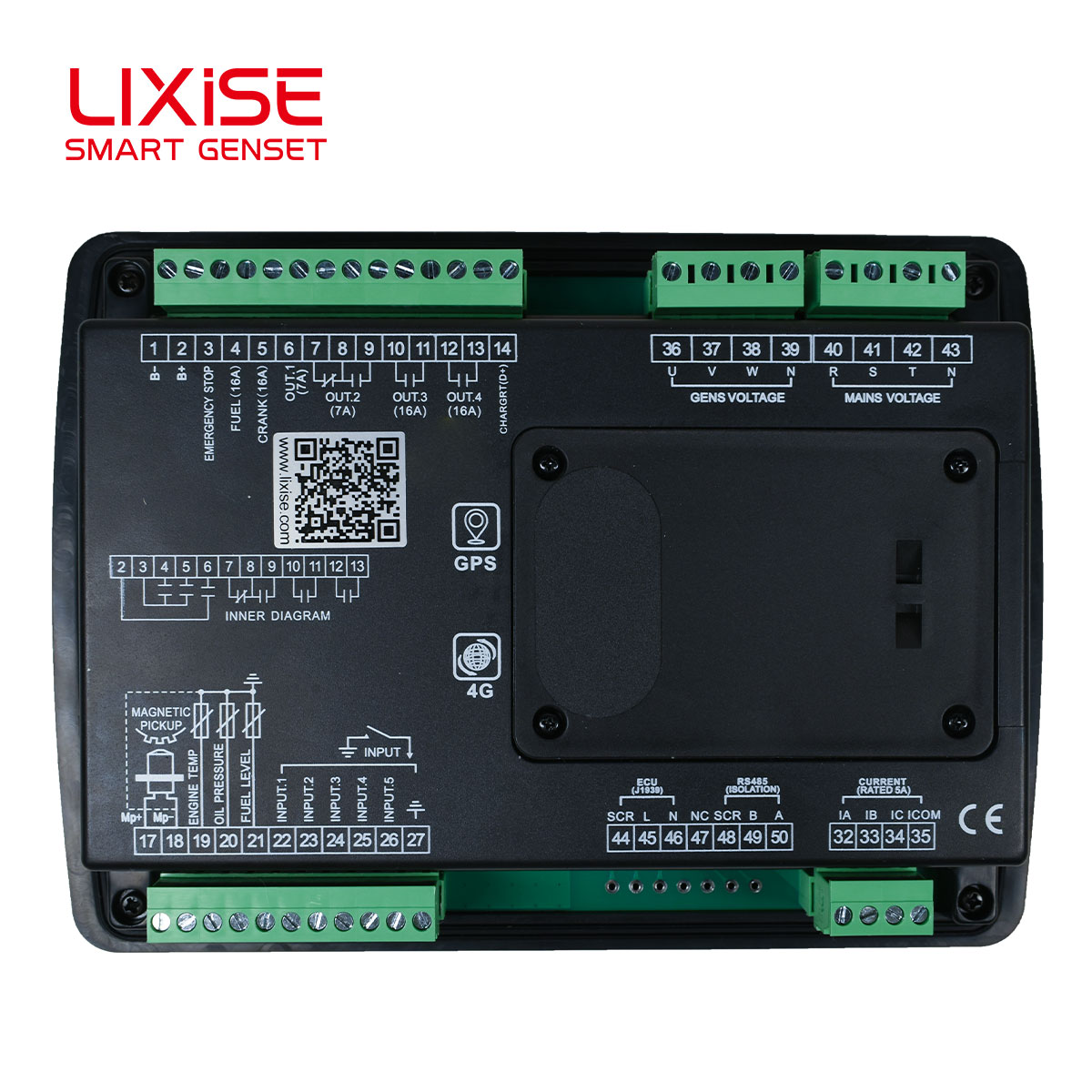
AIG6220: Automatic Mains Failure and ATS controller that detects grid loss and manages transfer switch operations between utility power and generator, then returns load upon mains recovery—the standard configuration for village-level hybrid systems.
AIG62X0C Variants: Dual-port expansion models equipped with both RS485 and CAN J1939 interfaces for advanced engine data reading and speed regulation in larger community power installations.
All variants feature Bluetooth (up to 100 meters in open spaces), 4G cellular, or WiFi connectivity options. The universal USB Type-C port allows local parameter programming without external power to the controller—essential when working in the field with laptop-based configuration tools.
Industries Served & Deployment Scenarios
AIGEN controllers serve rural electrification across multiple contexts: telecommunications remote base stations requiring unattended operation, healthcare clinics needing emergency backup power, community microgrids in off-grid villages, and mobile rental units deployed during agricultural seasons. The equipment rental and leasing sector particularly values the three-tier password management system (Operator, Technician, Engineer levels) that prevents unauthorized parameter changes while maintaining operational access for local staff.
Quantifiable Results from Rural Deployments
A telecommunications infrastructure provider managing remote base stations across mountainous terrain implemented AIGEN’s 4G-connected controllers and achieved remote parameter modification for minor adjustments, eliminating PC-based onsite visits that previously required 4-6 hour travel times per site. The 106 historical logs captured by each unit enabled the technical team to trace intermittent failures to fuel quality issues specific to certain regional suppliers, resulting in procurement changes that reduced unplanned downtime by measurable margins.
In generator rental operations serving seasonal agricultural processing facilities, the AI black box functionality identified recurring pre-shutdown patterns across multiple units. Analysis revealed sensor drift caused by excessive vibration during transport between sites. Implementing revised mounting procedures based on this insight prevented repeat failures and reduced liability disputes with lessees regarding equipment misuse.
Emergency standby systems for rural health clinics leveraged the periodic timed startup and maintenance timer features to ensure unit readiness. One regional health network reported elimination of fail-to-start incidents during actual power outages after implementing automated weekly exercise cycles monitored through the AIGENSET mobile application.
Physical Durability & Installation
The flame-retardant ABS housing meets IP55 ingress protection standards with gasket (IP42 standard configuration), providing dust and water resistance suitable for outdoor rural enclosures. The scratch-resistant acrylic display remains readable under direct sunlight. Standard panel mounting requires a 186×141mm cutout. High-rating 10A at 250VAC relay outputs for fuel and starter circuits reduce the need for intermediate relays, simplifying installation in space-constrained rural generator sets.
Technical Support Infrastructure
AIGEN provides a national 400-series technical support hotline with dedicated assistance for remote troubleshooting. The comprehensive fault elimination guides included in documentation enable local technicians with basic electrical knowledge to resolve common issues, while cloud connectivity allows factory engineers to perform advanced diagnostics when needed.
NO.2 Deep Sea Electronics DSE8610 MKII
This UK-based manufacturer offers robust 4G telematics through the DSEConnect platform. The 8610 MKII provides comprehensive mains failure and load management capabilities with proven reliability in harsh environments. Its global cellular compatibility and multi-language interface make it suitable for international rural electrification programs, though configuration complexity may require specialized training for local technical staff.
NO.3 ComAp InteliGen NT BaseBox
ComAp’s modular controller combines 4G connectivity with advanced paralleling capabilities for village-scale microgrids. The WebSupervisor cloud platform enables centralized monitoring of distributed generator networks. Particularly strong in renewable hybrid applications where generators supplement solar installations, though the premium pricing positions it toward larger institutional projects rather than single-unit deployments.
NO.4 Kohler APM603
Kohler’s APM603 integrates 4G communications within a controller designed specifically for their generator product line. The OnCue Plus connected solution provides fleet management tools well-suited to rural healthcare and education infrastructure projects. Native integration advantages are offset by limited third-party engine compatibility, making it optimal when standardizing on Kohler generating sets across a project.
NO.5 Caterpillar EMCP 4.4
Caterpillar’s controller leverages their Product Link telematics system for 4G connectivity and remote monitoring. Exceptionally robust for industrial applications and large community power systems, with deep integration into Cat diesel engine management. The enterprise-focused platform may present budget and complexity barriers for smaller rural electrification initiatives.
NO.6 Woodward easYgen-3500XT
Woodward’s solution combines sophisticated load sharing algorithms with 4G connectivity through partnered telematics providers. Excellent for complex rural microgrids requiring multiple generators in parallel operation. The engineering-oriented interface provides extensive customization but demands higher technical expertise during commissioning and ongoing management.
NO.7 Smartgen HGM6120K with WiFi/4G Module
This cost-effective controller from Smartgen offers optional 4G connectivity at accessible price points suitable for budget-conscious rural projects. The cloud monitoring platform covers essential remote management functions. While lacking some advanced diagnostic features found in premium competitors, it delivers reliable basic automation for straightforward backup power applications in rural schools, clinics, and community centers.
Conclusion & Recommendations
Selecting the optimal 4G controller for rural electrification requires balancing technical capabilities against practical deployment realities. Prioritize solutions offering robust cellular connectivity in areas with inconsistent coverage, intelligent diagnostics that minimize expensive site visits, and sensor compatibility accommodating mixed equipment environments. Evaluate the technical support infrastructure available in your operating region, as remote troubleshooting capabilities become critical when managing distributed generator networks.
Consider the skill level of local personnel who will interact with the system daily—intuitive mobile applications and hierarchical access controls enable effective operation without extensive specialized training. For projects involving equipment rental or seasonal deployment patterns, prioritize controllers with comprehensive data logging and tamper-resistant parameter protection. Finally, assess total cost of ownership including cloud platform fees, technical support access, and integration expenses beyond the initial hardware investment. The right controller transforms isolated generators into an intelligent, manageable rural power network that delivers reliable electricity to underserved communities.
https://dgfeirui.en.alibaba.com/
Dongguan Feirui Electronics Co.,Ltd.
