
The internal mechanics of modern toys have evolved far beyond simple on–off motion. From programmable educational kits to highly interactive consumer products, motion control has become a defining factor of play quality. At the center of this evolution is the brushed micro DC motor for toys, a compact electromechanical component that balances cost, control accuracy, and manufacturability. In this blog post, EcoMotor, as high performance brushed DC micro motor manufacturer, will share the benefits of using dc motor for toys to enhance the gaming experience.
Why Brushed Micro DC Motor Technology Still Matters in Toy Engineering
Despite rapid advances in brushless and smart motor solutions, brushed micro DC motors remain deeply embedded in toy manufacturing. Their relevance is not accidental.
In toy engineering, constraints are clear: limited space, tight budgets, and strict safety standards. Brushed architectures meet these constraints with minimal external electronics. Speed and direction control can be achieved using basic circuitry, which simplifies PCB design and reduces development cycles.
Equally important, brushed motors deliver predictable torque at low voltages. This makes them suitable for battery-powered toys where voltage stability is not guaranteed. For designers balancing motion realism and energy efficiency, this predictability is often more valuable than peak efficiency figures.
How Brushed Micro DC Motor for Toys Influences User Experience
Motion quality directly affects how users perceive a toy. Subtle differences in startup response, sound profile, and vibration can influence whether a product feels refined or disposable.
A well-matched brushed micro DC motor for toys provides smooth acceleration and deceleration, which is critical for interactive functions such as walking robots, spinning mechanisms, or articulated movement. Excessive cogging or inconsistent torque can break immersion, especially in toys aimed at older children or hobbyists.
Noise control is another factor. While brushed designs inherently generate some electrical and mechanical noise, proper motor selection and damping can significantly reduce audible artifacts. For toys used indoors or in educational environments, this becomes a key quality metric rather than a secondary concern.
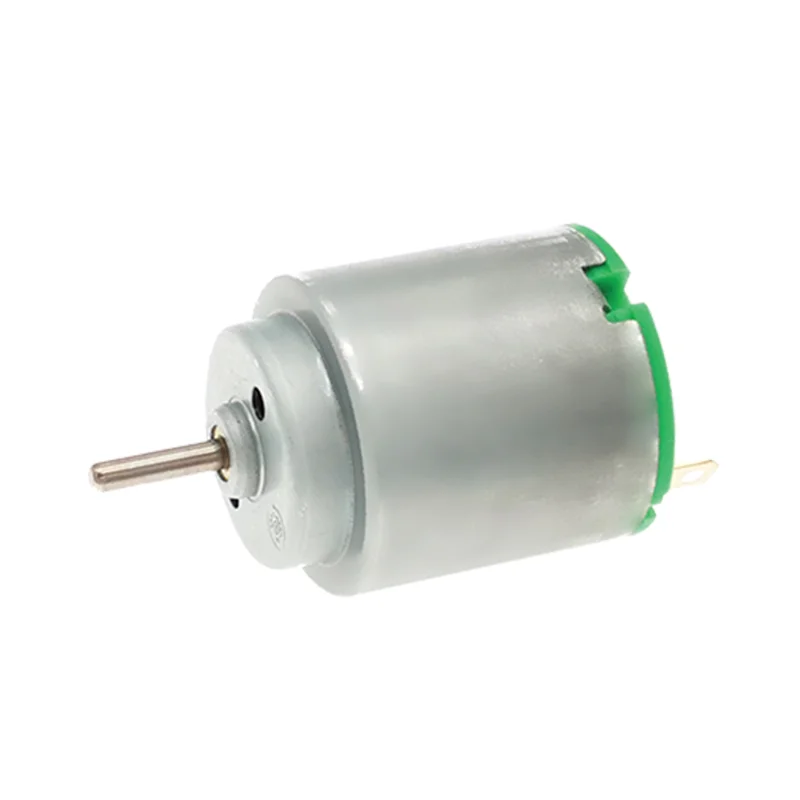
Design Trade-Offs Between Size, Torque, and Power Consumption
Toy designers often face conflicting requirements: smaller motors free up space for features, while higher torque enables stronger or faster movement. Understanding these trade-offs is essential.
Miniaturization typically reduces torque output, but gearing strategies can compensate. However, aggressive gear reduction increases mechanical wear and energy loss. Selecting a brushed micro motor with an appropriate balance of speed and torque minimizes the need for extreme gearing, improving durability and battery life.
Power consumption also ties directly into play duration. Excess current draw shortens usage time and raises internal temperatures, which can affect plastic housings and nearby components. Careful motor specification—considering stall current and nominal operating points—helps avoid these downstream issues.
Material Choices and Their Impact on Motor Longevity
The internal materials of a brushed motor significantly influence its service life. For toy applications, longevity is not only about total runtime but also about consistent performance across repeated short play sessions.
Brush composition affects wear rates and electrical stability. Softer brushes reduce noise but wear faster, while harder materials extend life at the cost of higher contact resistance. Commutator materials and surface finishing further influence friction and heat generation.
Housing materials also matter. Metal housings provide better heat dissipation, while plastic casings reduce weight and cost. In toys exposed to frequent handling or minor impacts, housing resilience can be as important as electrical specifications.
Integration Challenges in Compact Toy Assemblies
Integrating motors into tight assemblies introduces challenges beyond simple mounting. Alignment tolerance, shaft support, and vibration isolation all affect final performance.
In many designs, the motor shaft interfaces directly with plastic gears or cams. Misalignment can accelerate wear or generate noise over time. Using flexible couplings or precision-molded gear interfaces helps mitigate these risks.
Additionally, electromagnetic interference should not be overlooked. Brushed motors generate electrical noise that can disrupt nearby sensors or microcontrollers. Basic suppression components, such as capacitors across terminals, remain a practical solution without adding excessive cost.
Quality Control Considerations from a Production Perspective
Scaling toy production requires consistent motor performance across large batches. Variations in torque constants, no-load speed, or brush quality can lead to noticeable differences in user experience.
Working with a reliable dc micro motor manufacturer helps reduce these inconsistencies through standardized testing and process control. Incoming inspection protocols—such as random sampling for current draw and speed—can further protect assembly lines from hidden defects.
For global distribution, compliance with safety and environmental regulations is also essential. Motors must meet standards related to material safety, electromagnetic compatibility, and restricted substances, all of which influence supplier selection.
Matching Motor Characteristics to Toy Functionality
Not all toys demand the same motor behavior. A fast-spinning action toy places different demands on a motor than a slow, deliberate educational device.
Selecting a dc motor for toys involves matching electrical and mechanical characteristics to the intended function. High-speed applications benefit from motors optimized for efficiency at elevated RPMs, while motion-focused toys often require stable torque at lower speeds.
In some cases, duty cycles are the deciding factor. Toys designed for intermittent bursts of motion can tolerate higher peak loads, whereas continuous-operation products require conservative thermal margins to avoid premature failure.
Cost Optimization Without Sacrificing Performance
Cost pressure is constant in the toy industry, but aggressive cost reduction can backfire if it compromises reliability. Motor-related failures often lead to returns, damaging brand reputation more than modest cost increases would.
Strategic cost optimization focuses on right-sizing rather than under-specifying. Choosing a brushed micro motor that precisely meets functional needs avoids paying for unnecessary performance while maintaining durability.
Long-term supplier relationships also play a role. Consistent volume commitments can improve pricing without forcing compromises in material quality or testing rigor.
Market Trends Shaping Future Toy Motor Selection
While brushed motors remain dominant, market expectations are evolving. Consumers increasingly expect quieter operation, longer battery life, and more nuanced movement. These trends push manufacturers to refine traditional motor designs rather than abandon them outright.
Hybrid approaches, combining brushed motors with smarter control electronics, are becoming more common. This allows designers to extract better performance from familiar architectures while keeping costs manageable.
At the same time, sustainability concerns influence material choices and manufacturing processes. Efficient motor designs reduce battery waste, aligning product performance with broader environmental goals.
Conclusion
The brushed micro DC motor for toys continues to play a foundational role in modern toy design, not because it is the newest technology, but because it aligns closely with real-world manufacturing and user requirements. By focusing on system integration, material quality, and application-specific selection, manufacturers can deliver engaging play experiences without unnecessary complexity.
Whether evaluating a brushed micro motor for a new product line or refining an existing design, understanding these deeper considerations helps transform a simple component into a strategic advantage. Even as alternatives emerge, the practical balance offered by brushed solutions ensures their relevance in toys that prioritize reliability, accessibility, and consistent performance.
www.ecomotorhk.com
EcoMotor
