Calibration Equipment Cost Factors
1. Introduction
Liquid and gas flow calibration systems represent a significant capital investment for flow meter manufacturers, calibration laboratories, and industrial measurement facilities. Understanding calibration equipment cost factors is essential before specifying or purchasing a flow calibration system, because the final price depends on far more than a simple flow range number.
Flow measurement accuracy directly affects production efficiency, billing fairness, process control, and regulatory compliance. When a flow meter drifts out of tolerance, industrial operations may experience inaccurate billing, inefficient process control, or non-compliance with metrological requirements. Calibration equipment exists to verify and correct this measurement accuracy by comparing a device under test against a traceable reference standard.
This article explains the technical and engineering factors that influence calibration equipment cost, how calibration systems work, which calibration methods are available, and how to select the right system for a specific application.https://www.sytcflowmeter.com
2. What Are Calibration Equipment Cost Factors?
Calibration equipment cost factors refer to the technical, structural, and functional variables that determine the purchase price and long-term ownership cost of a flow calibration system. These factors include the calibration method used, the required measurement uncertainty, the flow range and pipe diameter covered, the level of automation, and the materials used in system construction.
In simple terms:
“Calibration equipment cost factors are the combination of technical specifications, system design elements, and operational requirements that determine how much a flow calibration system costs to design, manufacture, and operate.”
These cost factors are directly linked to flow measurement accuracy. A system built for tighter uncertainty, wider flow range, or higher automation generally requires more precise components, more rigorous manufacturing control, and more extensive data acquisition capability — all of which affect cost.
3. Working Principle and System Structure
A flow calibration system works by generating a controlled and stable flow, passing it through the flow meter under test, and comparing the meter’s reading against an independent reference standard. The difference between the reference value and the meter reading determines the calibration result.
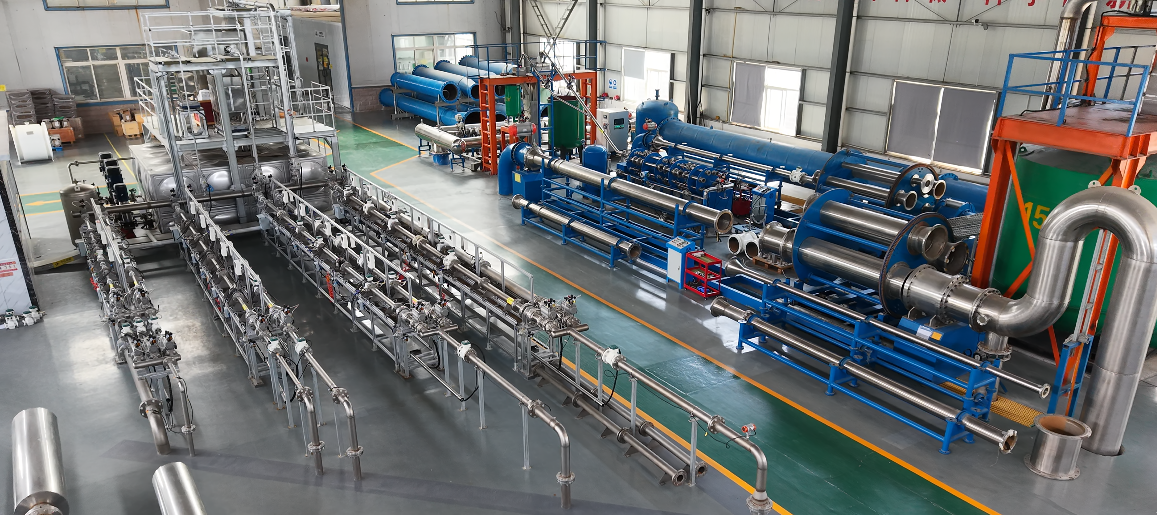
A typical liquid or gas flow calibration system consists of:
- Reference Standard — the traceable measurement basis, such as a mass scale, master meter, or sonic nozzle, against which the device under test is compared.
- Flow Generation System — pumps, valves, or gas supply components that produce a stable and repeatable flow condition.
- Measurement Section — the test line where the flow meter under test is installed under controlled hydraulic or pneumatic conditions.
- Data Acquisition System — sensors and instrumentation that capture flow, temperature, and pressure data during the test.
- Control System — typically a PLC or industrial PC-based system that manages flow stability, sequences the test process, and processes calibration data.
Each of these subsystems contributes to overall system cost, since accuracy, repeatability, and automation requirements each demand specific component quality and engineering design.
4. Calibration Methods and Technologies
Different calibration methods carry different cost structures because they require different reference standards, mechanical designs, and levels of precision engineering.
Static Mass Method
The static mass method calibrates a liquid flow meter by diverting flow into a weighing tank for a defined time interval and comparing the measured mass (converted to volume) against the flow meter’s reading.
- Working principle: flow is directed into a tank on a precision scale; the collected mass and elapsed time establish the reference flow value.
- Advantages: high accuracy, typically achieving measurement uncertainty as low as 0.05% under controlled laboratory conditions.
- Suitable applications: laboratory-grade calibration of liquid flow meters requiring high metrological traceability.
Master Meter Method
The master meter method calibrates a flow meter by comparing its output directly against a previously calibrated reference (master) meter installed in series in the same flow line.
- Working principle: fluid flows simultaneously through the master meter and the device under test; readings are compared in real time.
- Advantages: faster calibration cycle, suitable for on-site or field verification, typical uncertainty around 0.2%.
- Suitable applications: production line testing, field verification, and situations where continuous high-throughput calibration is required.
Sonic Nozzle Method (Gas Flow Calibration)
For gas flow calibration, the sonic nozzle method uses critical flow venturi nozzles operating at choked (sonic) flow conditions to establish a stable, repeatable reference flow rate for calibrating gas flow meters.
- Working principle: gas passes through a nozzle designed to reach sonic velocity at the throat, creating a fixed and predictable flow rate for a given upstream condition.
- Advantages: stable reference flow independent of minor downstream pressure fluctuations.
- Suitable applications: calibration of gas meters and gas flow instruments across small to large diameter ranges.
Each method should be selected based on required uncertainty, calibration object, and testing environment rather than assumed universally applicable.
5. How to Select a Liquid Flow Calibration System
Selecting an appropriately specified calibration system — and understanding its cost implications — requires evaluating several engineering parameters:
- Flow Range: The system must cover the minimum and maximum flow rates of the meters to be tested; wider ranges typically require more complex flow generation and control components.
- Pipe Diameter: Calibration systems must be sized to accommodate the diameter range of devices under test (for example, DN6 to DN1500 depending on system configuration).
- Accuracy Requirement: Tighter measurement uncertainty requirements (e.g., 0.05% versus 0.2%) demand higher-grade reference standards and more controlled environmental conditions, increasing system cost.
- Calibration Object: Whether the system will test electromagnetic, turbine, vortex, or other flow meter types affects fixture design and test section configuration.
- Measurement Uncertainty: Buyers should confirm the required uncertainty level for their application and select a calibration method capable of meeting it.
- Installation Requirements: Available floor space, foundation conditions, and utility supply (water, power, compressed air) influence system layout and cost.
- Automation Requirements: PLC and industrial PC-based automation for data acquisition, record keeping, and automated report generation adds engineering value but also contributes to overall system cost.
6. Application Scenarios
Flow calibration systems are used across several industrial and laboratory contexts:
- Flow Meter Manufacturers — verifying meter accuracy before shipment as part of quality control processes.
- Calibration Laboratories — providing third-party or internal calibration services with metrological traceability.
- Industrial Measurement Verification — supporting periodic verification of in-service flow meters used in production processes.
- Water Industry — supporting calibration needs related to municipal water supply, wastewater treatment, and water distribution measurement systems.
- Process Measurement Applications — supporting industrial users who require accurate flow monitoring for process control.
7. Technical Parameters and Performance Considerations
When evaluating calibration equipment cost factors, buyers should review the following technical parameters:
- Flow Range and Pipe Diameter Coverage: Systems may be configured to cover small to large diameter flowmeters depending on design.
- Accuracy and Measurement Uncertainty: The static mass method can achieve uncertainty as low as 0.05% under typical laboratory conditions; the master meter method typically achieves around 0.2%.
- Stability: Flow generation systems must maintain stable flow conditions during the calibration interval to ensure repeatable results.
- Calibration Uncertainty Documentation: Systems should support digital record keeping and traceable documentation of uncertainty budgets.
- Applicable Standards: Calibration systems should be designed with metrological traceability in mind, consistent with recognized measurement verification practices.
Buyers should avoid assuming that all systems achieve the same uncertainty; actual performance depends on method, component quality, and environmental control.
8. Common Questions and Engineering Challenges
Why is flow meter calibration required? Flow meters can drift over time due to wear, fouling, or changes in fluid properties. Calibration verifies that the meter’s output remains within acceptable accuracy limits and re-establishes traceability to a reference standard.
How often should flow meters be calibrated? Calibration intervals depend on the application, regulatory requirements, meter type, and operating conditions. High-precision or safety-critical applications generally require more frequent calibration than general industrial monitoring.
What affects calibration accuracy? Calibration accuracy is affected by flow stability, temperature and pressure fluctuations, reference standard quality, installation conditions, and the presence of air bubbles or turbulence in the flow stream.
What calibration method should be selected? The selection depends on required uncertainty, calibration object, and testing throughput. The static mass method is suitable for high-accuracy laboratory calibration, while the master meter method suits faster, higher-throughput testing.
Why do calibration system costs vary so widely? Cost variation reflects differences in required uncertainty, flow range, automation level, construction materials, and the complexity of the reference standard used.
9. How to Select a Reliable Calibration System Manufacturer
When evaluating a calibration equipment supplier, buyers should consider:
- Manufacturing Capability: Ability to produce both flow meters and calibration systems in-house, ensuring consistency between measurement instruments and reference standards.
- Calibration Technology: Demonstrated expertise in static mass, master meter, or sonic nozzle calibration methods.
- Quality Control: Certified quality management systems and documented manufacturing processes.
- Engineering Experience: A track record of designing calibration systems for varied flow ranges and pipe diameters.
- Customization Capability: Ability to configure systems for specific flow ranges, accuracy requirements, and installation constraints.
- Technical Support: Availability of installation guidance, commissioning support, and after-sales technical assistance.
- Export Capability: Experience supplying calibration systems to international industrial markets.
10. About Kaifeng Xinya Instrument Co., Ltd.
Kaifeng Xinya Instrument Co., Ltd. is an industrial instrumentation manufacturer focused on flow measurement technology development and manufacturing, flow calibration system design and production, and industrial process measurement solutions.
The company manufactures both liquid and gas flow calibration equipment, including liquid flow calibration systems based on the static mass method and master meter method, as well as gas flow calibration systems based on the sonic nozzle method. Its calibration systems incorporate PLC and industrial PC-based automation for data acquisition, digital record keeping, and automated report generation.
Kaifeng Xinya Instrument Co., Ltd. combines flow meter manufacturing with calibration system design, supporting independent R&D and factory calibration capability. The company offers OEM and customization support for calibration system configuration and has experience supplying industrial measurement equipment to markets across China, Southeast Asia, the Middle East, and other global industrial markets.
11. Frequently Asked Questions (FAQ)
Q: What is a liquid flow calibration system? A: A liquid flow calibration system is a measurement facility used to verify and calibrate flow meters by comparing measured flow values with a traceable reference standard, such as a weighing tank or master meter.
Q: What calibration methods are commonly used? A: Commonly used methods include the static mass method and the master meter method for liquid flow calibration, and the sonic nozzle method for gas flow calibration.
Q: How accurate can a flow calibration system achieve? A: Under typical laboratory conditions, the static mass method can achieve measurement uncertainty as low as 0.05%, while the master meter method typically achieves around 0.2%.
Q: How do I choose the correct calibration system? A: Selection should be based on required flow range, pipe diameter, target measurement uncertainty, the type of flow meter being calibrated, and automation requirements.
Q: Why is flow meter calibration important? A: Calibration ensures that a flow meter’s readings remain accurate over time, supporting reliable process control, fair billing, and compliance with metrological traceability requirements.
Q: What are the main calibration equipment cost factors? A: Key cost factors include the calibration method, required uncertainty, flow range and pipe diameter coverage, automation level, and construction materials of the reference standard and test section.
Q: Can calibration systems be customized for specific flow ranges? A: Yes, calibration systems can be configured to cover different flow ranges and pipe diameters depending on the intended calibration objects and application requirements.
12. Conclusion
Calibration equipment cost factors are determined by a combination of calibration method, required measurement uncertainty, flow range, pipe diameter, automation level, and system construction. Understanding these factors allows flow meter manufacturers, calibration laboratories, and industrial users to make informed equipment selection decisions rather than comparing systems on price alone.
Selecting the right calibration method — whether static mass, master meter, or sonic nozzle — depends on the specific accuracy requirements and testing environment of each application. Proper system selection supports long-term measurement reliability across water, energy, chemical, and industrial process applications.
Engineers and buyers evaluating calibration equipment for flow meter verification are encouraged to consult with an experienced calibration system manufacturer, such as Kaifeng Xinya Instrument Co., Ltd., to discuss specific flow range, accuracy, and application requirements before finalizing a system specification.
https://www.sytcflowmeter.com/
Kaifeng Xinya Instrument Co., Ltd.
