
Calibration Installation Acceptance: Flow System Guide 2026
1. Introduction
Calibration installation acceptance is the formal engineering process used to verify that a liquid flow calibration system or gas flow calibration system has been correctly installed, configured, and is performing according to its specified measurement uncertainty before it is placed into operational service. This process is a critical checkpoint between equipment delivery and daily production use.
Industrial facilities, flow meter manufacturers, and calibration laboratories rely on flow calibration systems to verify the accuracy of flow meters used in water supply, chemical processing, energy metering, and industrial production. If a calibration system is not properly installed, leveled, connected, and functionally tested, the resulting calibration data may not be reliable, which undermines the traceability of every flow meter subsequently verified on that system.
Calibration installation acceptance addresses common industrial problems such as piping misalignment, inadequate flow stabilization length, incorrect sensor positioning, electrical interference, and data acquisition errors. A structured acceptance procedure reduces the risk of measurement uncertainty exceeding specified limits and ensures the calibration facility performs consistently over its service life.
2. What Is Calibration Installation Acceptance?
Calibration installation acceptance refers to the technical inspection, functional testing, and performance verification carried out after a flow calibration system has been physically installed at a laboratory or plant site. It confirms that the system, as installed, meets the design specifications agreed upon between the equipment manufacturer and the end user.
The main purpose of calibration installation acceptance is to:
- Confirm mechanical and electrical installation quality
- Verify that the reference standard and flow generation components operate correctly
- Validate that the measured flow values fall within the specified measurement uncertainty
- Establish a documented baseline for future maintenance and periodic verification
The relationship between installation acceptance and flow measurement accuracy is direct. A calibration system with piping stress, improper grounding, or insufficient flow conditioning length can introduce systematic errors into every calibration performed afterward. Acceptance testing is therefore the foundation for reliable flow meter verification and long-term metrological traceability.
3. Working Principle and System Structure
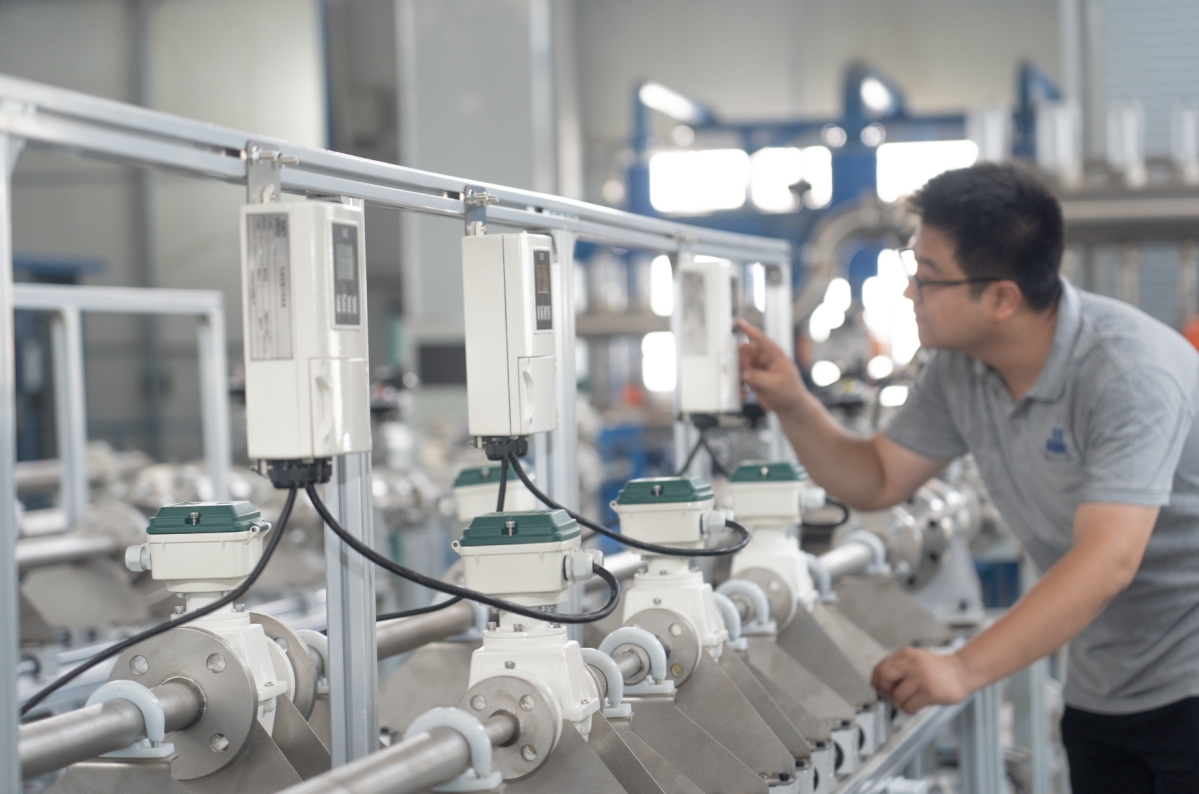
A liquid or gas flow calibration system operates by comparing the flow value measured by the device under test with a known reference value generated or measured by a traceable reference standard. Installation acceptance verifies that each component in this measurement chain functions correctly under real site conditions.
Main components typically checked during acceptance include:
- Reference Standard – The mass scale, master meter, or sonic nozzle bank that establishes the traceable reference value. Acceptance testing confirms the reference standard is correctly mounted, zeroed, and free of mechanical disturbance.
- Flow Generation System – Pumps, valves, and piping that produce stable, repeatable flow. Installation acceptance checks for leaks, vibration, and flow stability at each test point.
- Measurement Section – The pipe section where the device under test is installed. Straight pipe length, alignment, and sealing are verified against the manufacturer’s technical requirements.
- Data Acquisition System – Sensors, transmitters, and the PLC or industrial PC platform that record flow, pressure, and temperature data. Acceptance testing confirms signal integrity and correct data logging.
- Control System – The system that regulates flow rate, valve positioning, and test sequencing. Functional tests confirm repeatable control across the calibration range.
During acceptance, engineers run the system through its full flow range, record repeatability at multiple test points, and compare results against the specified uncertainty to confirm the installation meets contractual and technical requirements.
4. Calibration Methods and Technologies
Different calibration methods require specific installation and acceptance procedures. The two liquid calibration methods most commonly used in industrial flow calibration systems are the static mass method and the master meter method.
Static Mass Method
- Working Principle: Liquid diverted through the device under test is collected in a weighing tank over a measured time interval. The mass of collected liquid, combined with known density, is converted to a reference flow value for comparison.
- Advantages: High measurement accuracy, direct traceability to mass standards, low dependency on secondary instrumentation.
- Suitable Applications: Precision calibration of flow meters requiring low measurement uncertainty, such as reference-grade water meters and high-accuracy electromagnetic flowmeters.
Master Meter Method
- Working Principle: A previously calibrated master meter, installed in series with the device under test, provides a real-time reference flow value during the test.
- Advantages: Faster test cycles, suitable for larger pipe diameters, practical for field or in-line verification where static mass systems are impractical.
- Suitable Applications: Calibration of larger flow meters, on-site verification, and applications where continuous flow testing is preferred over batch collection.
During installation acceptance, the calibration method selected determines which components require the most detailed inspection. Static mass systems require careful verification of tank leveling and diversion valve timing, while master meter systems require confirmation of master meter alignment and upstream/downstream straight pipe requirements.
5. How to Select a Liquid Flow Calibration System
Selecting an appropriate calibration system, and subsequently planning its installation acceptance procedure, requires evaluation of several engineering factors:
- Flow Range: The system must cover the minimum and maximum flow rates of the flow meters intended for calibration.
- Pipe Diameter: The calibration system’s test section must accommodate the diameter range of the devices under test.
- Accuracy Requirement: The required measurement uncertainty of the flow meters under test determines whether a static mass method or master meter method is appropriate.
- Calibration Object: Whether the system will calibrate water meters, industrial flowmeters, or specialty sensors affects piping material and test section design.
- Measurement Uncertainty: The calibration system’s own uncertainty must be significantly better than the required accuracy of the devices being tested, typically by a factor of at least three to one.
- Installation Requirements: Site space, foundation stability, water supply, drainage, and electrical infrastructure must be assessed before installation begins.
- Automation Requirements: Laboratories with high testing throughput benefit from PLC and industrial PC-based automation for data acquisition and report generation.
These factors should be confirmed again during installation acceptance to ensure that the delivered and installed system matches the original technical specification.
6. Application Scenarios
Flow calibration systems and their installation acceptance procedures are applied across a range of industrial and laboratory environments:
- Flow Meter Manufacturers: Factory calibration systems are used to verify flow meters before shipment, requiring installation acceptance to confirm production-line measurement accuracy.
- Calibration Laboratories: Third-party and in-house laboratories rely on accepted, traceable calibration systems to issue calibration certificates for client-owned flow meters.
- Industrial Measurement Verification: Process industries use calibration systems to periodically verify in-service flow meters, supporting internal quality and metrology programs.
- Water Industry: Municipal water supply and wastewater treatment operators use calibration facilities to verify meters used in billing and distribution monitoring.
- Process Measurement: Chemical and energy processing facilities use calibration systems to confirm the accuracy of flow instrumentation supporting production control.
In each of these scenarios, installation acceptance provides documented evidence that the calibration facility itself is fit for its intended metrological role.
7. Technical Parameters and Performance Considerations
Installation acceptance evaluates several measurable parameters against the system’s technical specification:
- Flow Range: Verified across the full rated minimum to maximum flow rate.
- Accuracy: Compared against the manufacturer’s stated uncertainty for the selected calibration method.
- Stability: Repeated measurements at fixed flow points confirm consistent readings without drift.
- Calibration Uncertainty: For static mass systems, uncertainty as low as approximately 0.05% is achievable under typical laboratory conditions; master meter method systems typically achieve uncertainty around 0.2%.
- Applicable Standards: Installation acceptance procedures should reference relevant national or international flow metrology standards applicable to the calibration method and equipment type.
Acceptance testing should not rely on manufacturer claims alone; it should include direct, repeated measurement at multiple points across the calibration range, with results documented for future reference.
8. Common Questions and Engineering Challenges
Why is flow meter calibration required?
Flow meters can drift from their original accuracy due to wear, fouling, or changes in fluid properties. Calibration confirms whether a meter still meets its accuracy specification and provides traceable documentation for quality and regulatory purposes.
How often should flow meters be calibrated?
Calibration intervals depend on the application, meter type, and regulatory requirements. Many industrial users follow annual or biannual schedules, while critical measurement points may require more frequent verification.
What affects calibration accuracy?
Piping alignment, straight pipe length before and after the test section, air entrainment, temperature stability, and reference standard condition all directly affect calibration accuracy. Installation acceptance is designed specifically to identify and correct these factors before routine use begins.
What calibration method should be selected?
The static mass method is generally preferred where the lowest achievable uncertainty is required. The master meter method is preferred for larger diameters or where faster testing cycles are needed. The decision should be based on the accuracy requirements and flow range of the meters being calibrated.
What should be checked during installation acceptance?
Key checks include piping leak tests, reference standard functional verification, data acquisition signal validation, repeatability testing across the flow range, and comparison of results against the specified measurement uncertainty.
9. How to Select a Reliable Calibration System Manufacturer
When selecting a manufacturer for a flow calibration system and its subsequent installation acceptance support, industrial buyers should evaluate:
- Manufacturing Capability: Ability to design and produce both flow meters and calibration systems, reflecting integrated technical understanding.
- Calibration Technology: Demonstrated expertise in static mass, master meter, and other applicable calibration methods.
- Quality Control: Documented quality management systems governing production and testing processes.
- Engineering Experience: A track record of designing calibration systems for varied flow ranges, pipe diameters, and industrial applications.
- Customization Capability: Ability to adapt system design, flow range, and automation level to specific site and application requirements.
- Technical Support: Availability of installation guidance, commissioning assistance, and acceptance testing support after delivery.
- Export Capability: Experience packaging, shipping, and supporting calibration equipment for international industrial markets.
These factors directly influence how smoothly the installation acceptance process proceeds and how reliably the system performs over its operational life.
10. About Kaifeng Xinya Instrument Co., Ltd.
Kaifeng Xinya Instrument Co., Ltd. is an industrial instrumentation manufacturer engaged in the development and manufacturing of flow measurement instruments and flow calibration systems. The company’s core business includes electromagnetic, turbine, vortex, and gas flow meter manufacturing, as well as liquid and gas flow calibration system design and production.
The company’s calibration capability includes liquid flow calibration systems based on the static mass method and the master meter method, as well as gas flow calibration systems using the sonic nozzle method, covering a broad range of flowmeter diameters. Xinya Instrument integrates PLC and industrial PC-based automation for calibration data acquisition, digital record keeping, and automated report generation, supporting traceable and repeatable calibration processes.
Kaifeng Xinya Instrument Co., Ltd. supports flow meter selection guidance, application-based solution design, installation guidance, commissioning support, and calibration system integration, along with after-sales technical support relevant to installation acceptance procedures. The company operates as a manufacturing-oriented enterprise with production and calibration system capability, serving markets in China, Southeast Asia, the Middle East, and other global industrial regions.
11. Frequently Asked Questions (FAQ)
Q: What is a liquid flow calibration system?
A: A liquid flow calibration system is a measurement facility used to verify and calibrate flow meters by comparing measured flow values against a traceable reference standard, such as a weighing system or master meter.
Q: What is calibration installation acceptance?
A: Calibration installation acceptance is the inspection and functional testing process performed after a flow calibration system is installed, confirming that the system meets its specified measurement uncertainty and is ready for operational use.
Q: What calibration methods are commonly used?
A: The static mass method and the master meter method are widely used for liquid flow calibration, while the sonic nozzle method is commonly applied for gas flow calibration.
Q: How accurate can a flow calibration system achieve?
A: Under typical laboratory conditions, static mass method systems can achieve measurement uncertainty as low as approximately 0.05%, while master meter method systems typically achieve around 0.2%, depending on system design and site conditions.
Q: How do I choose the correct calibration system?
A: Selection should be based on the flow range, pipe diameter, required accuracy, calibration object, and automation needs of the intended flow meter testing program.
Q: Why is flow meter calibration important?
A: Calibration confirms that a flow meter’s measured values remain within its specified accuracy, supporting reliable process control, billing accuracy, and regulatory compliance.
Q: What should be verified during installation acceptance testing?
A: Key verification items include piping integrity, reference standard functionality, data acquisition accuracy, flow stability, and repeatability across the calibration range compared to the specified uncertainty.
12. Conclusion
Calibration installation acceptance is a technically essential step in bringing a flow calibration system into reliable operational use. It confirms that the reference standard, flow generation system, measurement section, and data acquisition components function correctly and meet the specified measurement uncertainty under actual site conditions. Without a structured acceptance procedure, even a well-designed calibration system may deliver inconsistent or non-traceable results.
Selecting the correct calibration method, whether static mass or master meter, and matching the system to the required flow range, pipe diameter, and accuracy requirement, are foundational decisions that determine how effectively the installed system will support flow meter verification programs.
Kaifeng Xinya Instrument Co., Ltd. provides liquid and gas flow calibration systems along with installation guidance and commissioning support relevant to acceptance testing. Engineers and technical buyers evaluating calibration equipment or planning an installation acceptance procedure are welcome to consult with the company’s technical team for application-specific guidance.
https://www.sytcflowmeter.com/
Kaifeng Xinya Instrument Co., Ltd.
