
Bridge Carbon Fiber Solutions by Mankate
When critical infrastructure demands lightweight yet powerful reinforcement, bridge engineers worldwide face a persistent challenge: how to strengthen aging concrete structures without adding substantial dead load or disrupting traffic flow. Traditional steel plate bonding methods, while effective, introduce weight penalties and corrosion vulnerabilities that compromise long-term performance. The emergence of advanced carbon fiber reinforcement systems has fundamentally transformed this equation, offering strength-to-weight ratios that exceed steel by nearly five times while maintaining complete resistance to electrochemical degradation.
The Structural Reinforcement Imperative in Modern Bridge Engineering
Bridge infrastructure represents one of the most demanding applications in civil engineering, where structures must withstand millions of load cycles while exposed to environmental extremes ranging from freeze-thaw cycling to chloride penetration from deicing salts. Research from transportation authorities indicates that approximately 42% of existing highway bridges in developed nations have exceeded their original design life, creating urgent demand for cost-effective strengthening solutions that extend service life without requiring full replacement.
Carbon fiber reinforced polymer (CFRP) systems have emerged as the preferred solution for this challenge due to several fundamental material advantages. The carbon fiber matrix exhibits tensile strength exceeding 2,400 MPa—more than double that of high-strength steel—while weighing only one-fifth as much. This exceptional strength-to-weight ratio allows engineers to apply significant reinforcement without altering the structure’s mass distribution or seismic response characteristics.
Active Versus Passive Reinforcement: A Critical Distinction
Traditional carbon fiber plate systems operate through passive reinforcement, bonding directly to the concrete substrate and engaging only when the structural member deflects under load. This approach suffers from a fundamental limitation: existing cracks remain open, and pre-existing stress in the concrete continues to dominate structural behavior. The carbon fiber contributes only to resisting additional loading beyond the point of application, creating what structural engineers term “stress lag.”
Nanjing Mankate Science & Technology Co., Ltd.has developed an alternative approach that addresses this limitation through prestressed carbon fiber plate systems. Unlike conventional bonding methods, this technology applies active reinforcement by prestressing the carbon fiber plates before anchoring them to the concrete surface. This reverse tensioning methodology generates compressive forces in the concrete member, effectively closing existing cracks and offsetting pre-existing tensile stresses.
The technical advantage of prestressing becomes particularly significant in flexural members such as bridge girders and deck slabs. By introducing controlled compression through prestressed CFRP plates, engineers can achieve crack closure and stiffness recovery that passive systems cannot replicate. Laboratory testing has demonstrated that prestressed systems can reduce existing crack widths by 60-80% while simultaneously increasing load-bearing capacity by 30-40% compared to equivalent passive installations.
Installation Methodology and Spatial Efficiency
One of the most significant practical challenges in bridge reinforcement involves working within severely constrained spaces. Traditional prestressing systems require substantial working length at beam ends—often 2-3 meters—to accommodate hydraulic jacking equipment and temporary anchorages. This requirement frequently proves prohibitive in existing structures where physical access is limited by abutments, bearings, or adjacent structural members.
The prestressed carbon fiber system from Nanjing Mankate Technology employs a reverse tensioning mechanism that requires only 20 centimeters of working space at beam ends. This compact installation envelope enables reinforcement in situations previously considered inaccessible, including continuous spans where intermediate supports prevent conventional access and urban viaducts where vertical clearance restrictions preclude traditional methods.
The installation process itself reflects careful engineering optimization. Rather than requiring surface grinding to create recesses for plate installation—a labor-intensive process that generates dust, noise, and temporary structural weakening—the system maintains a profile of less than 5 millimeters from the concrete surface. This no-grooving design reduces adhesive consumption by approximately 40% while eliminating the concrete removal step entirely, cutting installation time by 30-50% compared to conventional near-surface mounted systems.
Navigating Existing Reinforcement: The Eccentric Sleeve Innovation
A persistent challenge in retrofit applications involves the inevitable interference between new anchor points and existing steel reinforcement embedded within the concrete. Traditional approaches require either relocating anchor positions—compromising the reinforcement layout—or laboriously mapping rebar locations through cover meter surveys and test drilling.
Nanjing Mankate Technology has addressed this obstacle through a patented eccentric sleeve regulation system. When drill bits encounter existing rebar during anchor hole preparation, the eccentric sleeve allows controlled deviation of the drill path without compromising anchor capacity or plate alignment. This seemingly simple innovation dramatically reduces installation risk and eliminates the need for extensive pre-drilling investigations, cutting project timelines while maintaining structural integrity.
Performance Validation in Critical Infrastructure
The credibility of any structural reinforcement system ultimately depends on demonstrated performance in demanding real-world applications. Carbon fiber systems from Nanjing Mankate Technology have been deployed across infrastructure projects where failure consequences would be catastrophic, including nuclear power facilities, high-speed rail corridors, and international airport terminals.
At the Jakarta-Bandung High-Speed Railway—Indonesia’s first high-speed rail system—the company provided corrosion-resistant anchoring systems for catenary support structures throughout the 142-kilometer alignment. The tropical rainforest climate presents extreme challenges, with temperatures exceeding 35°C combined with near-100% humidity and aggressive atmospheric chlorides. The anchoring systems were engineered to maintain structural integrity across a 100-year design life despite these environmental extremes.
Similarly, at Beijing Daxing International Airport—one of the world’s largest aviation facilities—chemical anchoring systems supplied by the company secure critical structural connections throughout the terminal complex. The airport’s enormous column-free spans and complex geometry created anchoring challenges that required both exceptional load capacity and absolute reliability, given the consequences of failure in such a high-traffic public facility.
Durability Engineering and Long-Term Performance
The longevity of carbon fiber reinforcement systems depends critically on the adhesive matrix that bonds plates to concrete substrates. Environmental factors including moisture intrusion, thermal cycling, and alkaline exposure from concrete pore water can progressively degrade polymer matrices, reducing bond strength and compromising load transfer.
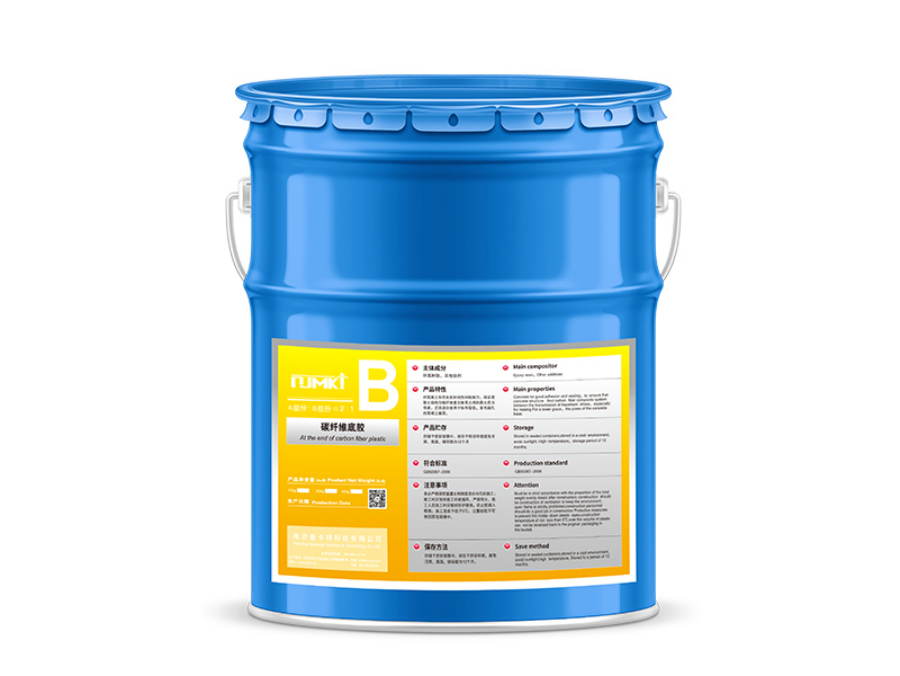
Nanjing Mankate Technology has developed modified epoxy resin formulations specifically engineered for infrastructure applications with century-scale design lives. These adhesive systems have achieved European Technical Assessment (ETA) certification confirming 100-year service life under standard environmental exposure categories. The formulations exhibit water absorption below 0.02%—an order of magnitude lower than standard construction epoxies—while maintaining stable mechanical properties across temperature ranges from -40°C to +160°C.
The thixotropic properties of these structural adhesives merit particular attention. When applied to vertical or overhead surfaces—common orientations in bridge soffit reinforcement—conventional adhesives tend to sag or drip before curing, creating voids that compromise bond integrity. The company’s steel bonding adhesive formulation maintains its applied position without slumping, even on overhead applications, while weighing 30% less than standard products. This combination reduces material waste, ensures complete void-free bonding, and decreases labor costs through faster, more reliable installation.
Seismic Performance and Dynamic Loading Considerations
Bridge structures in seismically active regions must accommodate both static gravity loads and dynamic forces generated during earthquake events. Reinforcement systems that perform adequately under static conditions may fail catastrophically when subjected to cyclic loading and stress reversals characteristic of seismic response.
Carbon fiber systems certified for seismic applications must demonstrate performance under C2 seismic rating protocols, which simulate high-magnitude earthquake loading through millions of fatigue cycles. Testing conducted on Nanjing Mankate Technology’s prestressed carbon fiber systems has validated performance through 10 million fatigue cycles without degradation—equivalent to the cumulative loading from multiple significant seismic events over a structure’s service life.
This fatigue resistance proves equally critical for bridges carrying heavy traffic volumes, where millions of vehicle passages generate cumulative stress cycles that can precipitate fatigue failures in both primary structural members and reinforcement systems. The high toughness and impact resistance of the company’s carbon fiber systems provide margins of safety that accommodate both traffic-induced vibration and occasional impact loading from overheight vehicles.
Quality Assurance and Risk Mitigation
Infrastructure owners evaluating reinforcement systems must balance performance requirements against project risk, particularly when selecting technologies from manufacturers without established track records. Third-party certification provides essential validation that products meet claimed specifications and will perform as designed.
Nanjing Mankate Technology maintains ISO 9001 Quality Management System certification alongside ISO 14001 Environmental Management System and ISO 45001 Occupational Health and Safety certifications. More significantly, the company’s mechanical and chemical anchoring systems have achieved European Technical Assessment (ETA) certification—a rigorous third-party validation process that confirms product performance through extensive testing and ongoing quality surveillance.
The company further mitigates client risk by insuring its products through Ping An Insurance, providing financial recourse in the unlikely event of product-related failures. This insurance backing, combined with comprehensive technical support including on-site training, load capacity calculations, and 24-hour technical consultation, creates a risk management framework that extends beyond mere product supply.
Economic Considerations and Life-Cycle Value
While carbon fiber systems command higher material costs than traditional steel plate bonding, comprehensive life-cycle analysis consistently demonstrates superior economic value. The corrosion immunity of carbon fiber eliminates future maintenance costs associated with steel protection systems, while the reduced installation time minimizes traffic disruption costs—often the dominant expense in bridge rehabilitation projects.
Nanjing Mankate Technology positions its systems as cost-effective alternatives to premium imported brands, offering equivalent or superior technical specifications at competitive pricing. For owners managing large bridge inventories with constrained maintenance budgets, this value proposition enables broader deployment of advanced reinforcement technologies across more structures than would be feasible with higher-priced alternatives.

The Evolution Toward Intelligent Infrastructure
Looking beyond current applications, the integration of carbon fiber reinforcement systems with structural health monitoring technologies represents an emerging frontier. Embedding fiber optic sensors within CFRP plates enables continuous strain monitoring, providing real-time data on structural performance and early warning of potential distress. As infrastructure management evolves toward predictive maintenance models based on actual structural condition rather than age-based assumptions, these intelligent reinforcement systems will become increasingly central to bridge asset management strategies.
The technical maturity of carbon fiber reinforcement systems, combined with growing infrastructure rehabilitation demands worldwide, positions these technologies as essential tools for extending the service life of existing bridge infrastructure. Companies like Nanjing Mankate Technology that combine advanced material science with practical installation methodologies and comprehensive technical support are enabling bridge owners to defer expensive replacement projects while maintaining safety and serviceability standards. As the global infrastructure stock continues aging, the strategic importance of proven, reliable reinforcement technologies will only intensify, making manufacturer selection a critical decision with decades-long consequences.
http://www.nj-mkt.com
Nanjing Mankate Science & Technology Co., Ltd.
