
In modern food processing, the efficiency and precision of drying systems are pivotal to both product quality and operational profitability. A high-performance food dryer directly influences:
-
Moisture content control
-
Product texture and shelf life
-
Energy consumption and operating cost
-
Compliance with hygiene and safety standards
For engineers, procurement specialists, and plant managers, selecting the right food dryer requires a deep understanding of thermal dynamics, airflow control, material compatibility, and automation features. Simply choosing a model based on capacity or price may lead to suboptimal results, including uneven drying, energy inefficiency, and increased maintenance costs.
FAB Stanley Trading (Shanghai) Co., Ltd specializes in industrial-scale food drying solutions, integrating precision engineering with advanced thermal management to meet the rigorous demands of global food production.
This article presents a detailed technical guide for selecting and optimizing industrial food dryers, focusing on real-world operational parameters and decision-making criteria.
Core Technical Considerations
Drying Technology Types
Food dryers employ various mechanisms to remove moisture efficiently while preserving product quality. Key types include:
-
Hot Air Convection Dryers
-
Utilize heated air circulated over food products
-
Suitable for fruits, vegetables, and herbs
-
Critical parameters: air temperature (40–120°C), airflow velocity (1–3 m/s), relative humidity control
Freeze Dryers (Lyophilization)
-
Remove water via sublimation under vacuum
-
Ideal for high-value products requiring nutrient preservation, such as coffee or premium fruits
-
Critical parameters: chamber vacuum levels (10–50 Pa), shelf temperature, cooling rates
Vacuum Dryers
-
Use reduced pressure to lower boiling point, drying at lower temperatures
-
Benefits: nutrient retention and reduced thermal degradation
-
Parameters: vacuum level (50–200 mbar), heating medium, residence time
Infrared or Microwave Dryers
-
Direct energy transfer to the product
-
Rapid drying with high energy efficiency
-
Parameters: power density, wavelength selection, penetration depth
Selecting the appropriate technology requires evaluating product characteristics, desired quality metrics, throughput, and energy efficiency.
Product Characteristics and Compatibility
Different foods respond differently to heat and airflow. Key considerations include:
-
Moisture content and distribution: High-water content foods may require pre-treatment or multi-stage drying.
-
Thermal sensitivity: Vitamins, pigments, and flavors degrade at high temperatures. Vacuum or freeze drying can minimize losses.
-
Size, shape, and porosity: Uniformity affects airflow distribution and drying rates.
-
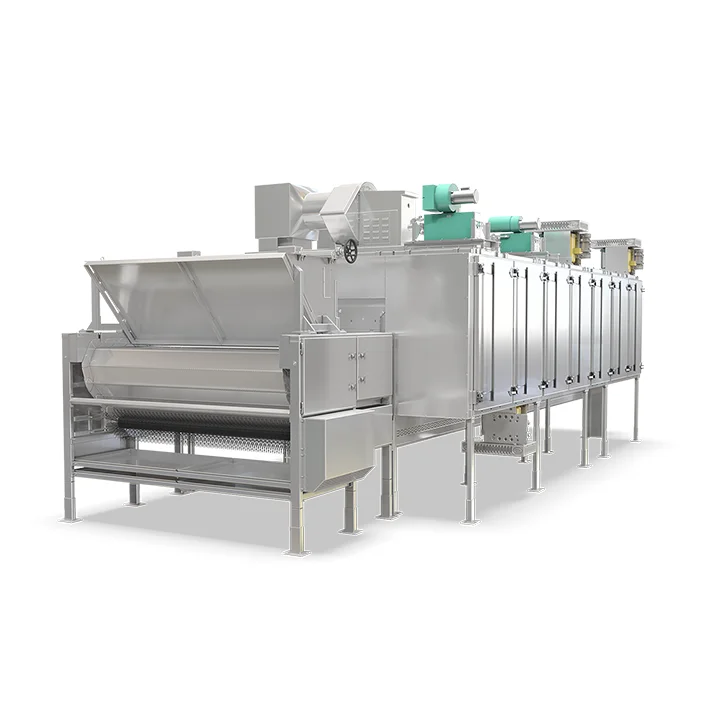
Batch vs continuous processing: Continuous tunnel dryers suit high-volume production; batch tray dryers are flexible for smaller-scale operations.
Matching the dryer to the product ensures consistent quality, minimal shrinkage, and optimal energy utilization.
Airflow and Thermal Management
Efficient drying relies on controlled airflow and heat transfer. Technical parameters to consider:
-
Air velocity and direction: Proper circulation prevents uneven drying or hot spots.
-
Temperature uniformity: Deviations >5°C across the drying chamber can compromise product quality.
-
Heat source efficiency: Steam, thermal oil, or electric heaters affect response time and energy consumption.
-
Humidity control: Removing evaporated moisture efficiently prevents condensation and microbial growth.
FAB Stanley Trading integrates precision airflow simulation and thermal modeling to optimize design for uniform drying in industrial-scale equipment.
Capacity and Throughput Optimization
Industrial operations require precise alignment between dryer capacity and production goals:
-
Batch dryers: 50–500 kg per batch; flexible for R&D or small-scale production
-
Continuous tunnel dryers: 500–5000 kg/hour; suitable for large-scale production
Factors affecting throughput include residence time, feed rate, and dryer dimensions. Engineers should simulate drying curves to determine optimal temperature, airflow, and belt speed for maximum efficiency without compromising quality.
Energy Efficiency and Operational Cost
Energy consumption is one of the largest operational costs in food drying. Optimizing energy use requires:
-
High-efficiency heat exchangers
-
Insulated chambers to minimize thermal loss
-
Variable speed fans and motors
-
Heat recovery systems to capture and reuse exhaust energy
Energy-efficient designs reduce operating costs and contribute to sustainable food production.
Automation and Process Control
Modern food dryers incorporate automation to enhance performance:
-
Programmable logic controllers (PLC) for temperature, airflow, and humidity control
-
Sensor integration for real-time monitoring of moisture content
-
Remote monitoring and data logging for predictive maintenance and batch traceability
Automation reduces human error, improves consistency, and allows optimization of energy use across production cycles.
Hygiene, Safety, and Compliance
Food processing equipment must comply with international standards (ISO, CE, HACCP). Critical considerations:
-
Material selection: Stainless steel (304/316) for corrosion resistance
-
Surface finish: Polished or electropolished surfaces prevent microbial growth
-
Safety features: Over-temperature protection, emergency stops, and proper ventilation
Compliance ensures not only food safety but also regulatory approval for international markets.
Maintenance and Longevity
Industrial dryers must minimize downtime while ensuring performance. Features that enhance maintainability:
-
Modular components for easy replacement
-
Clean-in-place (CIP) systems for rapid sanitation
-
Durable components resistant to corrosion, abrasion, and thermal stress
Long-lasting equipment reduces lifecycle costs and supports continuous production.
Case Study Scenarios
Example 1: Fruit Dryer for Export Market
-
Product: Sliced mango
-
Target moisture: 15%
-
Dryer type: Tunnel hot-air dryer with recirculated heated air
-
Key parameters: 60°C, 2.0 m/s airflow, 6-hour residence time
-
Outcome: Even drying, minimal color degradation, energy consumption 15% lower than baseline
Example 2: Freeze Dryer for Nutraceuticals
-
Product: Probiotic powder
-
Dryer type: Laboratory freeze dryer scaled for production
-
Critical parameters: Chamber pressure 20 Pa, shelf temp -40°C to 25°C
-
Outcome: Nutrient retention >95%, extended shelf life, high product value
Supplier Expertise: A Strategic Decision Factor
Selecting a supplier is as critical as the equipment specifications:
-
Proven track record in industrial-scale food dryers
-
Ability to customize designs for specific products and capacities
-
Integration of advanced motor systems, airflow control, and automation
-
Technical support for commissioning, training, and maintenance
FAB Stanley Trading (Shanghai) Co., Ltd combines industrial design expertise with advanced control solutions, ensuring tailored, reliable drying systems for global customers.
Future Trends in Food Drying Technology
Emerging technologies are shaping the industry:
-
AI-driven drying optimization for adaptive temperature and airflow control
-
IoT-enabled monitoring for predictive maintenance and remote diagnostics
-
Energy recovery and hybrid systems to improve sustainability
-
Non-thermal preservation techniques to retain nutritional and sensory quality
Investing in future-ready dryers ensures long-term competitiveness and compliance with sustainability targets.
Conclusion: Making a Technical Selection
Selecting the right food dryer is a multifaceted decision requiring a balance of:
-
Drying technology suitability for the product
-
Thermal and airflow precision
-
Energy efficiency and operational cost
-
Automation, monitoring, and compliance
-
Maintenance simplicity and lifecycle value
For industrial food production, a high-performance dryer is not merely equipment—it is a strategic asset that determines quality, efficiency, and profitability.
Partnering with experienced suppliers like FAB Stanley Trading (Shanghai) Co., Ltd. ensures access to customized, industrial-grade drying solutions capable of meeting the demands of modern global food production.
www.fabstanley.com
FAB Stanley Trading (Shanghai) Co., Ltd
