The bottled water industry continues to expand as consumers place higher value on convenience, safety, and product consistency. Behind every bottle on the shelf is a carefully selected water filling machine that matches the producer’s scale, output goals, and quality requirements. Choosing the wrong type of equipment can limit growth, increase downtime, or create unnecessary operational pressure.
This guide provides a practical overview of water filling machine types, categorized into small-, medium-, and large-scale solutions, and explains how each fits different production scenarios. It also highlights how Zhangjiagang Runbo Electromechanical Co., Ltd. supports manufacturers with flexible, reliable filling systems across multiple liquid product sectors.
Understanding Water Filling Machines in Bottled Water Production
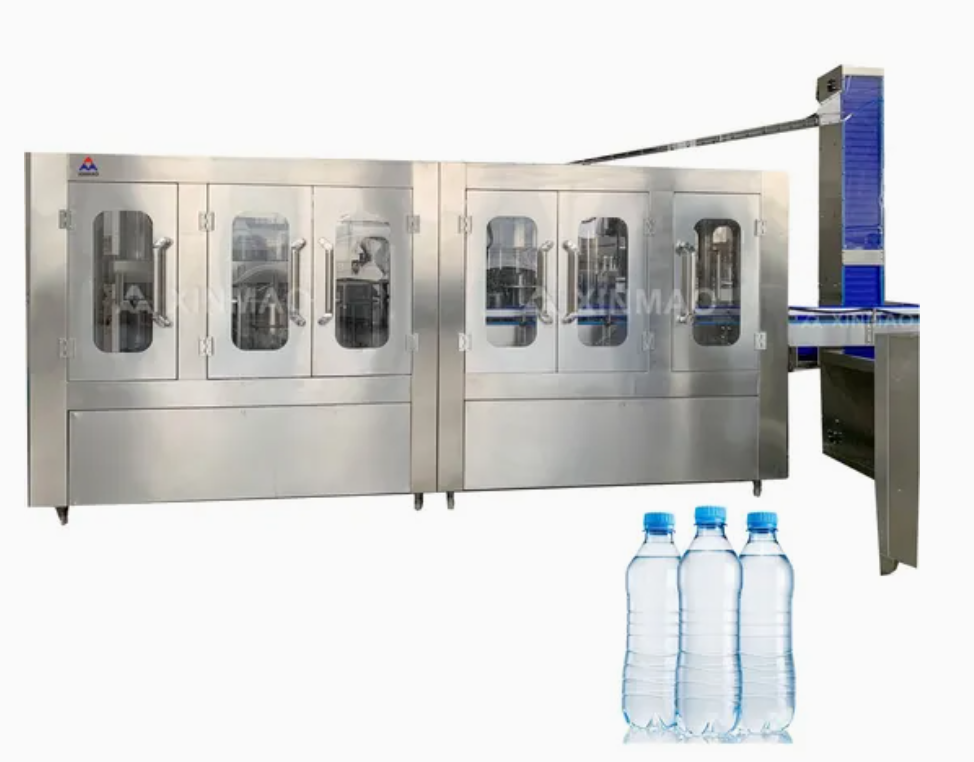
A water filling machine is designed to rinse, fill, and seal bottles with purified or mineral water under controlled conditions. While the core function remains the same, machine structure, automation level, and output capacity vary significantly depending on production scale.
Selecting the right category of machine is not about choosing the largest or most complex system. It is about aligning equipment capabilities with current production needs while allowing room for future expansion.
Small-Scale Water Filling Machines
Typical Application Scenarios
Small-scale water filling machines are commonly used by:
-
Start-up bottled water brands
-
Local or regional water producers
-
Pilot production lines
-
Facilities with limited space
These systems are designed to deliver stable performance without excessive complexity.
Key Characteristics
Small-scale machines usually feature a simpler structure and lower output capacity compared to industrial systems. They focus on reliability, ease of operation, and manageable maintenance requirements.
Typical characteristics include:
-
Compact footprint suitable for small workshops
-
Straightforward operation and control
-
Lower initial setup complexity
-
Support for basic bottle sizes
While automation levels may be limited, small-scale solutions still meet hygiene and quality standards required for bottled water production.
Advantages and Limitations
The main advantage of small-scale water filling machines is accessibility. They allow new producers to enter the market without overextending resources.
However, as demand grows, these systems may reach capacity limits. At that stage, producers often transition to medium-scale solutions rather than attempting to push small machines beyond their intended range.
Medium-Scale Water Filling Machines
Typical Application Scenarios
Medium-scale systems are the backbone of many established bottled water operations. They are widely used by:
-
Growing regional brands
-
Export-oriented producers
-
Plants supplying supermarkets and distributors
This category balances output efficiency with operational flexibility.
Key Characteristics
Medium-scale water filling machines often integrate rinsing, filling, and capping into a synchronized unit. Automation levels are higher, reducing reliance on manual intervention.
Common features include:
-
Stable continuous operation
-
Improved filling accuracy
-
Compatibility with multiple bottle formats
-
Better integration with labeling and packaging equipment
These machines are designed for long production runs while maintaining consistent product quality.
Operational Benefits
Medium-scale solutions provide an optimal balance between efficiency and cost control. They allow manufacturers to scale output without sacrificing flexibility.
For producers planning steady growth, this category offers the most versatile upgrade path.
Large-Scale Water Filling Machines
Typical Application Scenarios
Large-scale water filling machines are built for high-volume production environments, such as:
-
National bottled water brands
-
Export-focused industrial plants
-
Facilities supplying large retail chains
These systems are designed to run continuously with minimal interruption.
Key Characteristics
Large-scale machines emphasize automation, precision, and integration across the entire bottling line. They are often part of fully automated systems that include conveying, labeling, packing, and palletizing.
Key characteristics include:
-
High-speed, stable output
-
Advanced control systems
-
Optimized hygiene management
-
Seamless integration into complete production lines
These systems require professional installation and structured maintenance programs but deliver strong long-term productivity.
Strategic Value
For large producers, efficiency is measured not just by speed, but by consistency and reliability over long operating cycles. Large-scale water filling machines are built to meet these demands while supporting strict quality control requirements.
Comparing Small, Medium, and Large Scale Solutions
Rather than viewing these categories as strictly separated, it is helpful to see them as stages along a growth path.
-
Small-scale machines support market entry and testing
-
Medium-scale machines enable expansion and brand development
-
Large-scale machines support industrial-level production and distribution
Understanding where your business sits on this path is essential when selecting equipment.
Beyond Water: Multi-Liquid Filling Capabilities
Modern filling equipment manufacturers increasingly design machines that can be adapted for different liquid products. This flexibility is especially valuable for producers expanding into new markets.
Zhangjiagang Runbo Electromechanical Co., Ltd. develops filling equipment not only for bottled water but also for:
-
3 & 5-gallon water filling
-
Carbonated beverage filling
-
Milk filling
-
General liquid filling applications
These systems are widely used across the beverage, dairy, and other liquid product filling sectors, helping manufacturers diversify product lines while maintaining operational efficiency.
You can explore detailed specifications and application scenarios across different machine types via Runbo’s official product catalog:
water filling machines and liquid filling solutions
Reviewing complete product ranges allows buyers to compare configurations and choose systems aligned with both current and future production needs.
How Manufacturer Expertise Impacts Equipment Selection
Machine type alone does not determine success. The experience and technical support of the manufacturer play a critical role in long-term performance.
Zhangjiagang Runbo Electromechanical Co., Ltd. is a high-tech enterprise specializing in the research, development, production, and sales of filling equipment. The company focuses on providing efficient and reliable filling solutions tailored to real production environments.
Key strengths include:
-
Practical equipment design based on industry experience
-
Broad product coverage for different production scales
-
Support for system integration and line optimization
This expertise helps producers select equipment that fits operational goals rather than forcing operations to adapt to unsuitable machinery.
Choosing the Right Scale for Your Business
When selecting a water filling machine, manufacturers should evaluate:
-
Current production volume
-
Expected growth over the next 3–5 years
-
Available factory space
-
Labor structure and automation goals
-
Product diversification plans
The right choice is one that supports immediate needs while leaving room for sustainable expansion.
Conclusion
Water filling machines are not one-size-fits-all solutions. Small-, medium-, and large-scale systems each serve specific roles within the bottled water industry. Understanding these differences helps manufacturers make informed investment decisions and build production lines that grow alongside their business.
By working with experienced equipment suppliers such as Zhangjiagang Runbo Electromechanical Co., Ltd., producers gain access to filling solutions designed for reliability, scalability, and real-world performance across water, beverage, and liquid filling applications.
www.runbo-fillingmachine.com
Runbo
