
Conductive Liquid Flow Selection: A 2026 Engineering Guide
1. Introduction
Conductive liquid flow selection refers to the engineering process of choosing the correct flow measurement instrument for liquids that carry electrical charge, such as water, acids, alkalis, slurries, and food-grade fluids. This decision directly affects measurement accuracy, equipment lifespan, and long-term operating cost.
Industrial buyers face this challenge because conductive liquids vary widely in chemical composition, solid content, temperature, and pipe size. An incorrect selection often leads to signal instability, premature wear, or inaccurate billing data. This article explains the technical background of conductive liquid flow measurement and provides practical selection guidance for engineers, distributors, and plant operators.
2. What Is Conductive Liquid Flow Selection?
Conductive liquid flow selection is the engineering process of matching a flow meter’s working principle, materials, and configuration to the specific properties of a conductive fluid and its application environment.
The most common technology used for this purpose is the electromagnetic flow meter, which operates based on Faraday’s Law of Electromagnetic Induction. When a conductive liquid passes through a magnetic field generated by excitation coils, an electromotive force (voltage) is induced. This voltage is proportional to the liquid’s velocity and is detected by electrodes in contact with the fluid.
Main components involved in this measurement principle include:
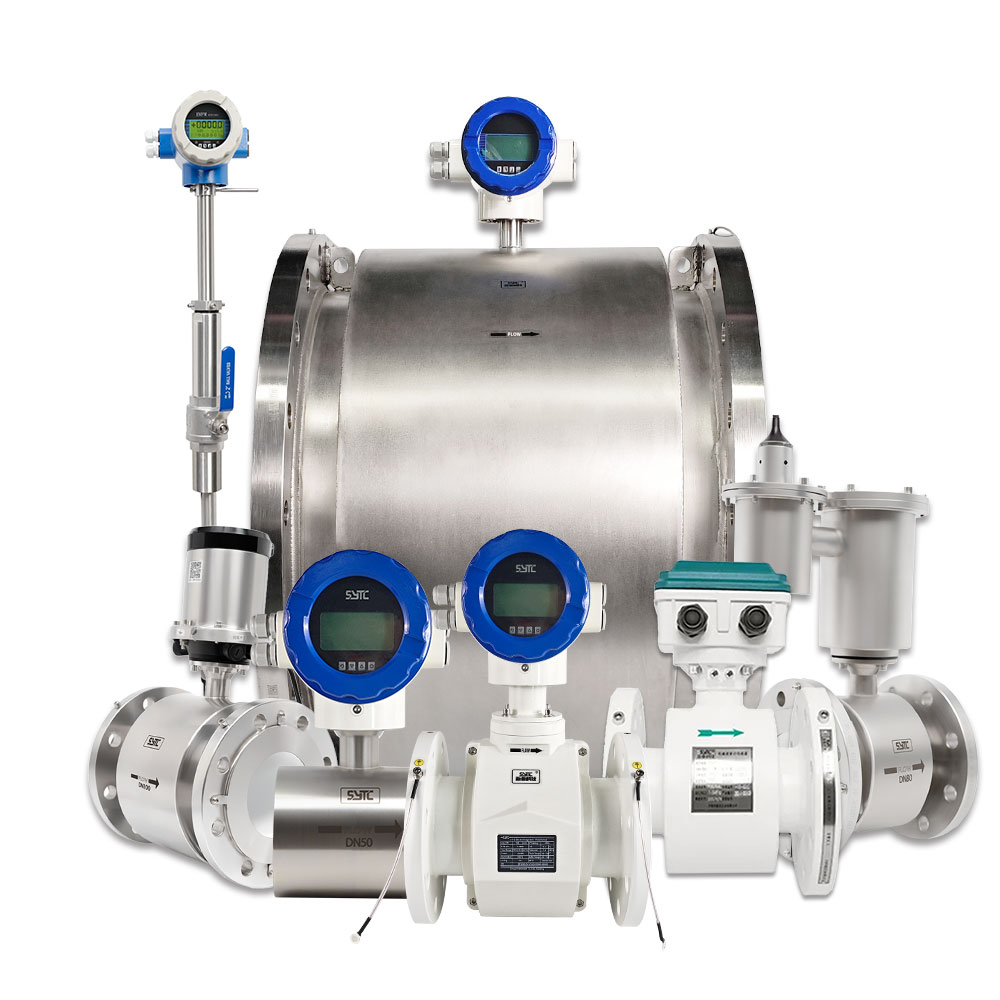
- Excitation coils – generate the magnetic field, typically using square wave pulse excitation for stability.
- Electrodes – detect the induced voltage; material selection depends on fluid chemistry.
- Liner – isolates the measuring tube from the fluid; material depends on abrasiveness and corrosiveness.
- Converter/transmitter – processes the signal using Voltage-to-Frequency Conversion (VFC) and outputs standard signals such as 4-20mA, pulse, or frequency.
The relationship between the equipment and the application is direct: the fluid’s conductivity, solid content, and chemical properties determine which liner, electrode, and signal processing configuration will deliver stable, accurate results.
3. Why Is This Solution Used in Industrial Applications?
Electromagnetic flow measurement is widely used for conductive liquids because it offers several practical advantages over mechanical flow measurement methods.
Application advantages:
- No moving parts in contact with the fluid, reducing mechanical wear.
- Minimal pressure loss, since the measuring tube has no internal obstruction.
- Bidirectional measurement capability for accounting in complex piping networks.
- Compatibility with a wide velocity range, typically 0.1 to 10 m/s.
Technical characteristics:
- Requires a minimum fluid conductivity for accurate signal detection (commonly above 5 μS/cm).
- Signal quality depends on proper grounding and electrode contact.
- Self-diagnosis functions can detect empty pipe conditions, excitation circuit breaks, and range overflow, which helps reduce unplanned downtime.
Suitable operating conditions:
This measurement approach works well for clean water, wastewater, chemical solutions, food-grade liquids, and slurries such as coal-water mixtures or mineral tailings, provided the liner and electrode materials are matched to the fluid.
4. Key Selection Factors
Correct conductive liquid flow selection requires evaluation of multiple engineering parameters:
- Measuring medium: Identify chemical composition, solid content, and corrosiveness.
- Conductivity: Confirm the fluid meets the minimum conductivity threshold for the technology.
- Flow range: Determine expected minimum and maximum velocity to select the correct nominal diameter (commonly DN15 to DN3000).
- Pipe size: Match the meter’s bore size or consider insertion-type meters for very large pipelines.
- Temperature and pressure: Verify liner and housing materials can withstand process conditions.
- Accuracy requirements: Standard applications may use ±0.5% accuracy, while critical processes may require ±0.2% or better.
- Material compatibility:
- Liners: PTFE, PFA, rubber, polyurethane, or ceramic, depending on chemical resistance and abrasion needs.
- Electrodes: stainless steel, Hastelloy, titanium, or tantalum, depending on corrosiveness.
- Liner selection: Ceramic and polyurethane liners are typically selected for abrasive slurries; PTFE and PFA are common for corrosive chemicals.
- Electrode selection: Grounding electrodes may be added to reduce interference from non-conductive coatings or lined pipes.
- Installation conditions: Available straight pipe length, upstream/downstream disturbances, and power availability (fixed power vs. battery-powered units) should be evaluated.
5. Common Challenges and Solutions
Engineering teams frequently encounter the following issues during conductive liquid flow measurement:
- Incorrect model selection: Choosing a standard liner for abrasive slurry leads to premature wear. Solution: select wear-resistant liners such as ceramic or polyurethane based on solid content.
- Measurement instability from solid particles: Solid grains colliding with electrodes can cause signal spikes, known as "cuspidal disturb." Solution: apply variation restraint algorithms designed to filter out these disturbances.
- Signal interference: Poor grounding or non-conductive pipe linings can distort readings. Solution: install grounding electrodes and ensure proper electrical bonding.
- Accuracy deviation over time: Electrode fouling or liner wear gradually reduces accuracy. Solution: schedule periodic inspection and factory recalibration.
- Material corrosion: Incompatible electrode or liner materials degrade quickly in aggressive chemicals. Solution: match materials to fluid chemistry using compatibility charts before installation.
- Installation errors: Insufficient straight pipe length or incorrect grounding causes measurement drift. Solution: follow manufacturer installation guidelines regarding upstream/downstream clearance.
- Harsh operating conditions without power access: Remote monitoring points may lack electrical infrastructure. Solution: consider battery-powered or wireless remote flow meters with IP68-rated sensors.
6. Application Areas
Conductive liquid flow measurement is applied across multiple industries where fluid conductivity supports electromagnetic sensing:
- Water and wastewater treatment: Flow accounting, billing, and treatment process control.
- Chemical processing: Measurement of acids, alkalis, and other conductive process fluids.
- Food and beverage: Hygienic measurement of liquids in sanitary processing lines.
- Mining and slurry: Measurement of coal-water slurry, mineral tailings, and pulp with abrasion-resistant configurations.
- Energy management: Heat measurement in district heating systems using enthalpy-based calculations.
- Industrial process control: Integration with PLC and DCS systems for automated flow regulation.
7. Installation and Maintenance Recommendations
Proper installation and maintenance directly affect long-term measurement reliability:
- Installation requirements: Ensure adequate straight pipe length upstream and downstream of the sensor; avoid installation near valves, pumps, or elbows that create turbulence.
- Operating recommendations: Allow sufficient preheating time (typically around 10 minutes) before taking stable readings, especially after power-up.
- Maintenance methods: Periodically inspect electrodes for coating buildup and verify grounding connections; check liner condition in abrasive or corrosive service.
- Calibration importance: Regular calibration against known reference standards, such as static mass method or master meter method systems, ensures measurement traceability and long-term accuracy.
- Long-term reliability improvement: Use self-diagnosis features to detect empty pipe conditions or excitation faults early, and replace calibrated circuit boards when necessary to restore original accuracy.
8. Industrial Supplier Evaluation
When selecting a manufacturer for conductive liquid flow measurement equipment, professional buyers should evaluate:
- Manufacturing capability: Whether the supplier designs and produces sensors and converters in-house rather than reselling third-party units.
- Quality control system: Compliance with relevant industry standards, such as JB/T9248-2015 for electromagnetic flowmeters or GB/T9124.1-2019 for flange dimensions.
- Calibration capability: Availability of in-house liquid and gas flow calibration systems, such as static mass or master meter methods, to verify instrument accuracy before shipment.
- Technical support: Ability to provide engineering guidance on liner and electrode selection for specific fluid conditions.
- Customization capability: Support for OEM/ODM requirements, custom flange standards, and application-specific configurations.
- Export experience: Familiarity with international communication protocols such as MODBUS-RTU and multiple electrical/ingress protection standards.
- Engineering service capability: Support for installation guidance, troubleshooting, and maintenance training after delivery.
9. About Kaifeng Xinya Instrument Co., Ltd.
Kaifeng Xinya Instrument Co., Ltd. is a professional industrial flow measurement manufacturer specializing in electromagnetic flow meter systems for conductive liquid applications, including standard industrial, hygienic, battery-powered, and slurry-resistant configurations.
As a source factory, the company maintains independent research and development capability, supported by manufacturing experience associated with NewAsia Industrial since 1996. Kaifeng Xinya operates liquid and gas flow calibration systems, enabling factory calibration of instruments prior to delivery.
The company has global export experience and supports OEM/ODM customization, including flange standards, communication protocols (RS485, HART, GPRS, WiFi), and material configurations tailored to specific fluid properties. Its Instrument IoT Big Data Platform allows customers to integrate flow data with remote monitoring systems for centralized management.
10. Frequently Asked Questions (FAQ)
Q1: Can an electromagnetic flow meter measure liquids with low conductivity?
Most electromagnetic flow meters require a minimum fluid conductivity, commonly around 5 μS/cm, to generate a detectable signal. Liquids below this threshold may require alternative measurement technologies.
Q2: What liner material should be selected for abrasive slurries?
Ceramic and polyurethane liners are commonly selected for high-abrasion applications such as coal-water slurry or mineral tailings due to their wear resistance.
Q3: How accurate is electromagnetic flow measurement for conductive liquids?
Standard accuracy is typically ±0.5%, with optional configurations achieving ±0.2% or ±0.3% under optimized installation and process conditions.
Q4: What factors most affect measurement stability in conductive liquid flow?
Grounding quality, electrode contact, solid particle interference, and proper installation clearance are the primary factors influencing signal stability.
Q5: Does the equipment require periodic calibration?
Yes. Periodic calibration against a traceable reference, such as a master meter or static mass calibration system, helps maintain measurement accuracy over the equipment’s service life.
Q6: How should the correct meter model be selected for a specific application?
Selection should be based on fluid conductivity, chemical compatibility, solid content, required accuracy, pipe size, and power availability at the installation site.
Q7: Can these meters operate in locations without electrical power?
Yes. Battery-powered electromagnetic flow meters with IP68-rated sensors are available for remote or submerged installation sites lacking grid power.
Q8: What electrode material is suitable for corrosive chemical fluids?
Electrode material selection depends on chemical compatibility; common options include stainless steel, Hastelloy, titanium, or tantalum, chosen according to the specific corrosive medium.
11. Conclusion
Conductive liquid flow selection requires careful evaluation of fluid properties, material compatibility, accuracy requirements, and installation conditions. Selecting the appropriate liner, electrode, and signal processing configuration directly impacts measurement stability, equipment lifespan, and operational reliability.
Engineers and industrial buyers evaluating flow measurement solutions for conductive liquids should consider both the technical requirements of their application and the manufacturing and calibration capabilities of their equipment supplier. For technical consultation on electromagnetic flow meter selection for conductive liquid applications, engineering teams may contact Kaifeng Xinya Instrument Co., Ltd. for further discussion of application-specific requirements.
https://www.sytcflowmeter.com/
Kaifeng Xinya Instrument Co., Ltd.
