
Laboratory professionals working with ELISA and other plate-based assays routinely face a set of persistent operational challenges: inconsistent manual washing, elevated residual liquid volumes that distort assay readings, and equipment downtime caused by crystallized buffer blockages inside wash tubing. These issues are not minor inconveniences—they directly affect assay integrity, laboratory throughput, and long-term equipment reliability. Understanding how an automated microplate washer with bottom flushing addresses these pain points requires a closer look at the underlying technology, and the DRW-330 Elisa Microplate Washer from Diatek, manufactured by Wuxi Hiwell-Diatek Instruments Co., Ltd, offers a clear, well-documented example of how these challenges are engineered around.
Why Bottom Flushing Matters in Microplate Washing
The core function of any microplate washer is to remove unbound substances from wells without disturbing bound analytes or introducing cross-contamination. Traditional washing approaches often leave residual liquid pooled at the bottom of wells, which can elevate background noise and compromise sensitive assay results. Bottom flushing—thorough washing directed at the base of each well—combined with precise liquid aspiration, is designed to minimize this residual volume as much as possible.
In the DRW-330, this is achieved through two-point liquid suction technology, which works alongside thorough bottom washing to reduce residual volume to ≤1μl/well. This specification directly addresses the industry pain point of high residual volumes affecting assay accuracy, since less leftover liquid means less interference with downstream reagent reactions and optical readings.
Core Engineering Behind the DRW-330 Elisa Microplate Washer
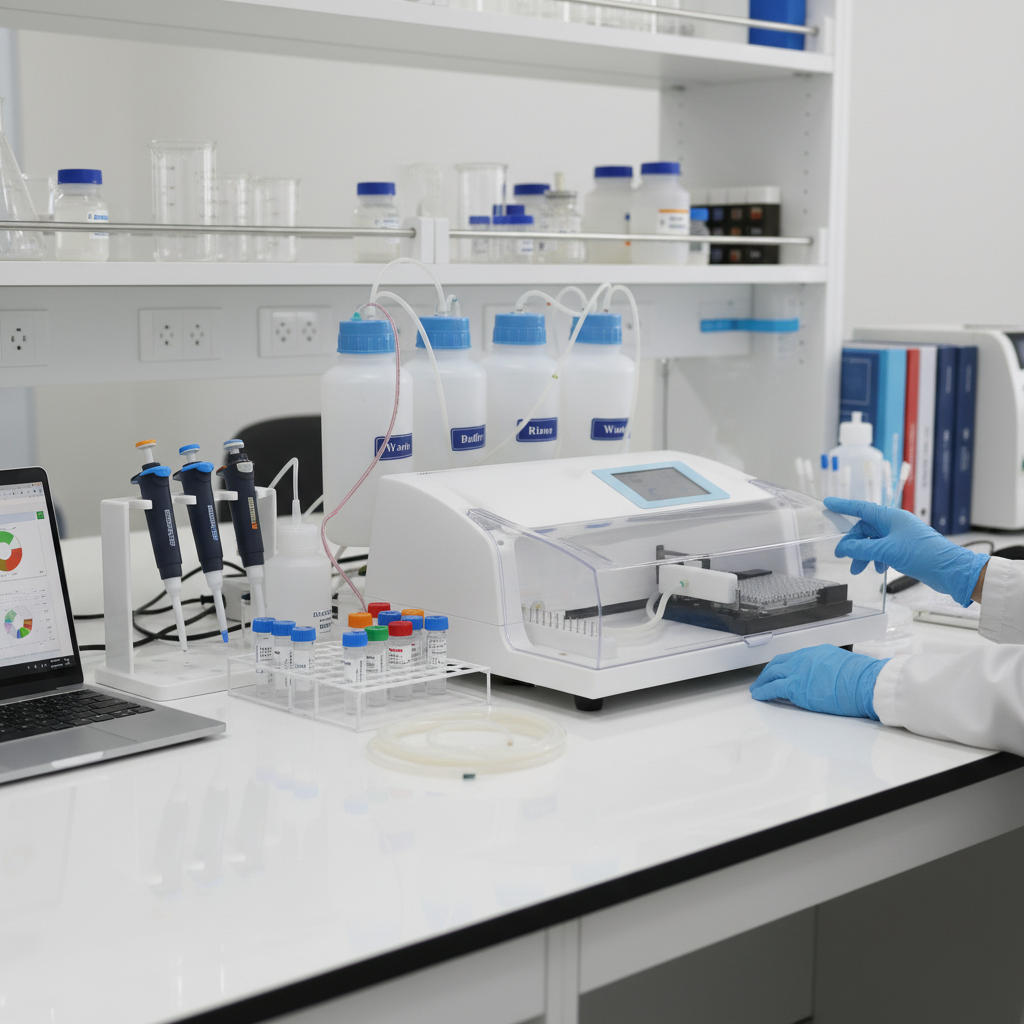
The DRW-330 is positioned as a versatile, standalone automated washer designed for thorough cleaning of 96/48 well microplates in ELISA and other laboratory assays. Its design reflects three interconnected priorities: assay accuracy, operational efficiency, and long-term reliability.
Precision Cleaning Technology
Beyond the two-point suction system, the washer separates Wash and Rinse channel management into independent pathways. This independent channel design is intended to prevent cross-contamination between washing and rinsing fluids, which is a meaningful consideration for laboratories running multiple assay types on the same instrument. The unit also includes high-precision manifolds, specifically 8-pin and 12-pin configurations, allowing it to accommodate different plate orientations. Universal well compatibility extends to Flat, V-bottom, and U-bottom 96/48 well microplates, giving laboratories flexibility without needing separate equipment for different plate formats.
For assays requiring extended processing, the DRW-330 offers adjustable deep cleaning with programmable soak and shake times ranging from 0 to 24 hours. Wash liquid pressure and aspiration (sip) time can be fine-tuned between 0.1 and 9.9 seconds, and the system supports 1 to 9,999 wash cycles with a liquid volume range of 10 to 9,999μl per well. These parameters give laboratory technicians granular control over each protocol, rather than relying on fixed, one-size-fits-all cleaning routines.
Workflow Efficiency and Programmability
Operational efficiency is addressed through the instrument’s 4.3-inch capacitive touchscreen, which is described as providing a user-friendly interface for simplified protocol programming and standalone operation. Because the touchscreen supports high-sensitivity control, technicians can program and adjust protocols directly on the device without requiring external PC control—an important consideration for laboratories seeking to streamline bench space and reduce dependency on connected computer systems.
The DRW-330 also stores up to 600 user-defined washing protocols in its internal memory. This large protocol capacity is relevant for laboratories that process a wide variety of assay types, since technicians can save and recall specific wash sequences rather than reprogramming settings for each run. The instrument supports both individual strip washing and whole plate washing, offering additional flexibility depending on sample throughput needs on a given day.
Reliability and Maintenance Reduction
One of the more distinctive engineering responses to the industry’s blockage problem is the DRW-330’s automated tube maintenance feature, which automatically rinses tubes before and after each program. This directly targets the pain point of tube blockages caused by crystallized buffer residue, a common source of equipment downtime in laboratories using automated washers. By building rinsing into the standard operating cycle rather than treating it as a separate maintenance task, the design aims to extend the practical availability of the equipment over time.
Safety considerations are also built into the system. Waste bottles are equipped with an overflow alert function to help prevent laboratory contamination, and an emergency stop function allows users to immediately pause or terminate a wash cycle if needed. Together, these features reflect a design philosophy that treats both assay quality and laboratory safety as integrated priorities rather than afterthoughts.
Customization for Specialized Applications
Beyond its standard ELISA washing capabilities, the DRW-330 supports customizable wash liquid channels, expandable from 2 to 4 channels, which allows the instrument to be adapted for more complex or varied washing protocols. Notably, the platform also supports a magnetic bead ELISA washer configuration, an option intended for laboratories working across biomedical research, clinical diagnostics, and drug development. In bead-based assays, this configuration’s core function is to automatically, efficiently, and gently wash magnetic beads, removing unbound substances to help preserve the accuracy and reproducibility of experimental results.
Where the DRW-330 Fits in Laboratory Environments
According to its documented industry adaptation, the DRW-330 is designed for use across several settings. In hospital laboratories, it supports standardized ELISA plate washing as part of routine diagnostic workflows. In clinical testing centers, its programmable cycles and large protocol memory are suited to high-throughput diagnostic operations. In research institutions, the ability to customize washing protocols supports the varied and evolving needs of experimental assay development. This range of adaptation reflects the broader customer base served by the manufacturer, which includes hospital laboratories, clinical testing facilities, and medical device distributors across healthcare, hospital laboratory services, and biomedical research sectors.
Quality Assurance and Manufacturing Background
Wuxi Hiwell-Diatek Instruments Co., Ltd, the manufacturer behind the Diatek brand, positions itself as a direct manufacturer providing standardized, high-precision laboratory diagnostic equipment focused on automated washing solutions for clinical and hospital environments. The DRW-330 and its manufacturing processes are backed by recognized quality frameworks, including CE Certification, ISO 9001 Quality Management System Certification, and ISO 13485 Medical Devices Quality Management System Certification. These certifications provide a documented basis for laboratories evaluating the equipment’s compliance with international quality and medical device standards, particularly for those requiring CE marking for European market access.
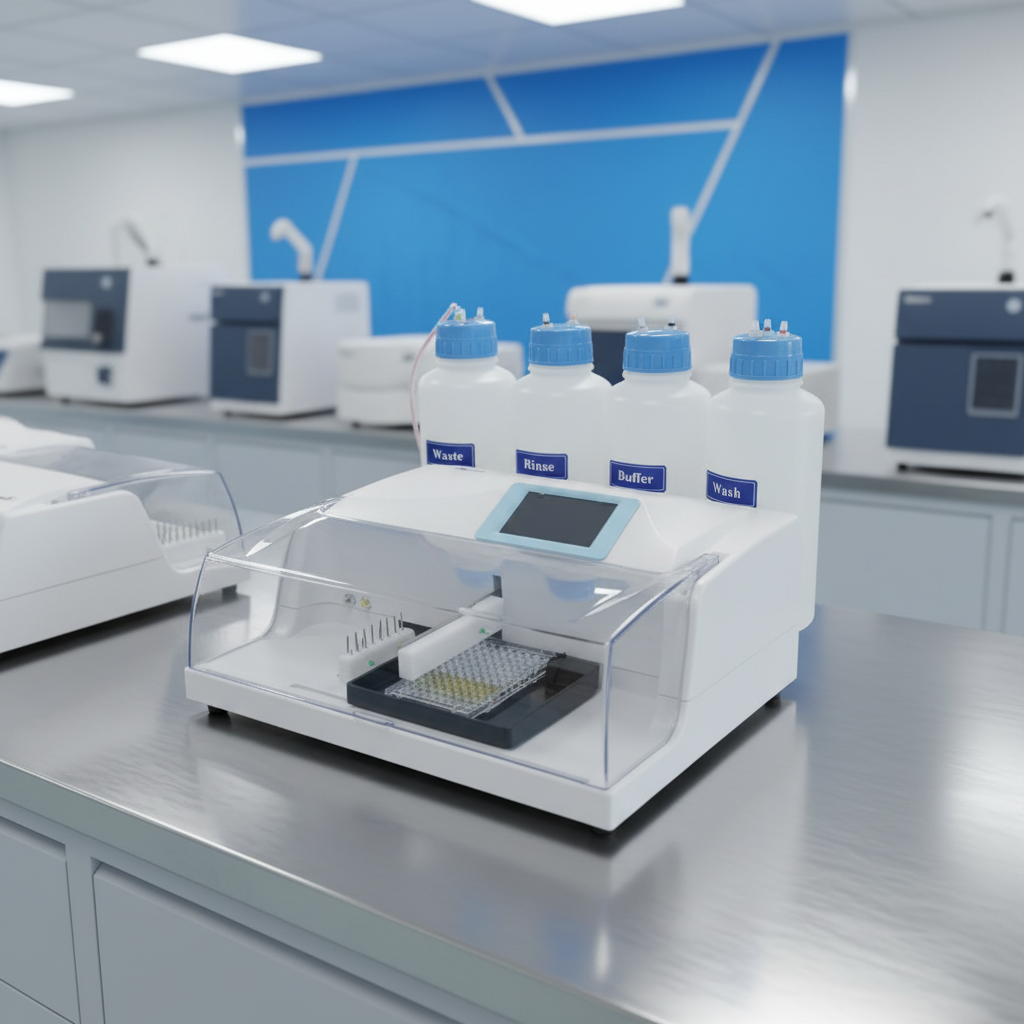
As a factory-direct product, the DRW-330 is supported by a 1-Year Global Warranty and dedicated online technical service, reflecting a service model built around direct manufacturer support rather than layered distribution channels. For laboratories evaluating an automated microplate washer with bottom flushing capability, these combined elements—two-point suction technology, independent wash and rinse channels, automated tube rinsing, extensive protocol storage, and internationally recognized certifications—provide a documented, feature-based foundation for assessing how the equipment addresses the recurring challenges of manual inconsistency, residual volume, and maintenance downtime in everyday laboratory operation.
www.hiwelldiatek.com
Wuxi hiwell-diatek instruments co.,ltd
