
In today’s fast-moving manufacturing and logistics environment, packaging is no longer just a final step in production—it is a critical factor that directly affects efficiency, product quality, and overall operating costs. As companies seek smarter ways to streamline operations, the debate between FFS (Form-Fill-Seal) packing machines and traditional packaging methods has become increasingly relevant.
As a high-tech enterprise specializing in the R&D, integration, manufacturing, sales, and service of automated packaging production lines, Dostar Packing Equipment Co., Ltd. has long been committed to providing customers with semi-automatic packaging systems and fully automatic packaging production lines. With deep experience across multiple industries, Dostar helps businesses transition from labor-intensive packaging to highly efficient automated solutions. This article compares FFS packing machines with traditional packaging across three key dimensions: efficiency, accuracy, and cost.
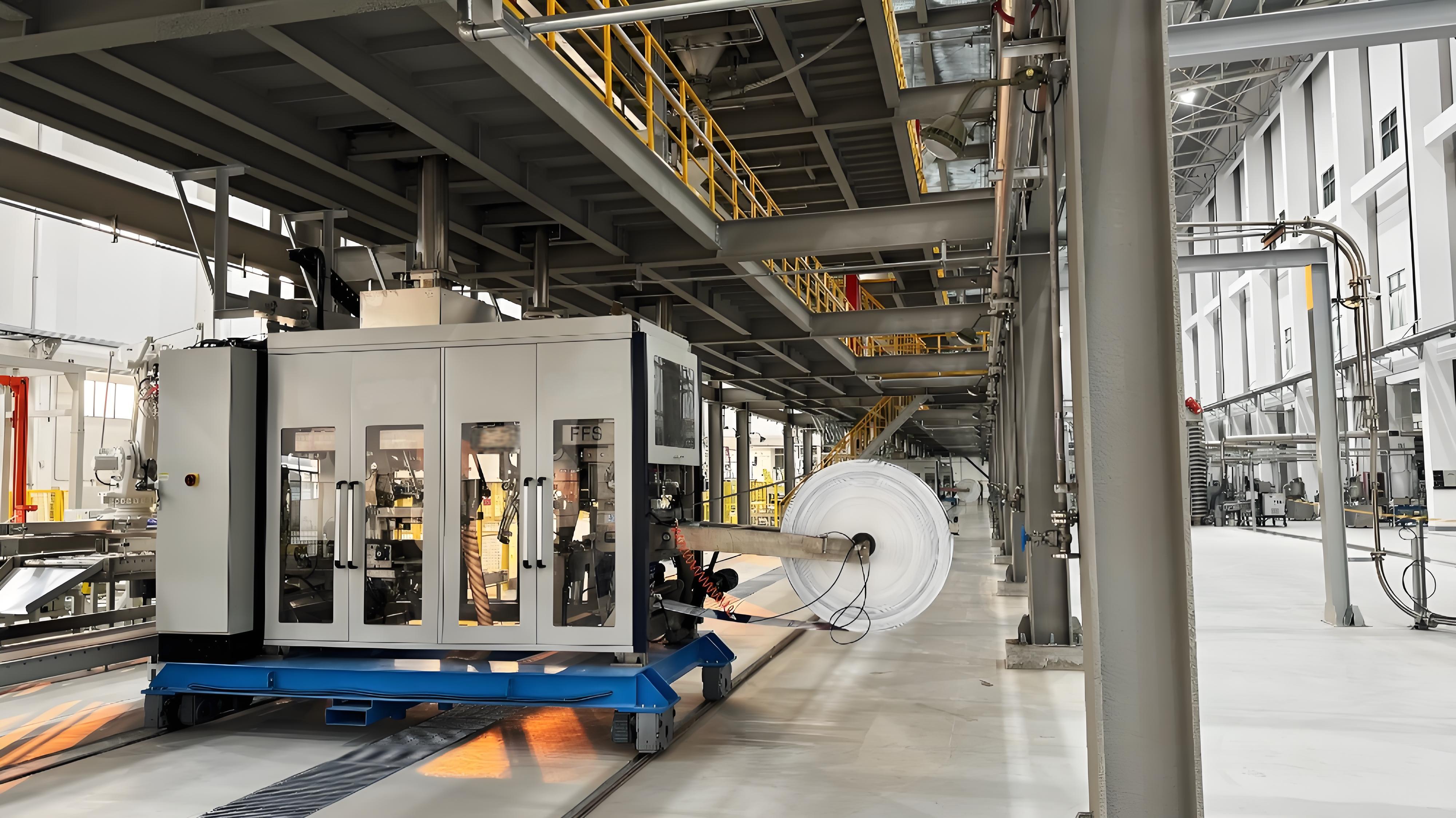
1. Understanding the Two Packaging Approaches
Before diving into the comparison, it’s important to understand how these two packaging methods differ in principle.
Traditional Packaging
Traditional packaging typically relies on pre-made bags or containers, manual or semi-manual filling, and separate sealing operations. It often involves multiple steps, such as:
-
Manually placing bags or cartons
-
Filling products using basic dosing equipment
-
Sealing with standalone heat sealers or taping machines
-
Human inspection and stacking
This approach is still widely used in small-scale operations or in markets with low labor costs, but it becomes less efficient as production volume increases.
FFS Packing Machines
FFS (Form-Fill-Seal) machines automate the entire packaging process. They form bags from roll film, fill them with a precisely measured product, and seal them in one continuous operation. Depending on the design, FFS machines can be vertical (VFFS) or horizontal (HFFS), making them suitable for powders, granules, liquids, and solid products.
Dostar Packing Equipment Co., Ltd. develops both semi-automatic and fully automatic FFS-based packaging production lines, allowing customers to scale automation according to their production needs.
2. Efficiency Comparison
Traditional Packaging Efficiency
Traditional packaging is inherently slower due to its reliance on manual labor and separate machines for different steps. Each stage introduces delays, including:
-
Time spent loading pre-made bags
-
Manual alignment and sealing
-
Product changeovers and setup adjustments
-
Worker fatigue and inconsistent pacing
For low-volume or custom packaging runs, this method may still be acceptable. However, for medium- to high-volume production, it often becomes a bottleneck that limits overall throughput.
FFS Packing Machine Efficiency
FFS machines are designed for continuous, high-speed operation. By integrating bag forming, filling, and sealing into a single workflow, they dramatically reduce cycle times.
Key efficiency advantages of FFS machines include:
-
High packaging speed with stable output
-
Minimal manual intervention
-
Rapid changeover for different bag sizes and product types
-
24/7 operation capability for large-scale production
Dostar’s automated packaging production lines further enhance efficiency by integrating upstream and downstream equipment, such as conveyors, weighers, and palletizers, creating a seamless end-to-end packaging system.
3. Accuracy and Product Consistency
Traditional Packaging Accuracy
Manual or semi-manual packaging is more prone to variation. Common issues include:
-
Inconsistent fill weights or volumes
-
Human errors in sealing or labeling
-
Product spillage and material waste
-
Irregular package appearance
These inconsistencies can lead to customer complaints, regulatory non-compliance, and increased rework costs.
FFS Packing Machine Accuracy
FFS machines rely on precision dosing systems, such as multi-head weighers, auger fillers, or liquid flow meters. These systems ensure that each package contains a highly accurate and consistent product quantity.
Accuracy advantages of FFS machines include:
-
Tight weight and volume tolerances
-
Uniform bag size and seal quality
-
Reduced product giveaway
-
Lower rejection rates in quality inspections
By integrating intelligent control systems and sensors, Dostar’s FFS-based solutions deliver high repeatability and stable performance, making them ideal for industries that demand strict quality standards, such as food, chemicals, pharmaceuticals, and building materials.
4. Cost Comparison: Short-Term vs Long-Term
Traditional Packaging Costs
At first glance, traditional packaging may appear more affordable due to its lower initial investment. Basic filling and sealing equipment is relatively inexpensive, and small teams can handle packaging tasks without advanced automation.
However, over time, hidden costs begin to add up:
-
High labor expenses
-
Increased material waste
-
Lower production capacity
-
Higher defect and rework rates
-
Limited scalability
For growing businesses, these long-term operational costs can outweigh the initial savings.
FFS Packing Machine Costs
FFS machines require a higher upfront investment, particularly for fully automatic packaging production lines. However, they offer substantial long-term cost advantages.
Long-term cost benefits of FFS machines include:
-
Reduced labor requirements
-
Lower packaging material costs (roll film is cheaper than pre-made bags)
-
Higher output per shift
-
Less product giveaway
-
Lower maintenance costs per unit packaged
Dostar Packing Equipment Co., Ltd. helps customers balance short-term budgets and long-term ROI by offering both semi-automatic and fully automatic systems, enabling a gradual and cost-effective transition to automation.
5. Flexibility and Scalability
Traditional Packaging Flexibility
Traditional systems can be flexible for small batch production or frequent product changes, but they struggle to scale efficiently. Increasing output usually requires hiring more workers or adding more standalone machines, which raises complexity and operating costs.
FFS Packing Machine Scalability
FFS machines are highly scalable. Production capacity can be increased by:
-
Upgrading to higher-speed models
-
Adding parallel machines
-
Integrating additional automation modules
With modular design concepts, Dostar’s packaging production lines can grow alongside a business, supporting new product formats, bag types, and higher throughput without a complete system overhaul.
6. Labor Dependence and Workplace Safety
Traditional Packaging Labor Challenges
Manual packaging depends heavily on human labor, which introduces challenges such as:
-
Worker shortages
-
Training costs
-
Fatigue-related errors
-
Occupational health and safety risks
These issues become more severe as labor markets tighten and safety regulations become stricter.
FFS Packing Machine Labor Advantages
FFS machines significantly reduce labor dependence by automating repetitive tasks. Fewer operators are needed, and their roles shift from manual handling to monitoring and quality control.
This leads to:
-
Improved workplace safety
-
More consistent production
-
Lower employee turnover
-
Better utilization of skilled labor
Dostar’s focus on user-friendly control systems and reliable equipment design helps companies modernize their packaging operations while improving overall working conditions.
Conclusion: Which Is the Better Choice?
When comparing FFS packing machines with traditional packaging, the differences in efficiency, accuracy, and long-term cost become clear.
-
Traditional packaging is suitable for small-scale operations, low budgets, and limited production volumes, but it struggles with efficiency, consistency, and scalability.
-
FFS packing machines offer superior speed, precision, material efficiency, and long-term cost savings, making them the preferred solution for medium- to large-scale production.
As a professional provider of automated packaging production lines, Dostar Packing Equipment Co., Ltd. supports businesses at every stage of their automation journey. By delivering both semi-automatic packaging systems and fully automatic packaging solutions, Dostar helps manufacturers improve productivity, reduce operational costs, and build future-ready packaging operations.
For companies aiming to stay competitive in an increasingly automated world, investing in an FFS packing machine is not just a technological upgrade—it is a strategic move toward smarter, more sustainable production.
www.dostar-pack.com
Dostar Packing Equipment (Wuxi) Co., Ltd
