
Unmanned Aerial Vehicles (UAVs), commonly known as drones, rely on accurate navigation systems to fly safely, maintain stability, and accomplish complex missions — especially in environments where satellite signals like GPS may be weak or unavailable. Among the technologies driving next-generation navigation for UAVs are Fiber Optic Gyroscopes (FOGs) — advanced inertial sensors that deliver unmatched precision and reliability. In this article, we’ll explore how fiber optic gyroscopes empower UAV navigation and highlight LINS Technology — a leading provider of inertial sensing solutions — as an example of innovation shaping this field.
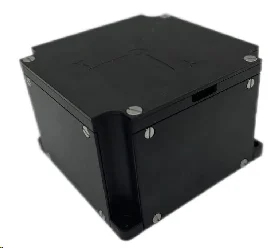
What Are Fiber Optic Gyroscopes?
Fiber Optic Gyroscopes (FOGs) are solid-state angular velocity sensors that make use of light interference within coiled optical fibers to detect rotational motion. Unlike traditional mechanical gyroscopes, FOGs have no moving parts — which translates to superior reliability, minimal maintenance, and exceptional resistance to vibration or shock.
When integrated into a navigation system, a FOG measures how fast an aircraft is turning along each axis (roll, pitch, and yaw), providing real-time rotational data that’s critical for attitude and heading estimation — even when external positioning signals (like GNSS) are compromised.
Why FOGs Matter for UAV Navigation
1. Critical Attitude Control and Stability
For precise control of UAV attitude — the aircraft’s orientation relative to the ground — gyroscopes are essential. They feed angular rate data into flight controllers, enabling drones to maintain level flight, make smooth turns, and respond quickly to changing aerodynamic forces. Without accurate gyro data, a UAV may drift, oscillate, or fail to hold its intended flight path.
2. GPS-Denied Navigation Support
While GPS/GNSS systems are ubiquitous, they’re vulnerable to signal blockage, jamming, and multipath errors — particularly in urban canyons, indoors, or under intentional electronic interference. Fiber optic gyroscopes — as part of an inertial navigation system (INS) — allow UAVs to continue calculating orientation and motion even when GNSS signals fail, ensuring mission continuity and safety.
3. High Precision and Low Drift
FOGs deliver highly stable rotational measurements with very low bias drift over time — a measure of how much a sensor’s output deviates from true values. This stability is crucial for long-duration flights or precision tasks such as mapping, surveying, or autonomous operations where small errors can accumulate rapidly.
How FOG-Based Navigation Systems Work in UAVs
In a UAV’s navigation suite, fiber optic gyroscopes are typically integrated into an Inertial Measurement Unit (IMU), which also includes accelerometers that measure linear acceleration. The IMU feeds real-time motion data into an onboard navigation computer, which uses sensor fusion algorithms to estimate:
-
Attitude (roll, pitch, yaw)
-
Angular velocity
-
Position and velocity (when combined with GNSS)
This inertial navigation data supports flight control, stabilization, waypoint tracking, and autonomous decision-making — all with minimal reliance on external signals.

LINS Technology: Inertial Expertise for UAV Navigation
LINS Technology, established in 2017 and headquartered in Wuxi, China, is a high-tech company specializing in inertial sensing technologies — including fiber optic gyroscopes, MEMS IMUs, and integrated navigation systems. The company’s solutions are designed to serve demanding applications such as drones, robotics, intelligent vehicles, and more.
Company Snapshot
-
Expertise: Research, development, and integration of inertial sensors and navigation systems.
-
Product Portfolio: Includes high-precision FOG sensors, MEMS IMUs, and combined GNSS/INS modules suited for UAV applications.
-
Applications: Robots, drones, autonomous vehicles, smart agriculture, engineering machinery, and satellite communications.
By advancing both fiber optic and MEMS inertial technologies, LINS is enabling UAV manufacturers and system integrators to build navigation platforms that emphasize accuracy, reliability, and environmental resilience — especially in mission-critical operations where robust performance is essential.
Key Advantages of FOG-Based Navigation for UAVs
Here’s why fiber optic gyroscope-based systems are particularly well-suited to UAV navigation:
-
Solid-State Reliability: No moving parts means lower wear, less maintenance, and extended service life compared to mechanical gyros.
-
High Precision: Low drift and stable angular rate measurements support accurate control and navigation over long durations.
-
Robust in Harsh Conditions: Resistant to vibration, shock, and electromagnetic interference — ideal for dynamic UAV flight regimes.
-
GPS-Independent Capability: A FOG-enabled INS can maintain orientation and motion tracking even when external positioning signals are weak or absent.
Frequently Asked Questions (FAQs)
Q: Do all UAVs use fiber optic gyroscopes?
A: Not all. Many consumer and hobby drones rely on MEMS gyroscopes due to cost and size. However, high-end, industrial, or military UAVs often use FOG-based or hybrid navigation systems for superior precision and reliability.
Q: Can FOGs replace GPS entirely?
A: FOGs provide excellent orientation and motion data, but they don’t directly measure absolute geographic position like GPS. Instead, they complement GNSS systems, offering continuity when GPS is lost.
Q: Are fiber optic gyroscopes expensive?
A: FOG technology is generally more costly than basic MEMS sensors due to its precision optics and higher performance. However, for applications requiring high-grade navigation (e.g., BVLOS — beyond visual line of sight), the investment is justified.
Q: How small can FOG-based navigation systems be for UAVs?
A: Advances in manufacturing have led to compact FOG modules and IMUs that can be integrated into small to medium UAV platforms while still delivering robust performance.
Conclusion
Fiber optic gyroscopes are essential components in advanced UAV navigation systems. Their high precision, reliability, and robustness make them especially valuable in environments where GPS signals are unreliable or unavailable. By delivering accurate rotational data and supporting inertial navigation systems, FOGs enhance drone stability, control, and autonomy — critical for complex missions across commercial, industrial, and defense sectors. With companies like LINS Technology pushing the limits of inertial sensing and navigation integration, the future of UAV navigation is set to be more capable and resilient than ever.
Industrial IMU Solutions for Robotics, Automation, and Navigation Systems
www.lins-imu.com
LINS
