
In today’s automotive industry, suspension performance is no longer judged by comfort alone. Modern vehicles must deliver a balance of ride stability, handling precision, safety, and long-term durability under increasingly demanding road conditions. Whether for passenger cars, logistics trucks, or heavy-duty commercial fleets, the suspension system plays a decisive role in overall driving performance.
Among all suspension components, the automotive shock absorber remains one of the most critical yet often overlooked technologies. Although it works quietly in the background, every acceleration, brake, corner, and road impact depends on effective damping control.
Understanding the Real Function of Shock Absorbers
Many people assume shock absorbers simply “reduce bumps,” but their role is far more important. In reality, shock absorbers are responsible for controlling suspension movement and maintaining tire stability on the road surface.
Without proper damping control, a vehicle would continue bouncing after every road impact, leading to:
-
Reduced steering accuracy
-
Longer braking distance
-
Tire instability
-
Increased chassis vibration
-
Faster suspension wear
The suspension spring absorbs road impact energy, while the shock absorber controls how that energy is released. Together, they create a stable and predictable driving experience.
How Automotive Shock Absorbers Work
Modern shock absorbers operate using hydraulic or gas-pressure damping principles. Their job is to convert suspension movement into heat energy, which is safely dissipated through hydraulic fluid flow.
Compression Stage
When the wheel hits a pothole or uneven surface, the suspension compresses upward. Inside the shock absorber, hydraulic fluid is forced through precision valves that create resistance and slow the movement.
This helps prevent sudden vertical motion from transferring directly into the vehicle cabin.
Rebound Stage
After compression, the suspension spring naturally rebounds. Without damping control, the vehicle would continue oscillating uncontrollably.
The shock absorber regulates rebound speed by controlling reverse fluid flow, ensuring the wheel returns smoothly to its normal position.
Energy Dissipation
As hydraulic fluid moves through internal valve channels, kinetic energy is transformed into thermal energy. This controlled energy conversion stabilizes the vehicle after impact and minimizes excessive body movement.
Why Modern Vehicles Depend on Advanced Damping Systems
Today’s vehicles operate under much harsher conditions than before. Manufacturers must design suspension systems capable of handling:
-
Higher driving speeds
-
Heavier cargo loads
-
Long-distance transportation
-
Poor road conditions
-
Continuous operation cycles
-
Stricter safety standards
Under these conditions, ineffective suspension control can lead to severe operational issues.
Modern shock absorbers help improve:
-
Tire-road contact stability
-
Steering response precision
-
Braking consistency
-
Vehicle cornering control
-
Driver comfort during long journeys
For commercial fleets, these improvements directly affect operating efficiency and maintenance costs.
The Growing Importance of Air Suspension Integration
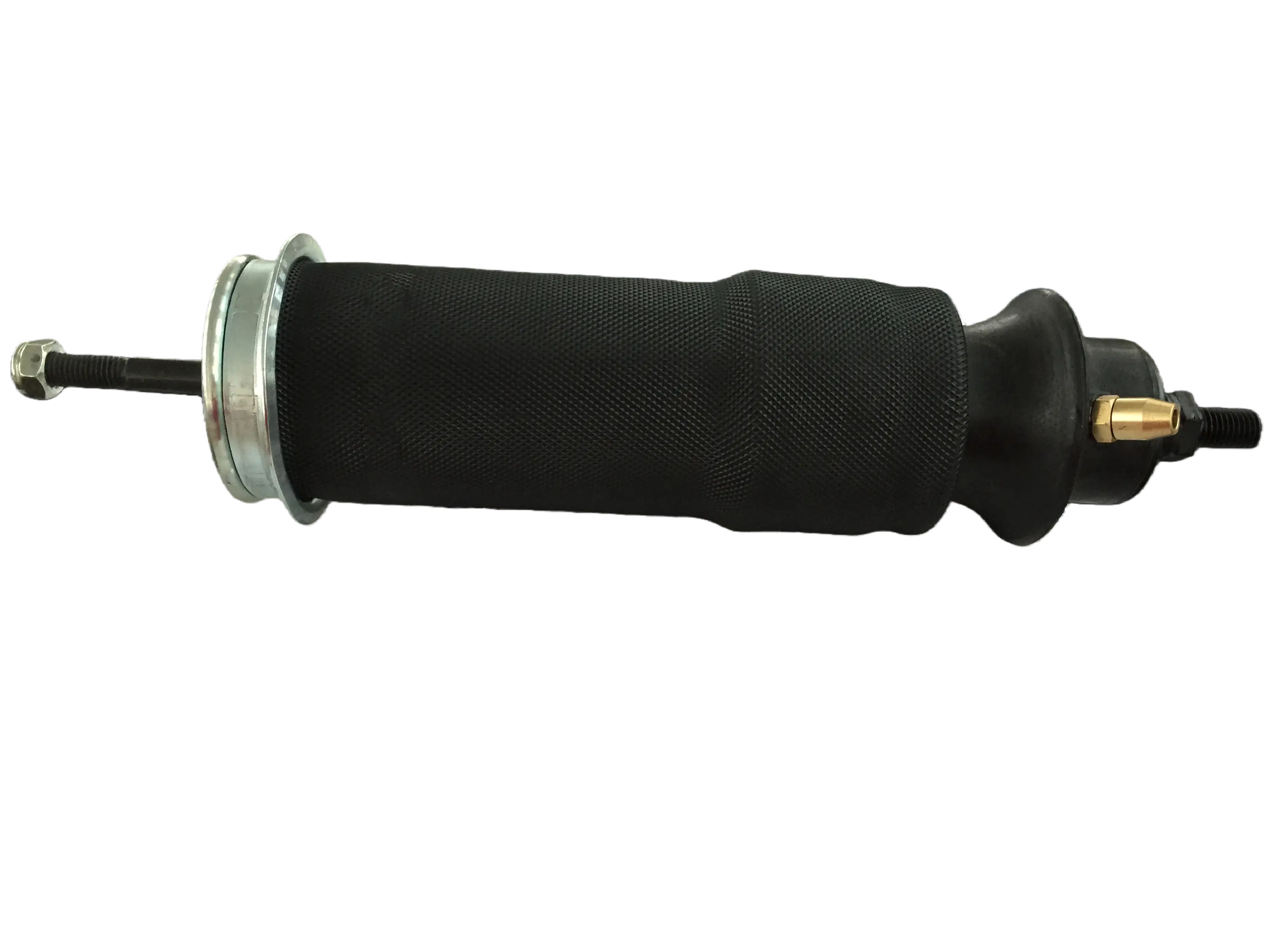
In heavy-duty truck systems, shock absorbers are increasingly combined with air spring suspension systems.
Air springs provide load balancing and adjustable ride height, while shock absorbers control vibration and oscillation. This combination creates a more adaptive and stable suspension structure.
The benefits include:
-
Improved ride comfort under varying payloads
-
Reduced cargo vibration damage
-
Better road shock absorption
-
Lower driver fatigue
-
Enhanced vehicle stability during long-haul transportation
For logistics and freight operations, this integrated system significantly improves both transportation reliability and equipment lifespan.
Shock Absorbers in Heavy-Duty Truck Applications
Commercial trucks face continuous stress from:
-
Uneven road surfaces
-
Heavy static loads
-
Repeated acceleration and braking cycles
-
Long-distance operating hours
Under these conditions, suspension performance directly impacts vehicle durability and operational safety.
Manufacturers such as Henan Jingzheng Shock Absorbing Technology Co., Ltd. specialize in developing shock absorbers, air springs, and rubber suspension components for commercial vehicle systems.
With large-scale manufacturing capacity and dedicated R&D capabilities, the company supports suspension solutions for:
-
Heavy-duty trucks
-
Logistics transport fleets
-
Trailer systems
-
Specialized industrial vehicles
These systems are engineered to maintain damping consistency even under continuous high-load operation.
Key Advantages of Modern Shock Absorber Technology
Improved Driving Comfort
By minimizing vibration transfer into the cabin, shock absorbers significantly improve ride quality for drivers and passengers.
This is especially important for long-haul commercial transportation where operator fatigue can affect safety and efficiency.
Enhanced Safety Performance
Stable tire contact improves:
-
Emergency braking capability
-
Steering precision
-
High-speed stability
-
Cornering control
This helps reduce accident risks during sudden maneuvers or difficult road conditions.
Reduced Mechanical Wear
Proper damping reduces stress on:
-
Suspension arms
-
Tires
-
Chassis components
-
Steering systems
As a result, overall vehicle service life is extended.
Better Cargo Protection
In commercial transport, vibration control helps protect sensitive cargo from excessive movement and impact damage.
Engineering Advances in Modern Shock Absorber Design
Today’s shock absorbers are highly engineered systems rather than simple hydraulic cylinders.
Modern designs incorporate:
-
Precision-tuned hydraulic valve systems
-
High-strength cylinder materials
-
Advanced sealing technology
-
Temperature-resistant fluid systems
-
Optimized damping curves for varying loads
These innovations ensure stable performance across different environmental and operational conditions.
Application Example: Suspension Systems for Scania Truck Series
Heavy-duty trucks such as Scania transport vehicles require suspension systems capable of handling continuous dynamic loads while maintaining ride stability.
Shock absorber and air spring assemblies designed for these truck platforms help:
-
Reduce road-induced vibration
-
Improve handling stability
-
Maintain ride height consistency
-
Protect transported cargo
-
Enhance long-distance driving comfort
These systems are widely used in freight logistics, industrial transportation, and commercial fleet operations worldwide.
Manufacturing Precision and Quality Control
Reliable shock absorber performance depends heavily on manufacturing accuracy and process consistency.
Key quality control factors include:
-
Hydraulic sealing precision
-
Material durability testing
-
Fatigue resistance validation
-
Load-cycle endurance testing
-
Temperature stability verification
Strict manufacturing standards ensure that each unit can maintain stable damping performance throughout extended service life.
Conclusion
Automotive shock absorbers are far more than comfort components. They are essential engineering systems that directly influence vehicle stability, handling safety, operational reliability, and long-term durability.
As transportation systems continue evolving toward heavier loads, higher speeds, and longer operating cycles, advanced suspension technologies combining shock absorbers and air springs are becoming increasingly important.
For modern commercial vehicles and industrial transportation systems, investing in high-quality suspension solutions is no longer optional—it is a fundamental requirement for safety, efficiency, and long-term performance.
Shock absorbers are therefore essential for controlling kinetic energy and stabilizing vehicle movement.
www.cnjzworld.com
jingzheng
