Achieving precision in modern industrial manufacturing is no longer an option but a requirement for maintaining competitiveness, sustainability, and operational efficiency. Among the equipment that quietly but fundamentally improves production quality, loss-in-weight (LIW) feeders play an especially important role. These systems enable highly accurate, continuous, and repeatable metering of powders, granules, and liquids—materials that often determine the performance and reliability of the final product.
As industries shift toward digitalization, automation, and low-carbon production, demand for precision dosing technology continues to increase. Companies such as Being (Shanghai) Intelligent Technology Co., Ltd. are helping customers integrate LIW feeder systems into complex production environments. By combining equipment expertise with engineering consulting, system design, and project management, the company provides tailored solutions for new materials, new energy, electronics, and environmental protection sectors. These industries, more than ever, require stable, efficient, and sustainable material handling strategies.
This article explores how loss-in-weight feeders work, why they improve process accuracy, and how integrated engineering partners can help manufacturers build smarter, greener production lines.
What Is a Loss-in-Weight Feeder?
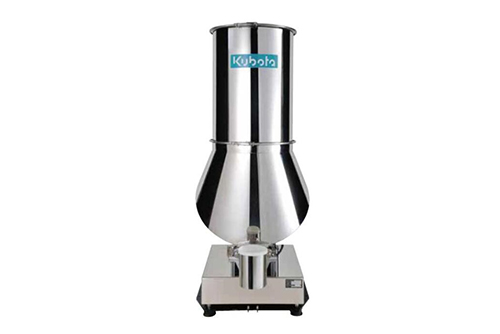
A loss-in-weight feeder is a gravimetric dosing device that measures and controls the mass flow rate of a material as it is discharged. It consists of:
-
A hopper mounted on load cells
-
A feeding mechanism such as a screw, belt, or vibrating tray
-
A control system that continuously monitors weight changes
As material exits the hopper, the system detects the reduction in mass over time. This “loss in weight” is recorded and converted into a mass flow rate. The feeder automatically adjusts its output to maintain the target feed rate, ensuring consistent and accurate dosing.
A reference link for further information is available here:Loss-in-Weight Feeder.
This type of feeder is widely used in chemical production, plastics processing, lithium battery materials, pharmaceuticals, food processing, and any scenario where dosing accuracy directly affects product performance.
Why Accuracy Matters in Industrial Material Feeding
Accurate dosing is essential for several reasons:
1. Product Quality and Consistency
Many industrial formulations rely on precise ratios. Whether compounding polymers, mixing lithium battery cathode materials, or preparing high-purity chemical additives, even slight deviations in formulation can lead to defects, inefficiencies, or product failures.
2. Reduced Waste and Lower Operating Costs
Overfeeding wastes raw materials. Underfeeding compromises product quality. A loss-in-weight feeder minimizes both, ensuring materials are used efficiently.
3. Improved Process Stability
Stable material flow minimizes fluctuations in downstream processes such as extrusion, reaction, coating, or compressing. With tighter control, manufacturers can reduce process interruptions and improve throughput.
4. Support for Sustainable and Low-Carbon Manufacturing
Accurate dosing is an enabler for optimized resource consumption. Reducing material waste and energy loss aligns perfectly with the goal of achieving carbon-neutral and zero-carbon production.
How Loss-in-Weight Feeders Improve Accuracy
Loss-in-weight feeders deliver high precision through a combination of mechanical stability, continuous measurement, and intelligent control algorithms. Below are the key mechanisms that drive their improved performance.
1. Gravimetric Measurement Overcomes Density Variations
Volumetric feeders depend on volume, which fluctuates with material density, humidity, particle size, and flow characteristics. In contrast, LIW feeders measure mass directly. This eliminates density-related errors and ensures consistent output even when materials vary batch to batch.
2. Closed-Loop Control System
Loss-in-weight feeders operate in real time. The load cells continuously send feedback to the controller, which adjusts the screw or belt speed to maintain the target flow. The system compensates for disturbances such as:
-
Hopper refilling cycles
-
Material consolidation or aeration
-
Mechanical wear
This closed-loop control significantly improves long-term stability.
3. High-Resolution Load Cells
Modern LIW feeders use precision load cells capable of detecting extremely small mass changes. This level of sensitivity is critical for fine powders or micro-ingredient dosing commonly found in electronics, chemical additives, and new-material production.
4. Intelligent Calibration and Drift Correction
Advanced systems integrate automatic calibration routines, drift compensation, and predictive algorithms that enhance repeatability. Some feeders support real-time diagnostics and self-correction features for improved reliability.
5. Compatibility With Complex Materials
Industries like lithium battery manufacturing often work with sticky powders, abrasive granules, or materials sensitive to moisture. LIW feeders can be configured with:
-
Hygienic or sealed designs
-
Abrasion-resistant components
-
Specialized feeding mechanisms
These customizations ensure accuracy even in challenging environments.
Applications Across High-Growth Industries
Being (Shanghai) Intelligent Technology Co., Ltd. has extensive experience supporting multiple sectors with integrated LIW feeder solutions. The following applications illustrate how these feeders provide value in real-world scenarios.
1. New Materials
Advanced composites, conductive materials, and specialty polymers require strict formulation controls. LIW feeders allow for precise dosing of additives, fillers, and modifiers, ensuring consistent material properties.
2. New Energy and Lithium Battery Manufacturing
In cathode and anode material preparation, dosing uniformity directly affects cell performance. LIW feeders help control binder content, conductive agents, and active materials with tight tolerances.
3. Electronics and Semiconductor Materials
Electronic chemicals and high-purity powders require contamination-free and highly accurate feeding. Customized LIW systems can be engineered with sealed structures and automated cleaning features.
4. Environmental Protection and Chemical Treatment
Dosing chemicals for water treatment or emission control requires stable metering to ensure regulatory compliance and process efficiency. LIW feeders excel where continuous accuracy is critical.
5. Plastics and Polymer Extrusion
In extrusion processes, LIW feeders stabilize melt quality by maintaining consistent additive and resin ratios. This reduces off-spec production and enhances product consistency.
Integrated Solutions: The Role of Engineering and System Integration
A feeder alone does not guarantee accuracy. System design, installation, and integration into digital manufacturing workflows are equally important.
Being (Shanghai) Intelligent Technology Co., Ltd. provides complete lifecycle support that includes:
Engineering Consulting and System Design
Engineers evaluate application requirements, material properties, process flow, and production constraints before selecting or customizing an LIW feeder system.
Technical R&D and Equipment Integration
The company integrates feeders with conveying systems, mixers, reactors, and PLC/DCS automation platforms. This improves synchronization and provides unified process control.
On-Site Construction and Commissioning
Correct installation is critical to stability. Professional teams handle mechanical setup, calibration, vibration isolation, and testing to ensure accuracy from day one.
Digitalization and Intelligent Manufacturing
Integrated digital solutions allow manufacturers to monitor feeder performance, trace material usage, and optimize energy consumption—key elements for achieving carbon-neutral operations.
Long-Term Maintenance and Optimization
With ongoing support, customers can adjust their feeding systems as material characteristics or process requirements evolve.
Building Toward a Zero-Carbon Future
Precision feeding contributes to industrial sustainability by minimizing waste, improving energy efficiency, and supporting data-driven production. As industries move toward carbon neutrality, equipment like loss-in-weight feeders will play an increasingly strategic role.
Through custom engineering solutions, digital integration, and continuous innovation, Being (Shanghai) Intelligent Technology Co., Ltd. aims to help customers build greener, more efficient production lines across emerging and high-value manufacturing sectors.
www.beyitech.com
Being (Shanghai) Intelligent Technology Co., Ltd.
