
In healthcare environments, hygiene is not an abstract concept—it is a daily operational requirement that directly affects patient safety, staff efficiency, and institutional reputation. While much attention is given to hand hygiene, air filtration, and surface disinfection, one often underestimated contamination source is footwear. Shoes carry dust, bacteria, and microorganisms from outdoor and semi-clean areas into sensitive medical spaces. Medical shoe cover dispensers have emerged as a practical and increasingly essential solution to address this challenge.
This article explores how medical shoe cover dispensers improve hygiene control in healthcare facilities, focusing on real-world use scenarios and technological innovation, with insights from Zhejiang Quen Technology Co., Ltd., a long-established manufacturer in this field.
Footwear as a Hidden Vector of Contamination
Hospitals and clinics manage complex traffic flows. Patients, visitors, doctors, nurses, logistics staff, and service providers move between public areas, wards, operating rooms, laboratories, and clean zones throughout the day. Even with regular floor cleaning, footwear can introduce contaminants faster than cleaning teams can remove them.
Studies and on-site observations in hospitals show that soles can carry pathogens, fine dust, chemical residues, and moisture. In high-risk areas such as operating theaters, ICUs, sterile labs, and dental clinics, these contaminants can compromise infection control protocols. Traditional disposable shoe covers help, but manual wearing introduces new problems: inconsistent use, cross-contamination by hand contact, waste accumulation, and user resistance.
The Role of Medical Shoe Cover Dispensers
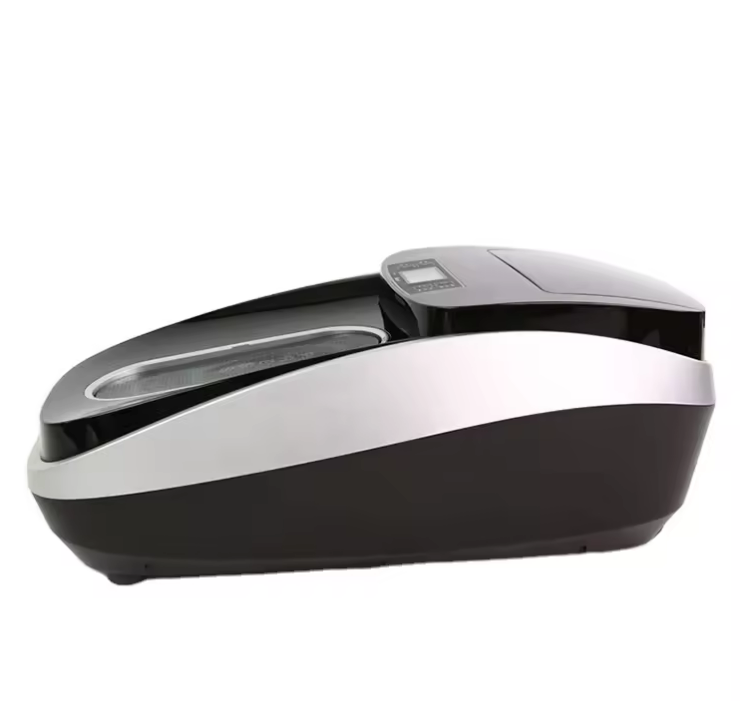
Medical shoe cover dispensers automate the process of applying protective covers to footwear. Instead of bending down or touching covers with hands, users simply step into the device, and the shoe cover is applied automatically. This simple change in process delivers several hygiene advantages:
-
Reduced Hand Contact
Automation eliminates the need to touch shoe covers, reducing cross-contamination between hands, shoes, and surrounding surfaces. -
Higher Compliance Rates
When the process is fast and effortless, staff and visitors are more likely to follow hygiene rules consistently, even during peak hours. -
Standardized Protection
Each user receives a properly fitted cover, reducing the risk of slipping, tearing, or partial coverage. -
Cleaner Indoor Floors
By blocking contaminants at entry points, dispensers reduce dirt accumulation and microbial load on floors, especially in controlled zones.
Heat-Shrink Technology: A Practical Upgrade
Among different shoe cover dispenser technologies, heat-shrink systems represent a notable advancement. Zhejiang Quen Technology Co., Ltd. developed its XT46 series heat-shrink shoe cover machines based on a simple but effective principle: a thin film is automatically wrapped around the shoe sole and gently heat-shrunk to fit securely.
This approach offers several practical benefits for healthcare facilities:
-
No Elastic Bands or Loose Covers
Traditional covers can loosen during walking. Heat-shrink film adheres closely to the sole, improving stability and reducing fall risk. -
Durable Coverage
The film resists tearing, making it suitable for longer walking distances within large hospitals. -
Fast Application
The process takes only seconds, minimizing bottlenecks at entrances to restricted areas.
Since its market introduction in 2006, the XT46 series has been adopted in many countries and regions, demonstrating long-term reliability in real-world environments.
Applications Across Healthcare Settings
Medical shoe cover dispensers are not limited to operating rooms. Their value extends across multiple healthcare scenarios:
Hospitals and Surgical Centers
At entrances to operating theaters, ICUs, and sterile corridors, dispensers act as a first-line barrier against contamination. They support existing infection control systems rather than replacing them.
Laboratories and Diagnostic Centers
Clinical labs often deal with biological samples and chemical reagents. Keeping floors clean reduces secondary contamination risks and simplifies compliance with cleanliness standards.
Dental Clinics
Dental practices may be smaller than hospitals, but they face similar hygiene challenges. Shoe cover dispensers help maintain a clean environment without slowing patient flow.
Cleanrooms and Special Units
In pharmaceutical compounding rooms or medical device production areas within hospitals, floor cleanliness is closely monitored. Automated shoe covering supports strict environmental control.
For a closer look at hospital-specific solutions, this detailed product page on a medical shoe cover dispenser for hospital use explains how such systems are designed for healthcare environments:<a href="https://www.quenshoecovers.com/medical-shoe-cover-dispenser-machine-for-hospital.html">medical shoe cover dispenser for hospital</a>
Operational Benefits Beyond Hygiene
Improved hygiene is the primary goal, but facilities often notice additional operational advantages after installing shoe cover dispensers:
-
Lower Cleaning Workload
Cleaner floors mean less frequent deep cleaning, allowing housekeeping teams to focus on critical areas. -
Clear Visual Hygiene Protocols
A dispenser at an entrance sends a strong signal that hygiene matters, reinforcing institutional standards for staff and visitors. -
Improved Patient Perception
Patients and families associate visible hygiene measures with professionalism and safety, which can positively influence trust. -
Adaptability to Non-Medical Zones
Many hospitals use the same equipment in data centers, archives, and equipment rooms where dust control is important.
Zhejiang Quen Technology Co., Ltd.: Experience Matters
Zhejiang Quen Technology Co., Ltd. is an intelligent appliance technology enterprise integrating research and development, manufacturing, and sales. Its long-term focus on automated shoe cover solutions has resulted in products that are practical rather than experimental.
The XT46 series heat-shrink shoe cover machine reflects this experience. Instead of overcomplicating the design, it focuses on stability, ease of use, and durability—qualities that matter in hospitals operating around the clock. Over the years, the equipment has been used not only in healthcare facilities but also in laboratories, factories, data centers, museums, real estate showrooms, clean workshops, and residential environments where floor cleanliness is critical.
This cross-industry adoption highlights a key point: effective hygiene tools are often those that integrate smoothly into daily routines without adding operational burden.
Implementation Considerations for Healthcare Facilities
When healthcare administrators evaluate shoe cover dispensers, several practical factors should be considered:
-
Placement Strategy
Install dispensers at logical transition points between public and controlled areas to maximize effectiveness. -
User Flow Analysis
Devices should accommodate peak traffic without causing congestion. -
Maintenance Simplicity
Easy film replacement and straightforward cleaning support long-term use. -
Safety and Stability
Non-slip performance and consistent coverage are essential in clinical environments.
Facilities that align these factors with proven equipment tend to see better results than those adopting solutions purely for compliance.
A Small Step with a Measurable Impact
Medical shoe cover dispensers may seem like a minor addition compared to advanced medical equipment, but their impact on hygiene control is tangible. By addressing footwear contamination at the source, healthcare facilities strengthen their overall infection prevention strategy.
Automated systems such as heat-shrink shoe cover dispensers demonstrate how thoughtful engineering can solve everyday problems in healthcare operations. When integrated correctly, they support cleaner environments, safer workflows, and greater confidence among patients and staff alike.
www.quenshoecovers.com
Zhejiang Quen Technology Co., Ltd.
