
Conveyor Belt Mistracking in Crushing Plants: Causes, Checks and Prevention
In an aggregate crushing plant, the belt conveyor may look simple, but once the conveyor belt starts drifting to one side, the whole production line can be affected.
A misaligned conveyor belt can cause material spillage, belt edge damage, abnormal roller wear, higher maintenance costs and even unplanned shutdowns. For quarry operators and aggregate producers, belt mistracking is not just a maintenance issue. It directly affects production stability.
The good news is that many conveyor belt tracking problems can be diagnosed with a simple field logic: look at where the belt starts to drift, then check whether it happens under no-load or loaded conditions.
Based on Leimeng Group’s experience in crushing and screening plant design, conveyor belt mistracking is often not caused by the belt alone. It is usually connected with feeding direction, chute design, frame alignment, pulley condition, belt tension and maintenance habits.
This article explains the common causes of conveyor belt mistracking in crushing plants and shares a practical field troubleshooting framework for checking pulleys, tension, return idlers and loading points.
What Is Conveyor Belt Mistracking?
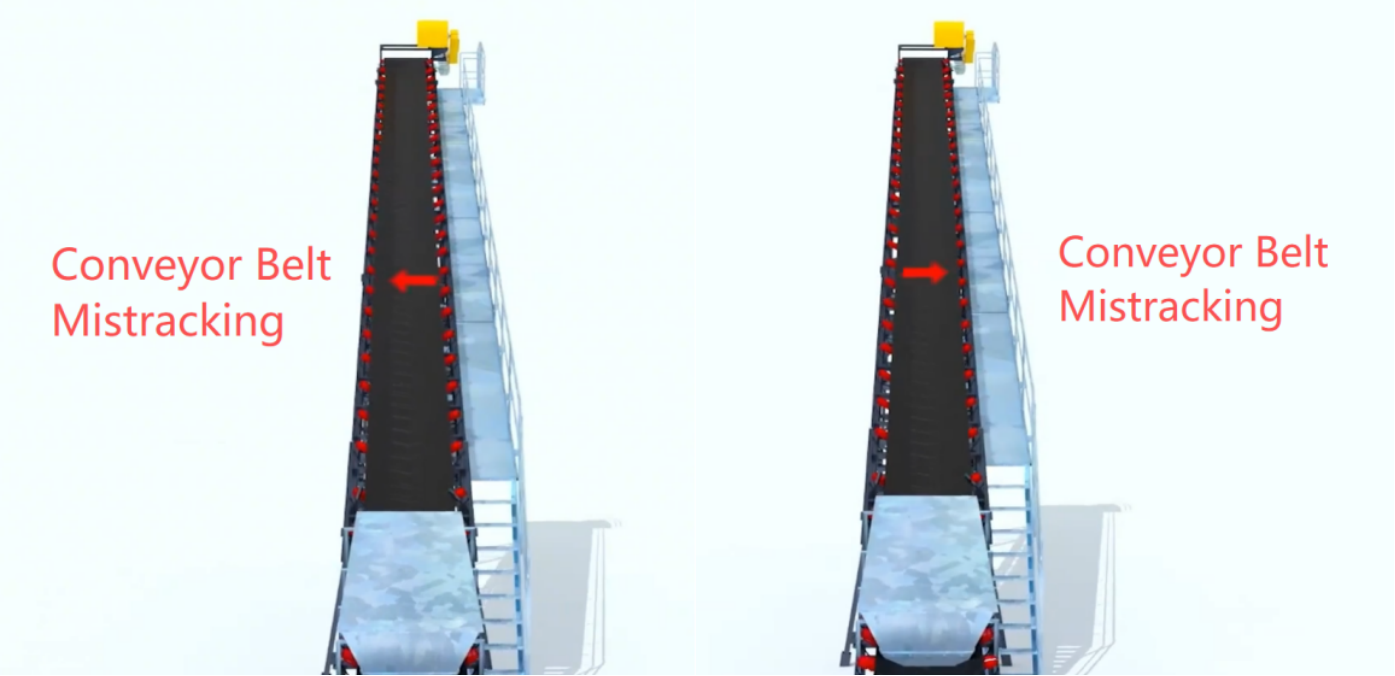
Conveyor belt mistracking means the belt does not run along the centerline of the conveyor frame. Instead, it gradually moves toward the left or right side during operation.
In aggregate crushing plants, this problem often appears after long hours of handling heavy, sharp and dusty materials. Granite, basalt, limestone, river stone and recycled aggregate can all create carryback, impact load and uneven material flow, which makes regular conveyor inspection especially important.
Common signs of conveyor belt mistracking include:
· The belt edge rubs against the conveyor frame.
· Material spills from one side of the belt.
· Rollers wear unevenly.
· The belt runs normally without material but shifts after feeding.
· The belt returns to the same side even after repeated adjustment.
For stone crushing and screening plants, belt conveyors usually work with jaw crushers, cone crushers, impact crushers, vibrating screens and stockpile systems. Since the conveyed material is heavy and abrasive, even a small alignment issue may become worse over time if it is not corrected properly.
Why Conveyor Belt Tracking Matters in Crushing Plants
A belt conveyor is not only used for material transfer. It connects different crushing and screening stages and directly affects material flow across the whole production line.
For example, in a complete aggregate production line, belt conveyors may be used for:
· Feeding material from the jaw crusher to the secondary crusher.
· Transferring crushed stone to vibrating screens.
· Returning oversize material for re-crushing.
· Stockpiling finished aggregates.
· Feeding sand-making or washing equipment.
When the belt runs off track, material flow becomes unstable. This may reduce crushing efficiency, increase cleanup work and damage conveyor components.
In some cases, the problem is not caused by the belt itself. It may come from the chute, pulley, take-up device, idler frame, installation accuracy or uneven material loading.
That is why random adjustment is not recommended. A better method is to identify the position and operating condition first.
Quick Diagnosis: Where Does the Belt Start to Drift?
Before adjusting the conveyor, observe the belt carefully. The location and operating condition usually point to the first area that should be checked.
|
Belt Mistracking Condition |
First Area to Check |
Possible Cause |
|
Belt drifts at the head section |
Head pulley |
Pulley misalignment, material buildup, damaged belt edge or unstable bearing seat |
|
Belt drifts at the tail section |
Tail pulley and take-up system |
Uneven belt tension, tail pulley misalignment or material buildup |
|
Belt drifts without load |
Return side and conveyor frame |
Misaligned idlers, poor belt splice, frame distortion or worn rollers |
|
Belt drifts only under load |
Loading point and chute |
Off-center feeding, uneven material flow, side impact or poor chute angle |
|
Belt keeps drifting after adjustment |
Full conveyor system |
Poor splice, pulley wear, roller seizure, frame deformation or repeated material impact |
Five Practical Rules for Conveyor Belt Mistracking
If the Belt Drifts at the Head, Check the Head Pulley
When the belt starts drifting near the discharge end, the first thing to check is the head pulley.
The head pulley controls the belt direction at the discharge point. If the pulley is not square to the conveyor centerline, the belt may be pulled to one side.
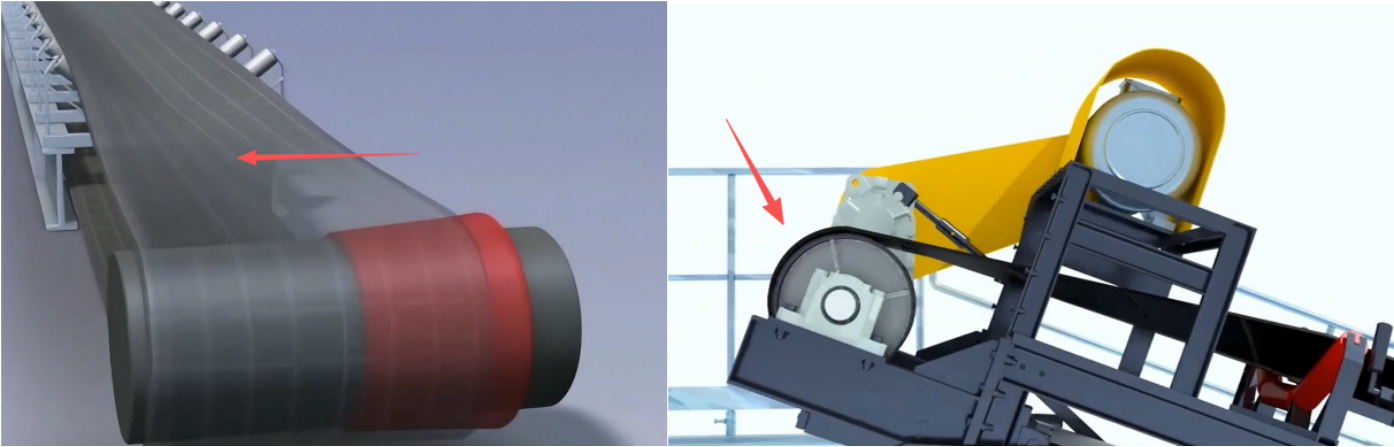
Check the following points:
· Is the head pulley level?
· Is the pulley axis perpendicular to the belt centerline?
· Is there material buildup on the pulley surface?
· Are the bearings and mounting seats stable?
· Is the belt edge already damaged?
Do not make a large adjustment at once. Move slightly, run the belt, observe the result, then continue. Over-adjustment may move the belt problem from one position to another.
If the Belt Drifts at the Tail, Check the Take-Up and Tail Pulley
If the belt runs off track near the tail section, the issue is often related to the tail pulley or tensioning system.
The tail pulley and take-up device help control belt tension. If the tension on both sides is not balanced, the belt may not stay centered.
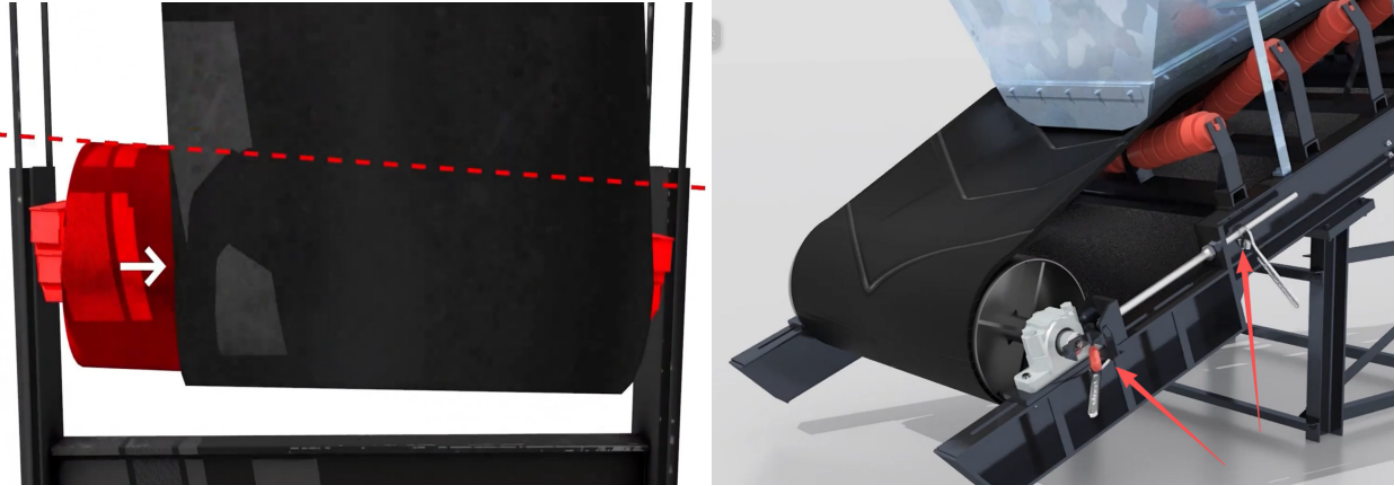
Common problems include:
· Uneven belt tension
· Tail pulley not aligned
· Take-up screw adjusted differently on both sides
· Material stuck around the tail pulley
· Loose or damaged bearing seat
For a crushing plant with heavy-duty material flow, the tail section is often exposed to dust, stone chips and carryback material. Regular cleaning is important because buildup can change the pulley surface and cause the belt to drift.
If the Belt Drifts Without Load, Check the Return Side
If the conveyor belt drifts when running empty, the problem is usually not caused by material loading.
In this case, the return side should be checked carefully.
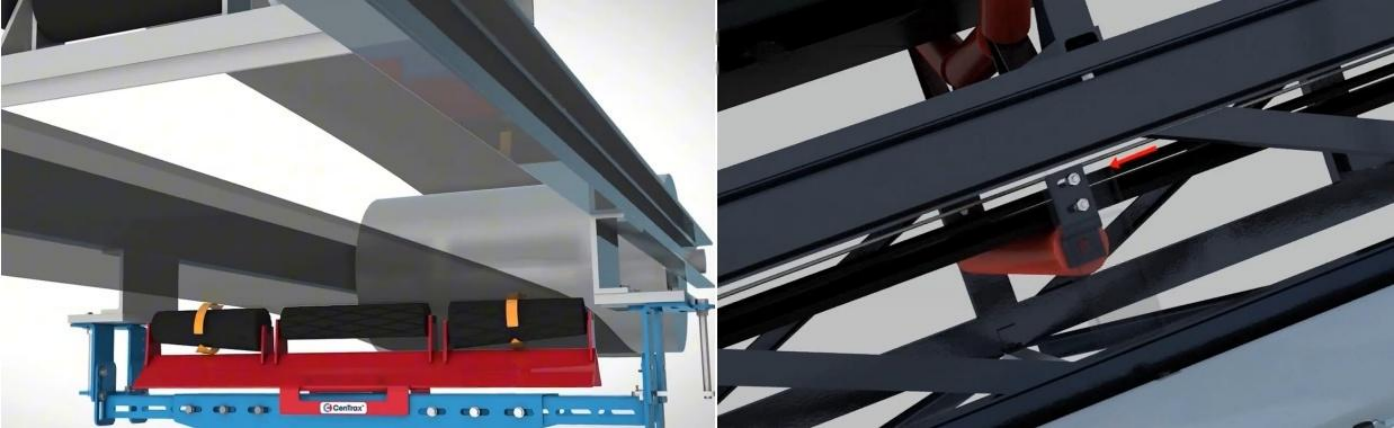
Focus on:
· Return idlers
· Lower belt path
· Roller angle
· Conveyor frame straightness
· Belt splice condition
· Belt tension balance
A belt that runs off track under no-load conditions may have installation or alignment problems. The belt may also be affected by a poor splice, frame distortion or worn idlers. For long belt conveyors, small errors can accumulate over distance, so the conveyor frame must be straight, level and correctly aligned during installation.
If the Belt Drifts Only Under Load, Check the Loading Point
If the belt runs normally when empty but shifts after material feeding, the problem is usually caused by off-center loading.
In aggregate plants, this is very common around transfer points. When crushed stone falls onto one side of the belt, the belt receives uneven pressure. Over time, the belt may move away from the centerline.
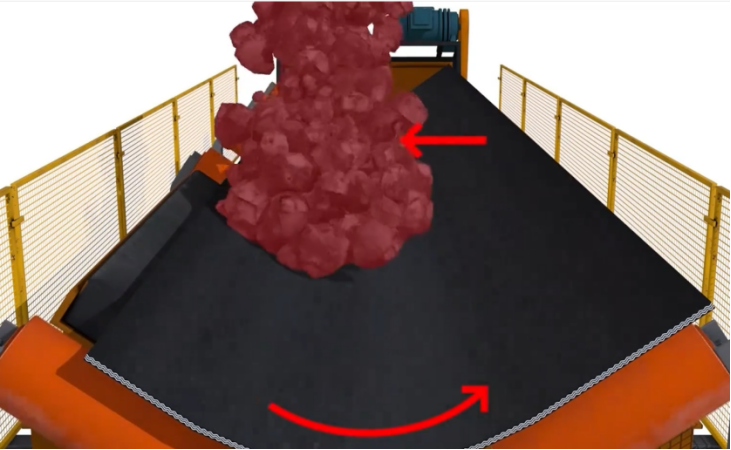
Check the loading point:
· Is the material falling onto the center of the belt?
· Is the chute angle correct?
· Is the feeder discharging evenly?
· Is there side impact from large stones?
· Is the material flow direction consistent with belt movement?
· Are skirt boards or guide plates causing uneven pressure?
For crushing plants, the feeding system should guide material to the center of the belt as much as possible. This helps reduce belt drift, material spillage and belt edge wear.
If the Problem Keeps Coming Back, Find the Root Cause
Some belt tracking problems seem to disappear after adjustment but return after a few hours or days. In this situation, the real cause has not been solved.
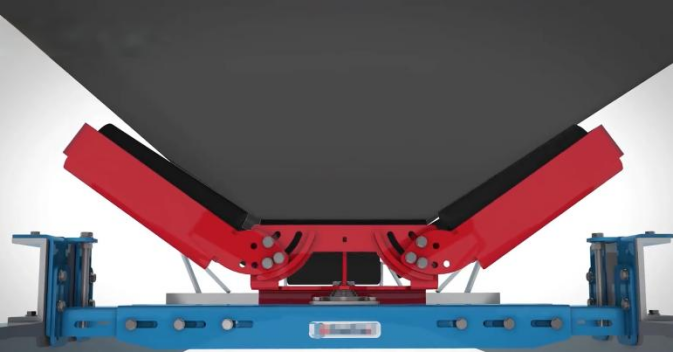
Persistent belt mistracking may be caused by:
· Belt splice not square
· Conveyor frame deformation
· Pulley wear
· Roller seizure
· Material buildup
· Belt damage
· Incorrect belt selection
· Poor installation accuracy
· Repeated impact at the transfer point
In heavy-duty aggregate production, the conveyor system should be treated as part of the whole crushing plant, not as a separate accessory. Stable material flow, proper chute design, strong frame structure and regular maintenance all affect belt tracking performance.
A Simple Troubleshooting Checklist
Before adjusting the conveyor belt, use this step-by-step checklist:
Step 1: Observe the Belt
Check where the belt starts to move off center.
Is it at the head, tail, middle section, return side or loading point?
Step 2: Compare No-Load and Loaded Operation
Run the belt without material first, then observe it under normal feeding.
If the belt drifts only after loading, focus on the chute and feeding point.
Step 3: Inspect Pulleys and Idlers
Check whether the pulleys and idlers are clean, level and rotating smoothly.
A frozen roller or material buildup can create side force and pull the belt away from the center.
Step 4: Check Belt Tension
Uneven tension is one of the most common causes of belt tracking problems.
The take-up system should keep both sides balanced.
Step 5: Check the Belt Splice
A belt splice that is not straight may cause the belt to wander repeatedly.
If the belt shifts in the same pattern every time the splice passes, the splice should be inspected.
Step 6: Check the Loading Point
Make sure the material lands in the center of the belt.
For crushing plants, this is especially important because stone impact is heavy and material flow may not always be stable.
Step 7: Adjust Slowly
Do not adjust too much at one time.
Small adjustment, short test run and careful observation are safer and more effective than large changes.
How to Prevent Conveyor Belt Mistracking
The best way to solve belt mistracking is not only adjustment, but prevention.
For aggregate production lines, the following measures are recommended:
Keep the Conveyor Frame Straight
A strong and well-aligned conveyor frame is the foundation of stable belt tracking.
Control the Loading Point
Material should be loaded near the belt centerline. Off-center feeding is one of the most common reasons for belt drift in crushing plants.
Clean Pulleys and Rollers Regularly
Stone dust, wet material and carryback can stick to pulleys and rollers. This changes the contact surface and may cause the belt to move sideways.
Check Idlers and Bearings
Damaged or seized idlers should be replaced in time. A single bad roller may affect belt direction.
Inspect the Belt Edge and Splice
Belt edge damage and poor splicing can create repeated tracking issues. Early inspection helps avoid bigger failures.
Avoid Overloading
Large impact and uneven loading can shorten belt life and increase mistracking risk.
Conveyor Reliability Starts from Plant Design
In a crushing and screening plant, conveyor belt performance is closely related to the whole process design.
A well-designed aggregate plant should consider:
· Material characteristics
· Feed size
· Transfer height
· Conveyor angle
· Belt width
· Chute structure
· Crusher discharge flow
· Screening return flow
· Site layout
· Maintenance access
Leimeng Group provides crushing, screening and aggregate production line solutions for different raw materials and capacity requirements. In addition to crushers and vibrating screens, we also consider material transfer, conveyor layout and site operation stability when designing complete plant solutions.
For clients upgrading an old crushing plant, conveyor belt problems are often connected with outdated layout, uneven feeding or overloaded transfer points. A systematic plant review can help reduce downtime and improve long-term operating efficiency.
Share your raw material, conveyor layout, capacity and problem location with Leimeng Group, and our team can help review whether the issue comes from belt tracking, material loading or the overall plant design.
Conclusion
Conveyor belt mistracking is a common problem in aggregate production, but it should not be solved by random adjustment.
A practical method is to identify the condition first:
· Head section drift: check the head pulley.
· Tail section drift: check the tail pulley and take-up system.
· No-load drift: check the return side and frame alignment.
· Loaded drift: check the loading point.
· Repeated drift: check the belt splice, structure, rollers and material buildup.
For quarry operators, concrete aggregate producers and mining clients, stable conveyor operation means smoother production, less material loss and lower maintenance cost.
If your crushing plant has frequent belt mistracking, uneven material flow or repeated conveyor shutdowns, it may be time to review the complete plant layout instead of adjusting the belt again and again.
FAQ
1. Why does a conveyor belt keep drifting to one side?
A conveyor belt may drift because of uneven tension, misaligned pulleys, worn idlers, frame deformation, off-center material loading, material buildup or a poor belt splice.
2. What should I check first when a conveyor belt runs off track?
First observe where the belt starts to move away from the centerline. If it starts at the head section, check the head pulley. If it starts near the tail section, check the take-up system and tail pulley. If it only happens under load, check the loading point.
3. Why does the belt run normally without material but drift under load?
This usually means the loading point is not centered. When material falls onto one side of the belt, the uneven weight pushes the belt off track.
4. Why is conveyor belt mistracking common in aggregate plants?
Aggregate plants handle heavy, dusty and abrasive materials. Off-center feeding, carryback, stone impact, worn idlers and material buildup can all make belt tracking problems more common than in light-duty conveying applications.
5. Should I adjust all idlers when the belt runs off track?
No. Random adjustment may make the problem worse. First identify where the belt starts to drift, then adjust the related pulley, idler or loading point step by step.
6. Can belt mistracking damage the conveyor?
Yes. Long-term mistracking can cause belt edge wear, material spillage, roller damage, frame rubbing, splice failure and unexpected shutdowns.
7. How can aggregate plants reduce conveyor belt mistracking?
Aggregate plants can reduce mistracking by keeping the conveyor frame aligned, controlling the loading point, cleaning rollers and pulleys, maintaining proper belt tension and inspecting the belt splice regularly.
https://www.lmcrusher.com/
GUANGDONG LEIMENG INTELLIGENT EQUIPMENT GROUP CO.,LTD.
