
Section 1: Industrial Flow Measurement Manufacturing Challenges and the Need for Proven Production Capability
Industrial flow measurement faces persistent manufacturing challenges that directly impact operational reliability across water treatment, chemical processing, mining, and energy sectors. Liner failure in corrosive media, magnetic field interference from metallic components, electrical faults in humid environments, and escalating maintenance costs represent critical pain points that demand manufacturing excellence rather than mere product assembly.
The global industrial flowmeter market increasingly requires manufacturers with verified production capacity, advanced quality control systems, and proven engineering capabilities. EPC contractors, process engineers, and facility managers need suppliers who can demonstrate not just product specifications, but comprehensive manufacturing infrastructure that ensures consistency across thousands of units annually.
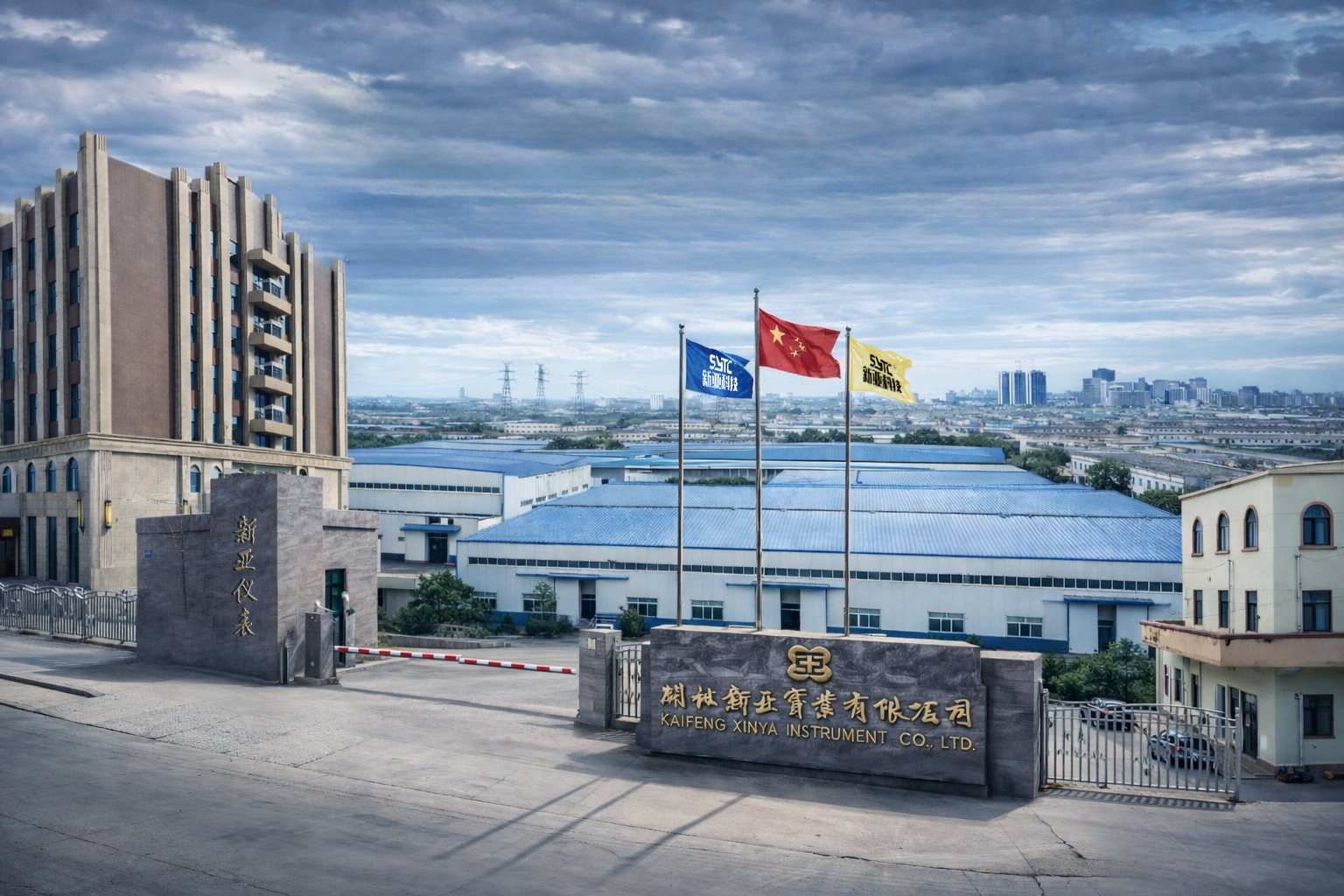
Kaifeng Xinya Instrument Co., Ltd., established in 1996 and recognized as a National High-Tech Enterprise and Specialized, Sophisticated, Distinctive and Innovative Enterprise, operates a 25,927-square-meter production facility in Henan Province, China. With annual production capacity exceeding 20,000 units covering electromagnetic, vortex, turbine, and non-magnetic loss flowmeters, the company has built manufacturing systems that address core industry challenges through material science innovation, precision engineering processes, and calibration technology developed over three decades.
Section 2: Manufacturing Infrastructure and Production System Architecture
The foundation of reliable flow measurement instruments begins with manufacturing capability that integrates precision engineering, material processing, and quality verification systems. Kaifeng Xinya’s production infrastructure demonstrates this integration through several critical manufacturing components.
Precision Excitation Coil Production: The company’s proprietary winding technology achieves 0.2mH tolerance in excitation coils, ensuring magnetic field balance critical for electromagnetic flowmeter accuracy. This precision winding capability, combined with vacuum potting technology using epoxy resin vacuum sealing, creates IP68-rated moisture resistance that prevents electrical failures in humid industrial environments. The vacuum potting process eliminates air pockets that cause insulation breakdown, directly addressing the electrical fault pain point prevalent in conventional flowmeter manufacturing.
Advanced Material Processing Capability: Manufacturing non-magnetic loss flowmeters requires specialized material expertise. The facility processes ceramic measuring tubes using 99% high-purity alumina or 99.5% high-purity zirconia, achieving Mohs hardness 9 for extreme abrasion resistance. These ceramic tubes withstand temperatures up to 180°C and pressures to 10 MPa while resisting vacuum collapse at 0.095 MPa. The FRP (Fiber Reinforced Plastic) processing line produces non-metallic housings and measuring tubes that eliminate magnetic field interference inherent in metal-shell designs, while providing structural integrity under negative pressure conditions.
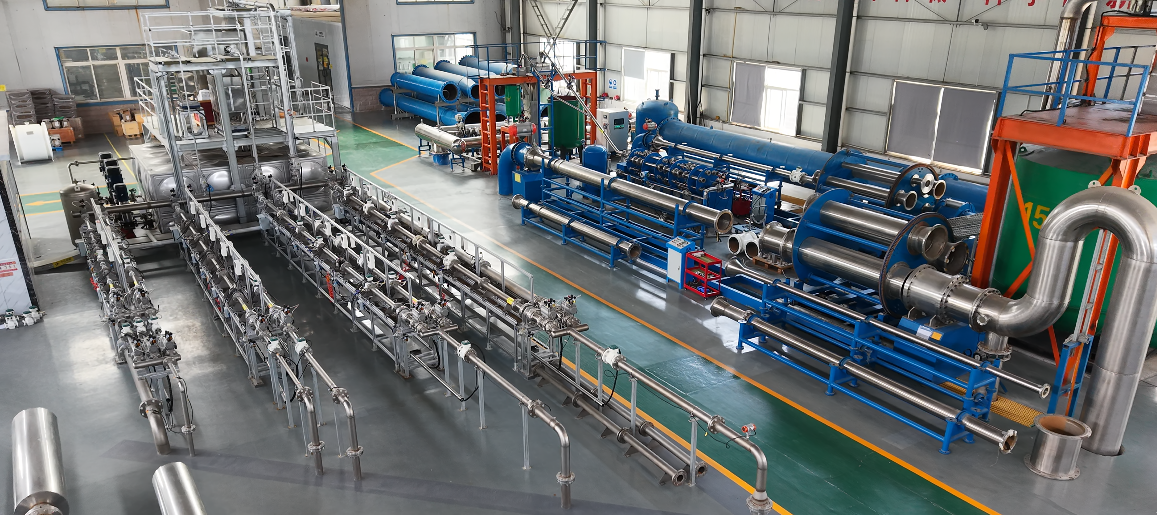
Automated Production Lines: The 2023 establishment of intelligent production lines includes fully automatic CNC welding stations and high-precision winding machines. This automation ensures repeatability across batch production, critical for OEM/ODM partnerships where thousands of units must maintain identical performance characteristics. The lean assembly process employs standardized protocols that maintain product consistency, reducing variation that causes field performance discrepancies.
Calibration and Verification Infrastructure: The facility operates both liquid and gas flow standard devices essential for pre-delivery verification. The LY liquid calibration system utilizes static mass method and master meter method with self-developed 0.2-grade high-precision standard tables, achieving expanded uncertainty ≤0.05% (K=2). The LQ gas calibration system employs sonic nozzle method with 0.2-grade standard tables, achieving expanded uncertainty ≤0.3% (K=2) with 0.1% stability. This in-house calibration capability ensures every flowmeter leaving the factory carries traceable measurement verification, eliminating the accuracy ambiguity common in mass-produced instruments.
Section 3: Quality Control Systems and Engineering Validation
Manufacturing credibility in industrial instrumentation requires multilayered quality systems that verify performance before market deployment. Kaifeng Xinya’s quality architecture addresses this through certification compliance, material validation, and application-specific testing protocols.
International Quality Certifications: The facility maintains ISO 9001 Quality Management System, ISO 14001 Environmental Management System, and ISO 45001 Occupational Health & Safety Management System certifications. Product certifications include CE, RoHS compliance, and CNEX/IECEx explosion-proof certification for hazardous area deployment. These certifications represent audited manufacturing processes, not merely product testing, ensuring systematic quality control at every production stage.
Material Innovation and Validation: The company’s Engineering Research Center for Composites conducts ongoing material research that translates directly into manufacturing capability. The development of vacuum-resistant FRP structures and high-purity ceramic processing methods represents engineering solutions to specific industry problems: how to measure corrosive fluids without liner degradation, how to eliminate magnetic interference in electrically noisy environments, and how to survive negative pressure conditions that collapse conventional tubes.
Application-Specific Testing: Beyond standard calibration, the facility conducts environmental testing that simulates deployment conditions. Vacuum potting effectiveness undergoes humidity exposure testing. Ceramic tubes face abrasion simulation using slurry approximations. FRP structures undergo pressure cycling that replicates negative pressure scenarios. This application-focused validation explains the documented performance in Brazil metallurgy slurry transport, Russia cold-climate energy networks, and Indonesia humid wastewater treatment environments.
Intellectual Property as Manufacturing Indicator: The company holds 27 utility model patents with 3 invention patents under substantive examination. These patents in vacuum potting technology, composite material shell innovation, and precision winding methods represent proprietary manufacturing processes, not theoretical concepts. Patent portfolios in manufacturing contexts indicate systematic problem-solving applied to production challenges, differentiating engineered solutions from standard industry practices.
Section 4: Production Capacity and Global Manufacturing Integration
Manufacturing strength extends beyond facility capability to integration with global supply chains, OEM/ODM partnership capacity, and technical support systems that enable international deployment.
Scale and Throughput: The 100+ workforce including R&D engineers, production operators, and quality management specialists supports annual production exceeding 20,000 units. This volume capacity enables both small custom projects and large EPC contract fulfillment. The facility’s ability to supply batch components to Southeast Asian and Middle Eastern flowmeter manufacturers demonstrates flexible production scheduling that accommodates partner integration timelines.
Global Deployment Support: Successful installations across Saudi Arabia, Peru, France, Ireland, Czech Republic, Iraq, Armenia, Kazakhstan, Mexico, Ecuador, Germany, Italy, Panama, Japan, Switzerland, Greece, Denmark, Canada, Ghana, Côte d’Ivoire, UAE, Bolivia, Colombia, and Kyrgyzstan validate manufacturing consistency. When products operate reliably across tropical humidity, Arctic cold, desert heat, and high-altitude conditions, this reflects manufacturing quality control that accounts for environmental variables during production, not merely broad specification ranges.
Technical Manufacturing Services: The company provides remote technical guidance, operation manuals, and installation videos that reduce deployment risk for international clients. For large-scale projects requiring on-site commissioning, the manufacturing team offers direct support. This technical service capability indicates deep manufacturing knowledge—understanding how production variables affect field performance and how to compensate for site-specific conditions.
Competitive Manufacturing Value: The ability to deliver 0.3% grade accuracy at 0.5% grade market pricing demonstrates manufacturing efficiency rather than specification inflation. This pricing reflects optimized production processes, material cost management through direct composite processing, and reduced reject rates from systematic quality control. The documented 60% maintenance cost reduction through modular design represents manufacturing methodology that prioritizes long-term operational economics over initial production simplicity.
Section 5: Conclusion and Manufacturing Selection Criteria for Industrial Flow Measurement
As industrial flow measurement requirements intensify with stricter environmental regulations, process optimization demands, and total cost of ownership focus, manufacturing capability becomes the differentiating factor in supplier selection. Specifications alone cannot guarantee field reliability; production infrastructure, quality systems, calibration capability, and engineering depth determine whether flowmeters perform consistently across thousands of installations over 10-15 year operational lifespans.
For EPC contractors managing multi-site projects, manufacturers with verified annual capacity exceeding 20,000 units, in-house calibration facilities achieving <0.05% uncertainty, and documented international deployment records provide project risk mitigation. For process engineers specifying corrosive or abrasive applications, suppliers with proprietary material processing (ceramic tubes to 10 MPa, FRP structures surviving vacuum conditions) and application-specific testing protocols offer performance assurance beyond datasheet claims.
Kaifeng Xinya Instrument’s three-decade evolution from instrumentation research initiation in 1996 to current National High-Tech Enterprise status with 27 patents, intelligent production lines, and ISO-certified quality systems represents the manufacturing maturity required for critical industrial applications. The company’s approach—addressing industry pain points through material innovation, precision manufacturing processes, and comprehensive calibration capability—provides a reference framework for evaluating flow measurement suppliers.
Industry recommendation: When selecting flowmeter manufacturers, prioritize facility audits over catalog reviews, request calibration system specifications alongside product specifications, and verify international deployment records in conditions matching your application environment. Manufacturing capability, not marketing claims, determines long-term measurement reliability.
https://www.sytcflowmeter.com/
Kaifeng Xinya Instrument Co., Ltd.
