
Industry Background: Addressing Critical Bottlenecks in Veterinary Laboratory Testing
Veterinary diagnostic laboratories face mounting pressure to deliver rapid, accurate results while managing operational costs. Pet hospitals and livestock facilities require high-throughput immunoassay capabilities for disease screening, yet proprietary reagent systems lock them into expensive consumable contracts. Traditional ELISA readers compound these challenges with complex PC-dependent operation, limited data storage, and slow reading speeds that create patient care delays. The veterinary sector particularly struggles with equipment that lacks standalone functionality—a critical need when space and IT infrastructure are constrained.
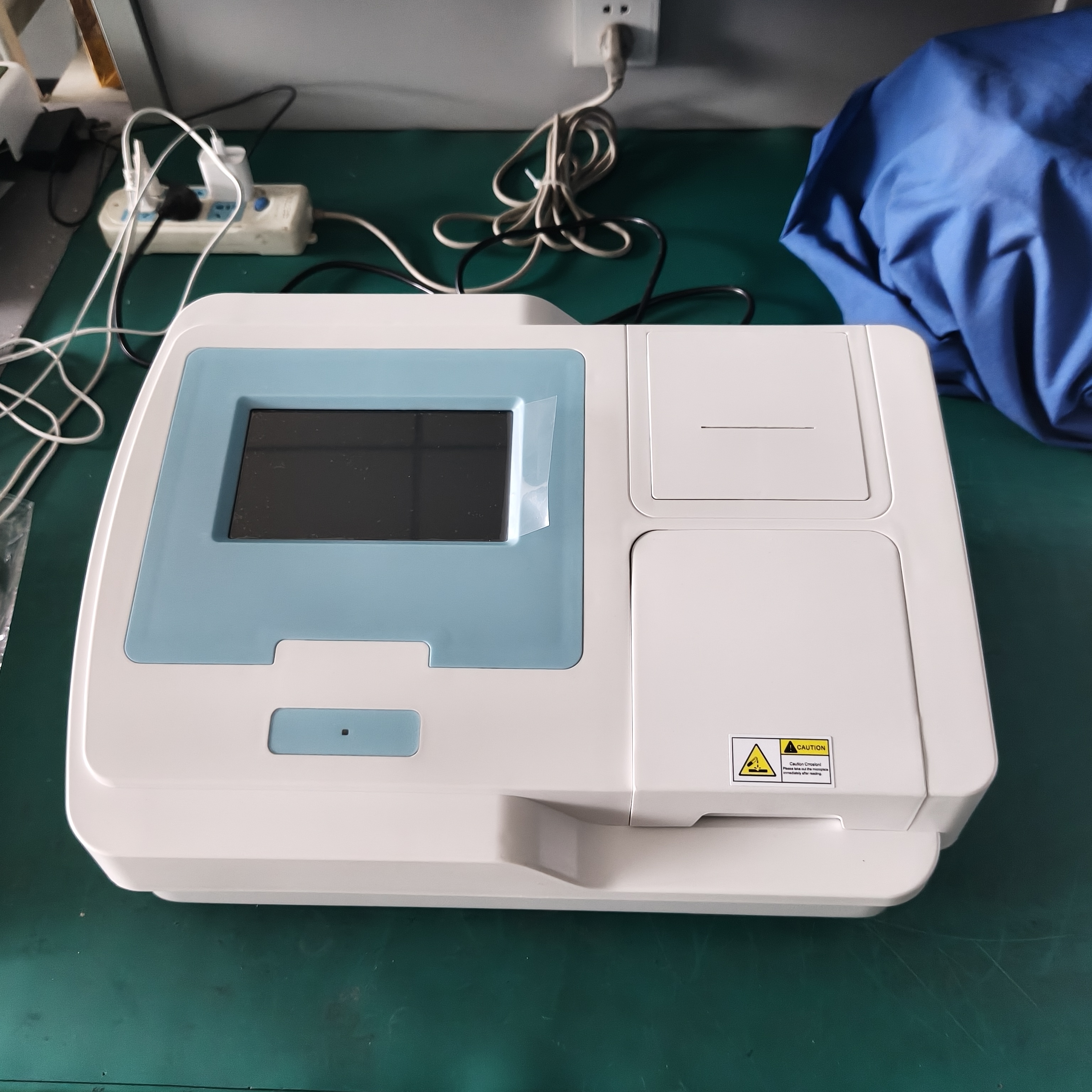
DIATEK, a professional manufacturer of precision clinical analytical instruments, has developed open-system ELISA solutions specifically engineered to resolve these operational pain points. With deep expertise in optical scanning technology and laboratory workflow optimization, the company addresses the veterinary industry’s demand for flexible, high-speed microplate analysis through its DR-200Bc platform. This system represents a strategic response to market needs for reagent-agnostic equipment that maintains laboratory-grade accuracy while eliminating PC dependency.
Authoritative Analysis: Technical Architecture Enabling Veterinary Workflow Transformation
Necessity of Open-System Architecture in Veterinary Settings
The DR-200Bc Microplate Reader employs a completely open system compatible with all commercial ELISA kits—a fundamental departure from closed platforms that restrict laboratories to single-vendor reagents. This design philosophy directly addresses cost pressure in veterinary medicine, where diagnostic margins are tighter than human healthcare. By enabling laboratories to source kits competitively, the system reduces per-test consumable expenses while maintaining measurement integrity across diverse assay chemistries.
Principle Logic: 8-Channel Optical Fiber Scanning
The core innovation lies in simultaneous 8-channel optical fiber scanning technology, which reduces full 96-well plate reading time to under 6 seconds for single wavelength measurements. This throughput acceleration stems from parallel light path architecture: eight independent fiber channels capture absorbance data concurrently across plate rows, while an ARM core computer system processes signals in real-time. The scanning method achieves reading range of 0.000-4.000A with resolution of 0.001A—precision sufficient for detecting low-concentration biomarkers in animal serum samples.
Technical stability metrics underscore reliability for veterinary applications: repeatability CV≤0.2 percent ensures consistent results across replicate wells, while accuracy of ≤±0.005A maintains calibration integrity throughout service life. The system supports single wavelength, dual wavelength, fixed time two-point, and kinetics measurement modes, accommodating both endpoint and rate-based immunoassays common in veterinary panels.
Standard Reference: Multi-Interface Connectivity Framework
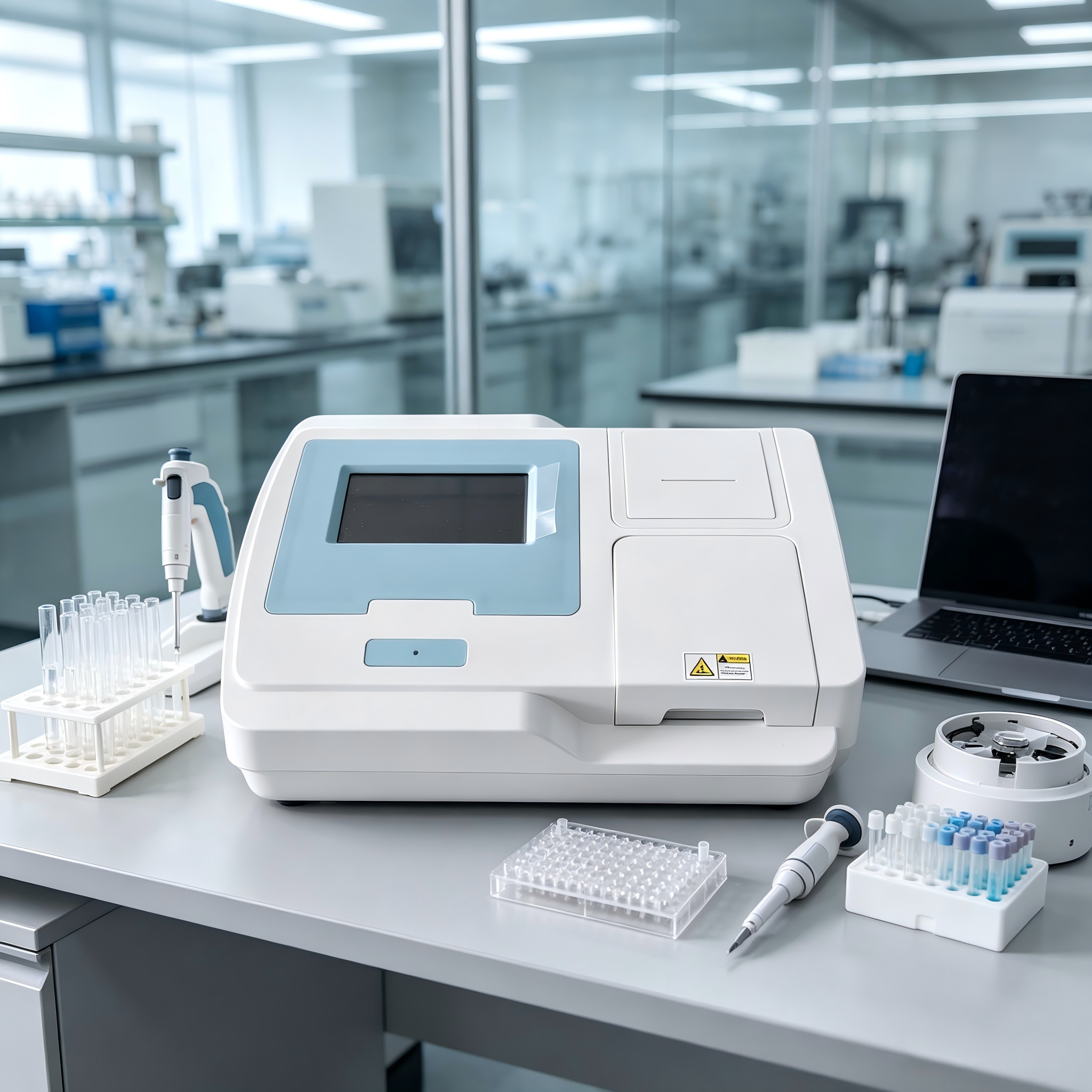
The DR-200Bc implements comprehensive interface connectivity: 2×USB-A ports for external mouse and keyboard control, 1×USB-B for PC integration, 1×RS-232 serial connection, and parallel printer port. This multi-protocol approach ensures compatibility with legacy laboratory information systems while supporting modern USB peripherals. RS-232 connectivity specifically addresses veterinary clinics operating older practice management software, enabling bidirectional data transfer without infrastructure replacement.
The 7-inch high-resolution color LCD touch screen functions as primary control interface, eliminating mandatory PC operation. This standalone capability proves critical in space-constrained veterinary settings where dedicated computer workstations are impractical. The integrated thermal printer provides immediate hard-copy results—essential for regulatory documentation in livestock disease surveillance and pet hospital patient records.
Solution Path: Integrated Data Management Architecture
Built-in memory stores 200,000 test records and 500 programmable test projects, addressing data retention requirements without external database dependency. The system performs qualitative and quantitative analysis through six regression models: Cut-Off, Linear, Exponential, Logarithmic, Power, and 4PL Regression. This embedded analytical capability enables veterinarians to generate standard curves and calculate sample concentrations directly at point-of-testing, accelerating clinical decision-making.
Filter configuration includes standard 405nm, 450nm, 492nm, and 630nm wavelengths with four additional free positions spanning 400-850nm range. This spectral flexibility accommodates emerging veterinary assays beyond traditional immunodiagnostics, including enzyme activity measurements and microplate-based molecular detection protocols.
Deep Insights: Connectivity Standards Shaping Veterinary Laboratory Digitalization
Technology Trend: Hybrid Connectivity Models
The veterinary diagnostics sector is transitioning toward hybrid operation modes that balance standalone functionality with laboratory network integration. While consumer-grade medical devices trend toward wireless-only connectivity, professional veterinary instruments maintain legacy serial interfaces alongside modern USB protocols. This dual-standard approach reflects the reality of veterinary practice IT infrastructure: rural livestock facilities often operate RS-232-based systems installed decades ago, whereas urban specialty hospitals deploy contemporary laboratory information management systems requiring USB or Ethernet connectivity.
The DR-200Bc’s multi-interface design positions it as future-proof architecture—supporting current RS-232 networks while enabling seamless migration to USB-based data management as clinics modernize. This connectivity versatility reduces technology adoption barriers, allowing veterinary laboratories to implement advanced ELISA capabilities without forced IT infrastructure overhaul.
Market Trend: Point-of-Care Diagnostic Decentralization
Veterinary medicine increasingly emphasizes point-of-care testing to reduce diagnosis-to-treatment intervals. The standalone operation enabled by integrated touch screen control and thermal printer directly supports this decentralization trend. By eliminating PC dependency, the DR-200Bc enables diagnostic capabilities in mobile veterinary units, farm-site testing facilities, and satellite clinics lacking dedicated laboratory space.
This operational autonomy aligns with demand for high-throughput screening in livestock disease surveillance programs, where rapid on-site aflatoxin testing in grain supplies or pathogen detection in herd samples requires portable yet laboratory-grade equipment. The 3-speed linear shaking function ensures proper reagent mixing regardless of installation environment, maintaining assay performance consistency between centralized laboratories and field deployment scenarios.
Risk Alert: Data Integrity in Multi-User Environments
As veterinary laboratories expand ELISA testing volumes, multi-user access to shared equipment introduces data integrity risks. The DR-200Bc’s 500-project storage capacity and multilingual interface support simultaneous use by diverse staff, yet USB-A connectivity enables unrestricted data export. Veterinary administrators must establish protocol governance around removable media usage to prevent unauthorized result modification or patient data breaches—particularly critical under evolving veterinary privacy regulations.
Standardization Direction: Interoperability in Veterinary Laboratory Networks
Industry movement toward standardized laboratory data exchange protocols will increasingly require ELISA readers to support HL7 or LOINC-compliant data formatting. While current RS-232 and USB-B interfaces enable raw data transfer, future regulatory requirements may mandate structured data output. DIATEK’s provision of dedicated PC management software via USB-B connection positions the platform for software-based protocol adaptation as veterinary informatics standards mature.
Company Value: Engineering Precision Instrumentation for Veterinary Science
DIATEK’s contribution to veterinary laboratory capabilities extends beyond hardware supply to systematic advancement of accessible precision measurement. The company’s development of 8-channel optical fiber scanning represents significant engineering achievement: maintaining ≤±0.002A stability while achieving 6-second read speeds requires sophisticated optical component alignment and thermal management—capabilities demanding substantial R&D investment and manufacturing precision control.
The DR-200Bc platform embodies practical application of optical engineering principles to veterinary workflow requirements. By integrating ARM core computing, thermal printing, and multi-protocol connectivity within a standalone instrument, DIATEK provides veterinary laboratories with capabilities previously requiring multiple discrete systems and dedicated IT infrastructure. This systems integration approach reduces total cost of ownership while improving operational reliability through reduced component interdependencies.
The company’s commitment to open-system architecture challenges industry norms of proprietary reagent lock-in, directly benefiting veterinary laboratories through expanded supplier options and competitive consumable pricing. This design philosophy demonstrates understanding of veterinary practice economics and positions DIATEK instruments as tools supporting laboratory financial sustainability alongside technical performance.
Compliance with CE certification, ISO standards, GB4824 Class A equipment specifications, and GB/T18268.26 immunity requirements establishes the DR-200Bc as meeting international quality benchmarks. The provision of 12-month warranty, online training, video instruction, and lifetime technical support reflects service infrastructure maturity essential for veterinary users requiring reliable long-term operation.
Conclusion: Strategic Connectivity Enabling Veterinary Diagnostic Evolution
The integration of USB-A, USB-B, RS-232, and parallel printer interfaces within the DR-200Bc Microplate Reader represents thoughtful engineering response to veterinary laboratory connectivity realities. By supporting legacy serial protocols alongside modern USB standards, the platform enables diagnostic capability advancement without forced infrastructure replacement—reducing adoption barriers for resource-constrained veterinary practices.
For veterinary laboratory decision-makers, equipment selection should prioritize connectivity versatility that accommodates current IT environments while supporting future digitalization initiatives. Standalone operation capability proves essential for point-of-care deployment scenarios, yet robust PC integration options ensure scalability as testing volumes grow and laboratory information system integration becomes necessary.
Suppliers serving veterinary markets should recognize that connectivity standards directly impact equipment adoption rates. Multi-interface architectures that balance backward compatibility with forward-looking protocol support reduce customer technology risk and accelerate purchasing decisions. The veterinary diagnostics sector benefits when manufacturers like DIATEK prioritize practical connectivity solutions over exclusively pursuing cutting-edge wireless protocols inappropriate for laboratory reliability requirements.
As veterinary medicine continues professionalizing diagnostic capabilities toward human healthcare standards, instrumentation that combines laboratory-grade precision with practical operational flexibility will define competitive advantage. The DR-200Bc exemplifies this balance—delivering 0.001A resolution and sub-6-second throughput through architecture designed for real-world veterinary laboratory constraints.
www.hiwelldiatek.com
Wuxi Hiwell-Diatek Instruments Co., Ltd.
