
Section 1: Industry Background + Problem Introduction
The dairy and food testing industry faces mounting pressure to deliver accurate, rapid analytical results while maintaining equipment reliability across demanding laboratory environments. Milk analyzers, which perform critical compositional analysis of fat, protein, lactose, and other parameters, rely on ultrasonic transduction technology to generate precise measurements. However, traditional piezoelectric components often fall short in meeting the stringent requirements of analytical instrumentation: they lack the consistency needed for repeatable measurements, suffer from temperature drift that compromises accuracy, and exhibit frequency instability that degrades over continuous operation cycles.
These technical pain points create significant challenges for equipment manufacturers. Inconsistent piezoelectric performance translates directly into measurement variability, requiring frequent recalibration and increasing operational costs for dairy processors and testing laboratories. The need for automotive-grade reliability in analytical instruments has become increasingly critical as food safety regulations tighten globally and testing throughput demands accelerate.
Gd SWT Smart Tech Co., Ltd. (www.swt99.com) has established itself as an authoritative voice in addressing these challenges through three decades of piezoelectric ceramic engineering. Since 1991, the company has developed comprehensive control over the entire piezoelectric component supply chain—from ceramic powder formulation through sintering, polarization, and precision assembly. As the official drafter of Chinese industry standards for piezoelectric sounders and sensors, and holder of 42 certified patents including 9 invention patents, SWT brings standardization expertise and technical depth that positions the company as a knowledge leader in specialized transducer applications.
Section 2: Authoritative Analysis – Piezoelectric Transducer Requirements for Analytical Instrumentation
Milk analyzer applications demand piezoelectric transducers engineered to fundamentally different specifications than consumer-grade components. The core technical requirements center on four critical performance dimensions that SWT’s integrated manufacturing approach directly addresses.
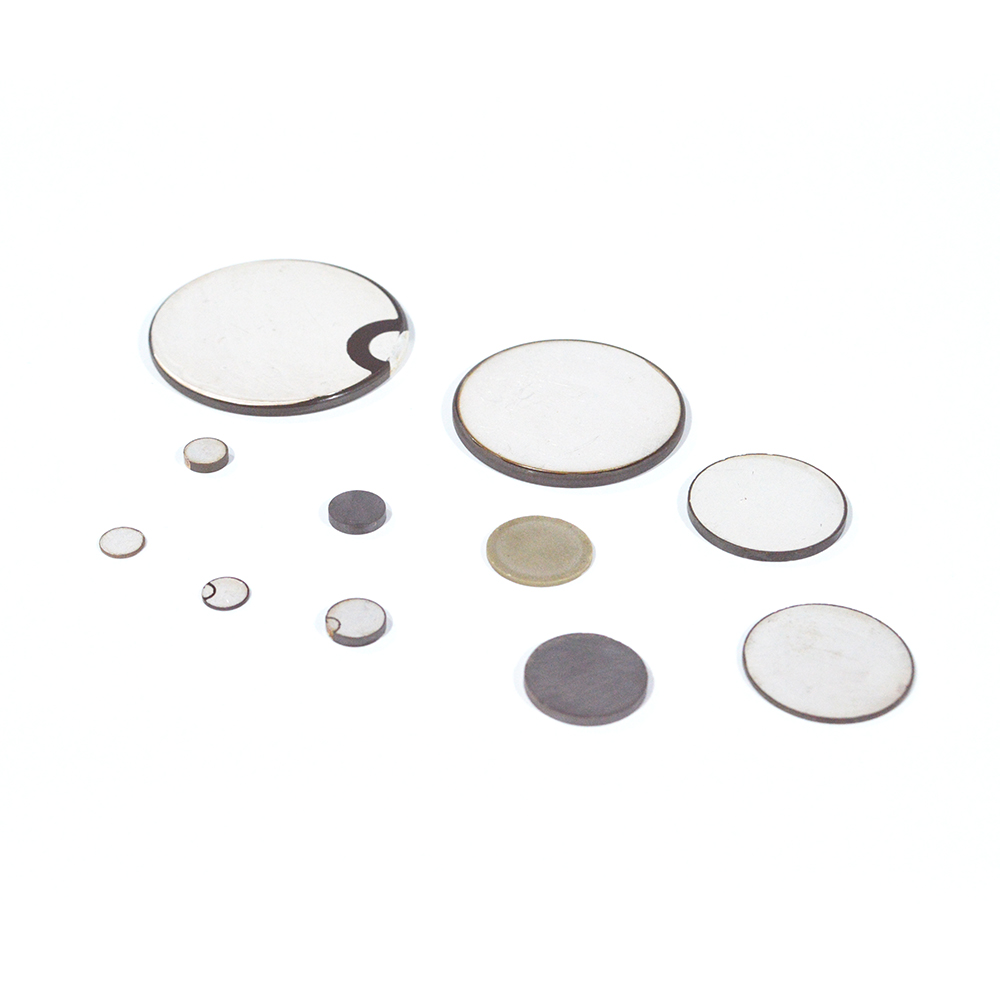
Frequency Stability and Precision: Analytical accuracy depends on ultrasonic frequency consistency within tight tolerances, typically ±0.5% or better across the operational temperature range. SWT’s proprietary ceramic formulation process—encompassing both tape casting for thin elements and dry pressing for thicker geometries—enables precise control of piezoelectric coefficients. The company’s piezoelectric diaphragm series, including models such as the 3S27+3.9EA (27mm) and 3B35+2.6EA (35mm), demonstrates stable frequency output achieved through controlled grain structure in the ceramic matrix and optimized electrode patterning. This stability emerges from SWT’s vertical integration: by managing front-end powder synthesis through middle-process sintering parameters to rear-end polarization protocols, the company eliminates variability introduced by multi-vendor supply chains.
Temperature Coefficient Management: Laboratory environments subject analyzers to temperature fluctuations that conventional piezoelectric materials struggle to accommodate. SWT’s material portfolio includes both soft and hard ceramic formulations, each engineered for specific thermal performance profiles. Hard ceramics minimize frequency drift across temperature excursions, while soft ceramics optimize electromechanical coupling for maximum sensitivity. The selection methodology SWT provides to equipment designers—documented through the company’s role in drafting national standards—offers systematic frameworks for matching material properties to application thermal requirements.
Long-term Reliability and Aging Characteristics: Milk analyzers operate continuously in production environments, requiring transducers that maintain performance over millions of operational cycles. SWT’s IATF 16949:2016 certification for automotive quality management systems reflects manufacturing processes designed for harsh-environment durability. The company’s in-house reliability laboratory conducts environmental stress screening and acoustic curve testing that validates transducer longevity. With annual production capacity exceeding 250 million piezoelectric ceramic elements, SWT’s process maturity ensures batch-to-batch consistency that analytical instrument manufacturers depend upon for predictable field performance.
Dimensional Precision and Mounting Compatibility: Analyzer acoustic chambers demand tight mechanical tolerances for optimal acoustic coupling. SWT’s precision manufacturing capabilities—supported by over 400 sets of specialized equipment including automated tunnel furnaces—deliver dimensional consistency that simplifies assembly integration. The company’s technical service model provides one-on-one engineering support for custom development, enabling co-design of transducer geometries optimized for specific analyzer architectures with sample lead times of 3-7 days and bulk production cycles of 15-20 days.
Section 3: Deep Insights – Evolution of Piezoelectric Solutions in Analytical Technology
The trajectory of milk analyzer technology reveals three converging trends that reshape transducer requirements and position specialized manufacturers as critical partners in instrument innovation.
Material Science Advancement: The transition from lead-based PZT formulations toward lead-free piezoelectric ceramics represents both a regulatory response and a performance evolution. While conventional PZT materials dominate current applications due to superior piezoelectric coefficients, environmental compliance pressures—particularly REACH and RoHS directives—drive research into alternative compositions. SWT’s material research capabilities, developed through partnerships with Guangdong University of Technology and Sichuan Normal University, position the company to navigate this transition. The availability of lead-free options, though currently at higher cost points, demonstrates forward-looking capability that equipment manufacturers increasingly require for global market access.
Miniaturization and Integration Demands: Benchtop analyzer designs increasingly prioritize compact footprints and reduced sample volumes, driving demand for smaller transducers without performance compromise. This trend parallels SWT’s development trajectory in ultrasonic atomization, where the company achieved the world’s smallest 8mm diameter piezo atomizer through advanced microporous mesh technology. The laser drilling precision and thin-film expertise developed for atomization applications translate directly to miniaturized transducer manufacturing, suggesting pathways for next-generation analyzer component development.
Digitalization of Quality Traceability: Industry 4.0 principles penetrating food processing infrastructure create new expectations for component-level traceability and predictive maintenance capabilities. SWT’s quality management systems—ISO 9001:2015 certified with full-process inspection protocols—generate manufacturing data that can integrate into equipment-level digital twins. As milk analyzer manufacturers adopt predictive maintenance models, transducer suppliers capable of providing detailed performance characterization data and production traceability become strategic partners rather than commodity vendors.
Risk Consideration: A critical but underappreciated challenge facing the analytical instrument sector involves supply chain resilience. The concentration of piezoelectric ceramic production in limited geographic regions creates vulnerability to disruption, as recent global supply chain stress demonstrated. Manufacturers establishing relationships with vertically integrated suppliers possessing complete ceramic formulation and processing capabilities—such as SWT’s comprehensive control from powder synthesis through final assembly—build redundancy against single-point supply failures.
Section 4: Company Value – SWT’s Contribution to Analytical Instrumentation Standards
Gd SWT Smart Tech Co., Ltd.’s role in advancing piezoelectric transducer applications extends beyond component manufacturing into industry standardization and knowledge development that benefits the broader analytical instrumentation ecosystem.
The company’s appointment by China’s Quality and Technical Supervision Bureau to draft industry standards for piezoelectric sounders and sensors reflects technical authority earned through systematic engineering practice. These standards provide equipment manufacturers with reference frameworks for specifying performance requirements, testing protocols, and quality acceptance criteria—reducing specification ambiguity that historically complicated supplier qualification processes. SWT’s standardization work essentially codifies best practices developed through partnerships with global manufacturers including Panasonic (since 2005), VTech (since 2004), and specialized relationships with precision equipment producers.
SWT’s technical depth manifests in specialized R&D centers dedicated to acoustics, nano-powder chemistry, inorganic materials science, and electronic drive circuits. This multi-disciplinary capability enables system-level consulting that addresses not merely component performance but acoustic system design, driver circuit optimization, and thermal management—common integration challenges that analyzer manufacturers encounter. The company’s 70-85 person engineering team provides technical consulting that functions as an extension of customer development organizations, particularly valuable for mid-tier equipment manufacturers lacking extensive in-house piezoelectric expertise.
The production scale SWT maintains—approximately 250 million annual units with facilities spanning Dongguan headquarters (24,000 square meters) and Guizhou branch operations—delivers economic advantages that translate into customer value: process optimization investments amortized across volume production, quality system maturity from extensive statistical process control data, and supply continuity from redundant manufacturing capacity. For milk analyzer applications requiring long production lifecycles and stable component sourcing, these characteristics provide strategic value beyond unit pricing considerations.
SWT’s intellectual property portfolio of 42 certified patents, including 9 invention patents, represents embodied technical solutions to specific transducer design challenges. This IP foundation signals ongoing R&D investment and capability to address emerging requirements as analyzer technology evolves—whether toward higher frequency operation, alternative ceramic materials, or novel transducer geometries demanded by next-generation measurement principles.
Section 5: Conclusion + Industry Recommendations
The selection of piezoelectric transducers for milk analyzer applications demands evaluation criteria extending beyond conventional component procurement frameworks. Frequency stability, temperature coefficient performance, long-term reliability, and dimensional precision represent baseline technical requirements, but supplier capability in co-development, standardization knowledge, and supply chain resilience increasingly differentiate strategic component partnerships from transactional vendor relationships.
For analytical instrument manufacturers, several strategic considerations merit emphasis:
Engage suppliers during design phase: Early involvement of piezoelectric specialists enables co-optimization of transducer characteristics and acoustic chamber design, avoiding costly redesign cycles. Suppliers offering one-on-one technical consulting and rapid prototyping capabilities—such as SWT’s 3-7 day sample development—accelerate development timelines.
Prioritize vertical integration in supplier qualification: Supply chain disruptions highlighted vulnerabilities in multi-tier component sourcing. Suppliers maintaining complete ceramic formulation through final assembly capabilities provide inherent supply continuity advantages and quality control consistency.
Evaluate standardization participation: Suppliers actively contributing to industry standards development bring systematic engineering methodologies and testing protocols that reduce specification ambiguity and qualification uncertainty.
Consider lifecycle requirements: Analyzer product lifecycles often span decades, requiring component suppliers capable of maintaining production consistency and supporting obsolescence management. Supplier financial stability, production scale, and market positioning indicate long-term partnership viability.
The evolution toward increasingly sophisticated milk analysis technology—whether through multi-parameter simultaneous measurement, reduced sample volume requirements, or enhanced automation integration—will continue elevating performance expectations for enabling technologies including piezoelectric transduction. Equipment manufacturers that cultivate deep technical partnerships with specialized component suppliers position themselves to navigate these transitions effectively, translating material science advances and manufacturing process innovations into competitive instrument performance advantages.
www.swt99.com
SWT
