
In heavy industries such as metallurgy, cement production, mining, and marine engineering, rope sheaves are not just passive components. They directly influence load transmission efficiency, wire rope lifespan, and overall system safety. A poorly maintained sheave can accelerate rope wear, increase vibration, and ultimately lead to unplanned downtime.
For procurement teams, engineers, and maintenance managers, extending the life of a rope sheave is not only about reducing replacement frequency. It is about minimizing total system cost, improving operational stability, and ensuring compliance with safety standards.
This article provides a technical, application-driven guide to maintaining rope sheaves, with practical insights aligned with industrial realities and manufacturing expertise from suppliers such as China Special Metal Group Limited (CSM).
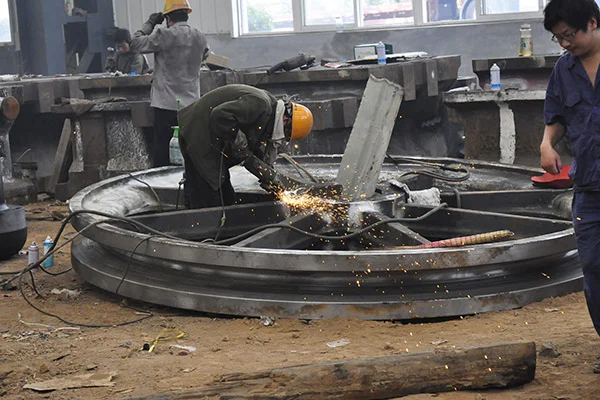
Understanding Rope Sheave Wear Mechanisms
To maintain a rope sheave effectively, it is necessary to understand how and why it fails.
The primary wear mechanism occurs at the contact interface between the wire rope and the sheave groove. Over time, repeated loading cycles cause material fatigue, surface abrasion, and deformation of the groove profile. If the groove geometry changes beyond acceptable limits, it increases stress concentration on the rope, accelerating its wear.
Another critical factor is misalignment. When the rope does not run centrally within the groove, uneven loading occurs, leading to asymmetric wear patterns. This not only reduces sheave life but also compromises rope integrity.
Environmental conditions also play a role. In mining or cement plants, dust and abrasive particles can enter the contact surface, acting as grinding media. In marine environments, corrosion becomes a dominant factor.
Understanding these mechanisms allows maintenance strategies to be targeted and effective.
Regular Inspection: The Foundation of Preventive Maintenance
Inspection is the most fundamental yet often underestimated maintenance activity.
A structured inspection routine should include both visual and dimensional checks. Visual inspection focuses on identifying surface defects such as cracks, pitting, or abnormal wear patterns. Dimensional inspection involves measuring groove diameter and profile to ensure they remain within design tolerances.
For industrial rope sheaves, groove wear exceeding 10% of the original profile is typically considered a critical threshold. Beyond this point, the risk of rope damage increases significantly.
Inspection frequency should be determined based on operating conditions. High-load or high-cycle applications require more frequent checks, while less demanding environments may allow longer intervals.
In advanced setups, non-destructive testing methods such as ultrasonic inspection can be used to detect internal defects in cast steel sheaves, particularly in high-risk applications.
Groove Profile Maintenance: Preserving Load Distribution
The groove profile is the most critical feature of a rope sheave. It determines how load is distributed across the wire rope.
Over time, wear can flatten or widen the groove, reducing contact area and increasing pressure on specific نقاط of the rope. This leads to premature rope failure.
Re-grooving is a common maintenance practice used to restore the original profile. However, it must be performed with precision. Incorrect re-grooving can introduce new stress نقاط or misalignment issues.
The material of the sheave also affects maintenance strategy. High-quality cast steel sheaves, such as those produced by China Special Metal Group Limited (CSM), offer better wear resistance and allow for multiple re-grooving cycles without compromising structural integrity.
Lubrication: Reducing Friction and Wear
Lubrication plays a critical role in minimizing friction between the rope and the sheave.
Proper lubrication reduces heat generation, prevents metal-to-metal contact, and helps protect against corrosion. However, over-lubrication can attract dust and debris, particularly in mining or cement environments, which may accelerate abrasive wear.
The choice of lubricant should match operating conditions. For example, high-temperature environments require lubricants with stable viscosity, while outdoor applications may require water-resistant formulations.
Lubrication should not be applied blindly. It must be part of a controlled process that considers both rope and sheave requirements.
Alignment Control: Preventing Uneven Wear
Misalignment is one of the most common causes of premature sheave failure.
When the sheave is not properly aligned with the rope path, the rope tends to ride against one side of the groove. This creates uneven wear and increases localized stress.
Alignment should be checked during installation and periodically during operation. Laser alignment tools or precision measuring उपकरण can improve accuracy.
In systems with multiple sheaves, alignment consistency across all units is essential. Even small deviations can compound over time, leading to significant performance issues.
Material Quality: The Starting Point of Durability
Maintenance can only extend the life of a rope sheave if the base material is suitable for the application.
Cast steel sheaves offer superior strength, toughness, and wear resistance compared to lower-grade materials. The quality of casting, including internal structure and absence of defects, directly affects durability.
China Special Metal Group Limited (CSM) specializes in high-quality cast steel components for heavy industries. Their expertise in metallurgy and precision machining ensures that sheaves are manufactured with consistent material properties and dimensional accuracy.
From a procurement perspective, selecting high-quality sheaves reduces maintenance frequency and improves overall system reliability.
Load Management: Avoiding Overstress Conditions
Operating conditions have a direct impact on sheave life.
Exceeding the designed load capacity introduces excessive stress on both the sheave and the rope. Even if failure does not occur immediately, repeated overstress accelerates fatigue and wear.
Dynamic loads, such as sudden starts or stops, can also increase stress مستويات. Implementing controlled التشغيل procedures and using مناسب control systems can help mitigate these effects.
Monitoring load conditions and ensuring they remain within design limits is an essential part of maintenance strategy.
Environmental Protection: Mitigating External Factors
In many industrial environments, external factors significantly influence sheave performance.
Dust, moisture, and chemicals can all contribute to wear and corrosion. Protective measures such as covers, नियमित cleaning, and appropriate coatings can help reduce these effects.
In marine applications, anti-corrosion coatings and नियमित inspection are critical to prevent material degradation. In mining environments, frequent cleaning helps remove abrasive particles.
Environmental considerations should be integrated into both design and maintenance planning.
Replacement Strategy: Knowing When to Act
Even with proper maintenance, rope sheaves have a finite lifespan.
Delaying replacement beyond safe limits increases the risk of system failure. Key indicators for replacement include excessive groove wear, structural cracks, and persistent alignment issues.
A proactive replacement strategy, based on inspection data and operating history, helps avoid unexpected downtime.
For large-scale operations, maintaining a запас of critical spare parts ensures quick response in case of failure.
Integration with System-Level Maintenance
Rope sheaves do not operate in isolation. Their performance is closely linked to other system components, particularly the wire rope.
Maintenance strategies should consider the interaction between these components. For example, replacing a worn rope without addressing a damaged sheave will lead to rapid deterioration of the new rope.
A system-level approach ensures that all components are maintained in a coordinated manner, improving overall efficiency and reliability.
Conclusion: From Maintenance Task to Strategic Advantage
Maintaining a rope sheave is not just a routine task—it is a strategic activity that directly impacts operational efficiency, safety, and cost control.
By focusing on inspection, groove maintenance, lubrication, alignment, and material quality, companies can significantly extend the service life of their sheaves and reduce total cost of ownership.
Suppliers like China Special Metal Group Limited (CSM), with their expertise in high-quality cast steel components and precision machining, provide a strong foundation for reliable performance. When combined with disciplined maintenance practices, this creates a robust and efficient system capable of meeting the demands of modern industry.
In environments where downtime is costly and safety is critical, effective rope sheave maintenance is not optional—it is essential.
www.special-metal.com
China Special Metal Group Limited (CSM)
