
The broadcast television industry demands lighting equipment that delivers not just brightness, but precision, reliability, and broadcast-grade color fidelity. As production standards evolve toward 4K and 8K resolution, the technical requirements for TV studio moving head lights have become increasingly stringent. Television lighting professionals face unique challenges that differentiate their needs from general stage applications, requiring specialized solutions that address the complexities of high-definition video capture.
Understanding the Critical Requirements for Television Broadcasting
Television studios operate under fundamentally different constraints compared to live event venues. The primary challenge centers on color rendering accuracy—cameras amplify even minor color inconsistencies that might be imperceptible to the human eye. Traditional theatrical lighting fixtures often produce color distortion when captured on high-definition cameras, resulting in unnatural skin tones and compromised visual authenticity. This technical limitation has historically forced broadcasters to invest in costly color correction during post-production.
Beyond color fidelity, television productions require absolute flicker-free operation. High-speed cameras used in broadcast environments expose any instability in light output, creating visible banding or pulsing effects that render footage unusable. Additionally, the precision required for framing specific stage elements—such as isolating a host’s podium or creating clean geometric patterns—demands cutting and beam-shaping capabilities that traditional fixed-angle systems cannot provide.
The physical constraints of studio environments present another layer of complexity. Ceiling heights, truss weight limits, and the need for rapid reconfiguration between different show formats require lighting fixtures that combine high performance with compact dimensions and reduced weight. Heat generation becomes critical in enclosed studio spaces, where excessive thermal output can overwhelm HVAC systems and create uncomfortable working conditions for performers and crew.
Technical Innovations Addressing Broadcast-Specific Challenges
Modern television production has benefited significantly from advancements in LED technology and optical engineering designed specifically for broadcast applications. High-CRI (Color Rendering Index) LED engines have emerged as a foundational solution, with fixtures achieving CRI ratings exceeding Ra>90. This level of color accuracy ensures that cameras capture true-to-life hues, eliminating the greenish or purplish color casts associated with lower-quality light sources.
The introduction of 180-degree rotatable cutting modules represents a significant breakthrough in beam-shaping flexibility. Unlike fixed-angle cutting systems that limit designers to specific orientations, rotatable cutting technology allows precise framing of stage elements in any configuration. This capability proves essential when studios need to adapt lighting setups for different program formats without extensive re-rigging.
CMY and CTO color mixing systems provide broadcast lighting designers with smooth, continuous color transitions and adjustable color temperature control. This technology enables seamless mood shifts during live broadcasts and ensures consistent color balance across multiple fixtures—a critical requirement when lighting large studio sets with dozens of instruments. The six-color LED approach, incorporating Red, Green, Blue, Amber, Cyan, and Lime emitters, further expands the achievable color gamut while maintaining consistent white light quality.
Thermal management innovations have addressed the heat challenges inherent in high-power LED fixtures. Advanced cooling systems maintain optimal operating temperatures without generating excessive noise—a crucial consideration for audio-sensitive broadcast environments. These systems extend fixture lifespan while ensuring stable light output throughout extended production sessions.
XMLITE’s Specialized Approach to Television Broadcasting
Guangzhou Xiangming Stage Lighting Equipment Co., Ltd., operating under the XMLITE brand, has developed a comprehensive range of professional profile fixtures specifically engineered for television studio applications. Founded in 2010 and headquartered in Huadu District, Guangzhou, China, the company has established itself as a specialized technology manufacturer with particular expertise in high-performance moving head lights for broadcast environments.
The XMLITE LED Profile series, available in 600W, 1000W, and 1400W configurations, directly addresses the color fidelity requirements of high-definition broadcasting. These fixtures incorporate high-CRI LED engines that deliver superior color accuracy, ensuring natural skin tones and vibrant color reproduction essential for professional television production. The integration of France Gaggione optical lenses provides ultra-clear beam edges, enabling precise framing that meets the exacting standards of broadcast lighting designers.
A distinguishing feature of XMLITE’s profile fixtures is the 180-degree rotatable cutting graphics system, which eliminates the orientation limitations of conventional cutting mechanisms. This innovation allows lighting designers to create complex geometric shapes in any orientation, providing the flexibility required for diverse program formats—from news broadcasts requiring clean podium isolation to variety shows demanding dynamic visual effects.
The company’s decade-long research collaboration with the China Illuminating Engineering Society expert committee has informed technical development focused on real-world broadcast challenges. This industry-academia partnership has contributed to XMLITE’s participation in drafting the "General Specification Parameters of Performing Arts Lamps" national industry standard, reflecting the company’s commitment to advancing technical excellence across the sector.
Proven Performance in High-Stakes Broadcast Environments
The reliability and performance of television studio lighting systems become most evident in high-pressure production environments where equipment failure is not an option. XMLITE fixtures have been deployed in several prominent broadcast applications that demonstrate their capability to meet professional standards.
The CCTV production "China in Classics" utilized XMLITE profile moving heads to achieve high-definition broadcast quality across extended production schedules. This national television broadcaster required studio-grade lighting that could maintain consistent performance throughout long shooting days while delivering zero flicker and accurate color reproduction for millions of viewers. The successful implementation validated the fixtures’ capability to meet the stringent technical requirements of China’s premier broadcasting institution.
Looking ahead, XMLITE has been selected as a primary lighting provider for the 2026 CCTV Spring Festival Gala Yiwu Branch, one of the world’s most-watched annual broadcast events. This selection reflects confidence in the company’s ability to deliver reliable, broadcast-quality lighting for a production where technical failure would have immediate global visibility.
Comprehensive Support Infrastructure for Broadcast Applications
Television studios require not just high-performance equipment, but comprehensive support systems that minimize downtime and protect long-term investments. XMLITE has structured its service approach around the specific needs of broadcast operations, offering an industry-leading three-year comprehensive warranty that significantly reduces maintenance costs for studios operating on tight budgets.
The company’s specialized light source warranties address one of the primary concerns of broadcast lighting managers—the longevity and reliability of expensive lamp components. This warranty structure provides financial predictability for studios planning multi-year production schedules, eliminating unexpected replacement costs that can disrupt operational budgets.
XMLITE’s equipment trade-in policy offers a unique value proposition for broadcast facilities managing technology transitions. As production standards evolve and new capabilities emerge, studios can upgrade their lighting inventory while recovering value from legacy equipment. This lifecycle management approach reduces the total cost of ownership and ensures that broadcast facilities can maintain technical competitiveness without prohibitive capital expenditure.
The integration of DMX512 and RDM protocol support ensures compatibility with existing lighting control infrastructure in professional broadcast facilities. This interoperability eliminates the need for costly control system replacements and allows seamless integration with established workflows. The DiDeng mini-program for DMX resource sharing and library management further simplifies fixture programming, reducing setup time between productions.
Strategic Considerations for Television Lighting Investments
When evaluating moving head light solutions for television studios, several strategic factors warrant careful consideration beyond basic technical specifications. The total cost of ownership extends far beyond initial purchase price, encompassing energy consumption, maintenance requirements, spare parts availability, and expected service life. Fixtures offering extended warranties and trade-in programs provide measurable financial advantages over multi-year operational horizons.
Technical compatibility with existing infrastructure—both physical mounting systems and control networks—can significantly impact implementation costs. Solutions requiring extensive facility modifications or control system replacements may undermine the apparent cost advantages of lower-priced fixtures. Broadcast facilities benefit from manufacturers who prioritize industry-standard protocols and provide comprehensive technical documentation.
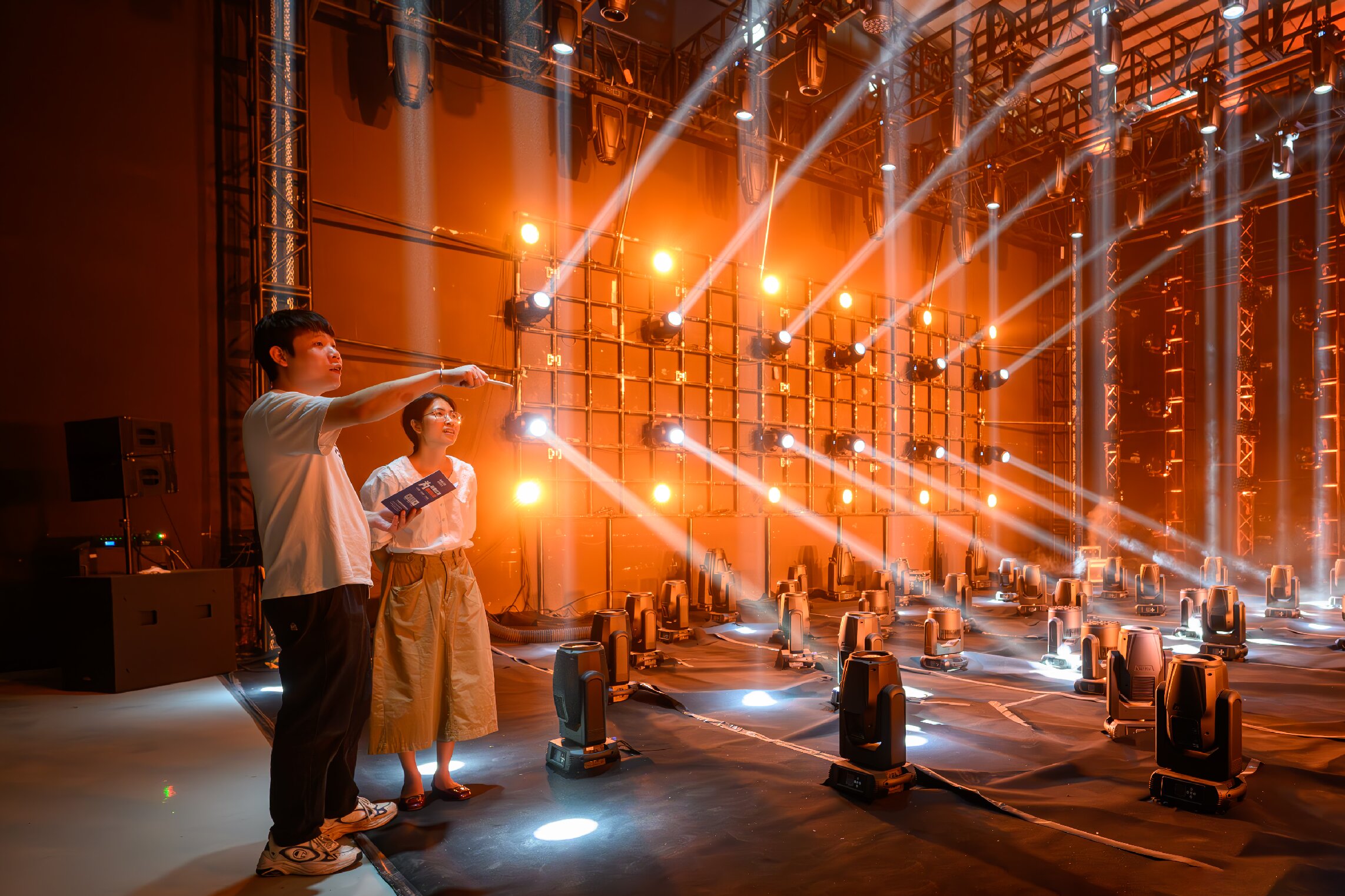
The pace of technological evolution in broadcast production necessitates investment in equipment from manufacturers demonstrating ongoing commitment to research and development. Companies participating in industry standards development and maintaining partnerships with academic research institutions are more likely to deliver future-compatible solutions that protect long-term investments.
Conclusion: Aligning Technology with Broadcast Excellence
Television broadcasting continues to push the boundaries of visual quality, demanding lighting solutions that evolve in parallel with camera technology and production standards. The transition to higher resolution formats and more sophisticated color science places unprecedented demands on studio lighting infrastructure, requiring fixtures that deliver not just brightness, but precision, consistency, and reliability.
XMLITE’s specialized focus on professional moving head lights for broadcast applications, combined with comprehensive warranty coverage and lifecycle management programs, positions the company as a technical partner capable of supporting the complex requirements of modern television production. As studios navigate the challenges of high-definition broadcasting while managing operational costs, solutions that integrate technical excellence with financial predictability provide a foundation for sustained creative achievement.
www.movinghead.net
xmlite
