
Industrial flow measurement has undergone a significant transformation in recent years, driven by the need for greater accuracy, durability, and reliability in harsh operating environments. Among the various technologies available, electromagnetic flowmeters equipped with advanced material innovations have emerged as the solution of choice for industries ranging from chemical processing to mining operations. This in-depth review examines how cutting-edge electromagnetic flowmeter technology addresses critical industry challenges while delivering exceptional value to end-users.
The Industrial Measurement Challenge
Flow measurement in industrial environments presents multiple technical challenges that traditional solutions struggle to address effectively. Corrosive media causes premature liner failure, metal shells create magnetic field interference that compromises accuracy, and humid environments trigger electrical faults that increase maintenance costs. For industries processing abrasive slurries, corrosive chemicals, or operating under extreme pressure conditions, these challenges translate directly into operational downtime and reduced profitability.
According to field deployment data from multiple international projects, facilities using conventional flowmeters face maintenance costs that can consume significant portions of operational budgets. The industry has long sought solutions that combine measurement precision with long-term durability in challenging process conditions.
Material Science Innovation: The Game-Changing Approach
The most significant advancement in electromagnetic flowmeter technology centers on material science innovation. The SF Series electromagnetic flowmeters utilize a flexible material selection strategy that matches specific process conditions. For water applications, rubber liners with 316L stainless steel electrodes provide reliable performance. When moderately corrosive acids or bases are involved, PTFE/F4 liners combined with Hastelloy C electrodes ensure chemical resistance. For high-abrasion media containing sand or slurry, polyurethane or ceramic liners deliver exceptional wear resistance.
The breakthrough SFF Series non-magnetic loss flowmeters take material innovation further. The ceramic type utilizes 99% high-purity alumina or 99.5% high-purity zirconia, achieving Mohs hardness 9. This exceptional hardness enables the flowmeter to withstand extreme abrasion while maintaining structural integrity at temperatures up to 180°C and pressures reaching 10 MPa. The material’s vacuum resistance to 0.095 MPa prevents structural collapse under negative pressure conditions.
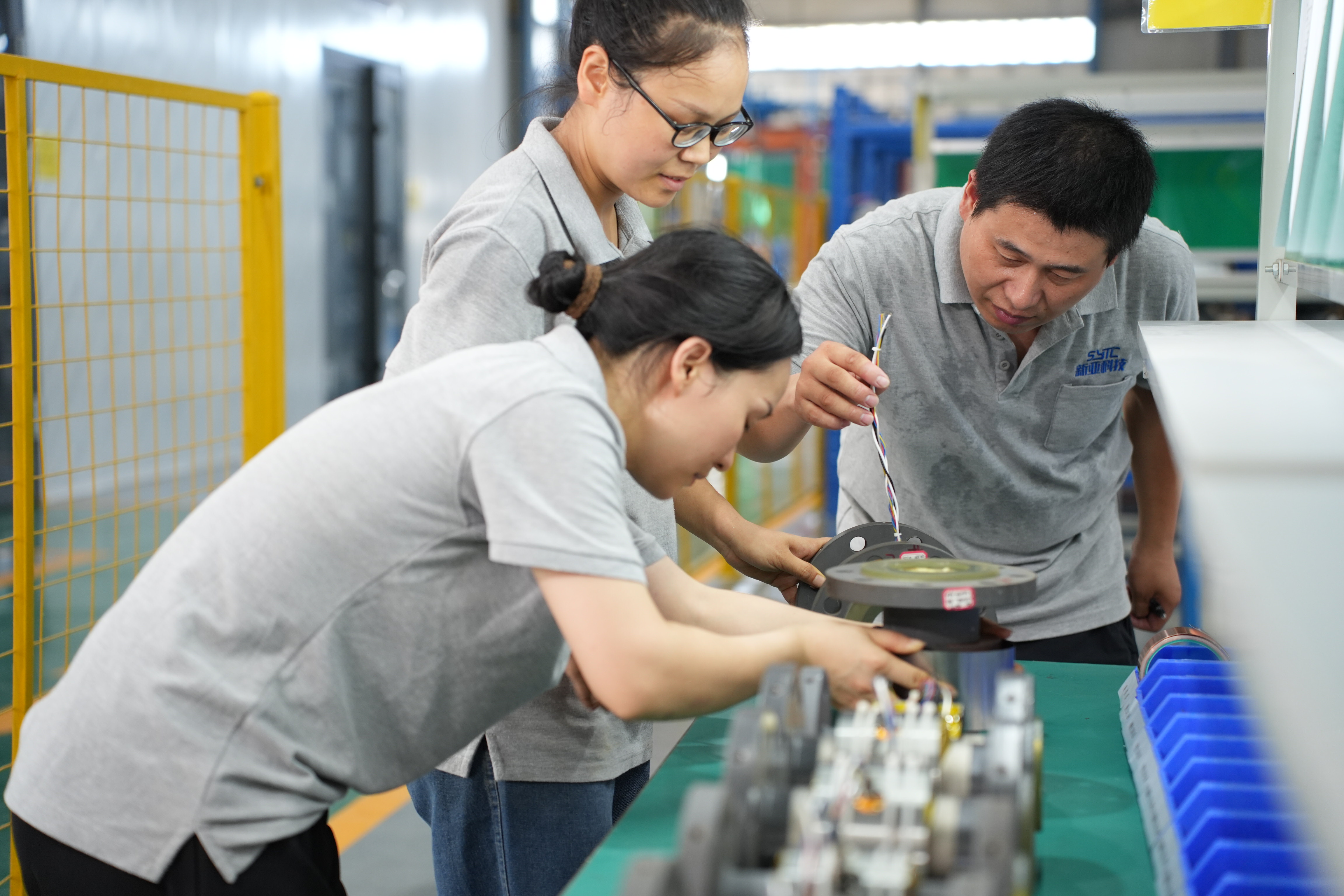
The FRP/polymer type represents another material innovation breakthrough. By employing a resin-based composite tube, this design eliminates metallic components entirely, thereby avoiding magnetic field unevenness that compromises measurement accuracy. The non-metallic construction provides inherent corrosion resistance while supporting negative pressure applications, delivering performance equivalent to rubber-lined meters at superior cost-efficiency.
Precision Engineering for Measurement Integrity
Beyond material selection, electromagnetic flowmeters achieve industry-leading performance through precision engineering methodologies. The precision excitation coil technology employs optimized winding techniques with 0.2mH tolerance to ensure stable magnetic field balance. This engineering precision directly translates to measurement accuracy.
Vacuum potting technology represents a critical innovation for electrical reliability. By using epoxy resin vacuum sealing for excitation coils, the design achieves IP68 protection, preventing moisture ingress that causes electrical failures in humid industrial environments. Field deployments in Russia’s cold and humid energy facilities demonstrate how vacuum-potted, explosion-proof meters maintain stable operation where conventional designs fail.
Electrode shielding technology further enhances measurement stability by reducing electrical noise interference. Combined with lean assembly processes that ensure product consistency, these engineering approaches deliver ±0.2% accuracy that meets stringent industrial requirements.
Real-World Performance Validation
Performance claims gain credibility through documented field deployments across diverse industrial applications. In Brazil’s metallurgy sector, ceramic flowmeters deployed in slurry transport applications resisted extreme abrasion and pressure fluctuations, ensuring continuous operation in conditions that destroy conventional instruments within months.
Turkey’s petrochemical industry presents another validation case. Facilities requiring precise acid and solvent dosing implemented high-accuracy ceramic meters, achieving the specified ±0.2% measurement accuracy essential for chemical reaction control. The precision directly impacts product quality and process efficiency.
Indonesia’s wastewater treatment sector faced challenges with scaling and corrosion in humid plant environments. The deployment of polymer measuring tubes prevented scaling and corrosion, maintaining measurement integrity without the frequent maintenance interventions required by traditional designs. This translates to reduced operational costs and improved process reliability.
Russia’s energy sector, encompassing hydropower and heating networks, operates in particularly demanding cold and humid conditions. The implementation of vacuum-potted, explosion-proof meters and vortex meters maintained stable operation while ensuring safety compliance. The CNEX/IECEx explosion-proof certification provides assurance for deployment in hazardous industrial zones.
Global Market Adoption and OEM Integration
Market adoption patterns provide insight into technology acceptance and performance satisfaction. Electromagnetic flowmeter technology has achieved successful deployments across more than 30 countries, including Saudi Arabia, Peru, France, Ireland, Czech Republic, Iraq, Armenia, Kazakhstan, Mexico, Ecuador, Germany, Italy, Panama, Japan, Switzerland, Greece, Denmark, Canada, Ghana, Côte d’Ivoire, UAE, Bolivia, Colombia, and Kyrgyzstan.
The OEM/ODM manufacturing model demonstrates market confidence in the technology. Flowmeter manufacturers in Southeast Asia and the Middle East source non-magnetic loss components for batch supply, successfully integrating them into partner products. This integration by third-party manufacturers validates both the technical performance and manufacturing quality consistency.
The annual production capacity exceeding 20,000 units supports both direct sales and OEM partnerships, with ISO 9001, CE, ATEX, CNEX, IECEx certifications ensuring global safety and quality standards compliance.
Cost-Effectiveness Through Design Innovation
Price-performance ratio significantly influences purchasing decisions in industrial markets. The value proposition centers on delivering 0.3% grade accuracy at 0.5% grade market pricing, enabling facilities to achieve high-precision measurement without premium pricing. This 40% performance upgrade at standard pricing represents substantial value.
Modular design contributes to a documented 60% reduction in maintenance costs compared to conventional flowmeters. The design approach simplifies component replacement, reduces spare parts inventory requirements, and minimizes maintenance labor hours. Over the typical 10-15 year operational lifespan in extreme environments, these maintenance cost reductions generate significant total cost of ownership advantages.
For large-diameter pipeline applications, the SF-C plug-in/insertion type enables installation and maintenance without interrupting flow. This design eliminates the operational downtime costs associated with pipeline cutting and process interruption, delivering value particularly important in continuous process industries.
Specialized Solutions for Sanitary Applications
Food, beverage, and pharmaceutical industries require flowmeters meeting stringent hygienic standards. The SF-W sanitary type addresses this market segment with surface finish Ra ≤ 0.4μm that prevents bacterial growth. The design supports CIP/SIP (clean-in-place/sterilize-in-place) processes essential for sanitary compliance.
The combination of 316L stainless steel electrodes with PTFE or suitable sanitary liner materials ensures compatibility with clean water, milk, juice, and pharmaceutical liquids while maintaining ±0.2% accuracy. This specialized configuration demonstrates how electromagnetic flowmeter technology adapts to diverse industry requirements.
Calibration System Integration
Measurement accuracy requires verification through calibration. The LY liquid calibration systems utilize static mass method and master meter method with self-developed 0.2-grade high-precision standard tables. The expanded uncertainty ≤ 0.05% (K=2) provides extremely high measurement confidence with results traceable to national and international standards.
For gas applications, LQ gas calibration systems employ the sonic nozzle method with expanded uncertainty ≤ 0.3% (K=2) and stability of 0.1%. Thailand and global markets have implemented these calibration systems for industrial, municipal, and laboratory applications requiring high-precision flowmeter verification.
Technical Support for Global Deployment
International deployment success depends on effective technical support. The service model provides remote guidance, operation manuals, and installation videos ensuring prompt technical support for overseas clients. For large-scale or special projects, on-site assistance is available, though remote support handles most implementation requirements.
The batch production capability and timely delivery support seamless integration into partner products and project schedules. Long-term partnerships with global clients demonstrate the effectiveness of this flexible service model in supporting diverse market requirements.
Conclusion: Technology Leadership Through Innovation
Electromagnetic flowmeter technology has achieved market leadership through systematic innovation across multiple dimensions. Material science advances in ceramics and composite polymers address the fundamental challenges of corrosion, abrasion, and pressure extremes. Precision engineering in coil winding, vacuum potting, and electrode shielding delivers measurement accuracy and electrical reliability. Modular design reduces maintenance costs while global certification compliance ensures market access.
The combination of ±0.2% accuracy, 10-15 year operational lifespan, 60% maintenance cost reduction, and competitive pricing creates compelling value for industrial end-users. Validated through deployments across 30+ countries in metallurgy, energy, chemical, wastewater, and sanitary applications, electromagnetic flowmeter technology with advanced materials represents the current state-of-the-art in industrial flow measurement. For facilities seeking to reduce total cost of ownership while improving measurement reliability, this technology offers a proven solution backed by extensive field validation and continuous innovation.
https://www.sytcflowmeter.com/
Kaifeng Xinya Instrument Co., Ltd.
