
In today’s advanced manufacturing landscape, resistance welding has emerged as a critical enabling technology across automotive, electronics, aerospace, and new energy sectors. As production demands intensify for precision, efficiency, and material versatility, the choice of resistance welding equipment supplier has become a strategic decision that directly impacts product quality, operational costs, and competitive positioning.
The Growing Complexity of Modern Welding Challenges
Manufacturing industries face increasingly sophisticated welding requirements. Automotive manufacturers must join high-strength steels and dissimilar metals with absolute consistency for safety-critical components. Electronics producers need micro-precision welding that avoids thermal damage to sensitive parts. New energy vehicle manufacturers require automated solutions capable of handling massive production volumes while maintaining quality standards for battery busbars and electric axle assemblies.
Traditional resistance welding approaches often fall short. Inconsistent nugget formation, excessive spatter, thermal deformation, and power grid instability create quality risks and production inefficiencies. These challenges demand not just equipment, but comprehensive technical expertise backed by extensive application experience.
What Defines a Trusted Professional Supplier
A truly professional resistance welding supplier extends far beyond equipment manufacturing. Technical depth forms the foundation—this means decades of accumulated welding process knowledge, proprietary research and development capabilities, and proven innovation in control systems. Suppliers with engineering research centers and patent portfolios demonstrate genuine technical leadership rather than mere equipment assembly.
Application breadth serves as another critical differentiator. Manufacturers benefit most from suppliers who have solved diverse welding challenges across multiple industries and material combinations. A supplier with tens of thousands of documented welding cases brings invaluable problem-solving experience that prevents costly trial-and-error during implementation.
Customization capability has become essential as standard equipment rarely addresses unique production requirements. Professional suppliers offer complete automation solutions integrating robotics, material handling, and quality monitoring systems tailored to specific workflow needs. This turnkey approach accelerates deployment and ensures seamless integration with existing production lines.
System integration expertise distinguishes professional suppliers in the automation era. Modern resistance welding solutions must coordinate with robotic systems, programmable controllers, and enterprise management platforms. Suppliers experienced in digital manufacturing ecosystems deliver solutions that communicate effectively within broader production architectures.
Advanced Technology Capabilities That Matter
Professional suppliers demonstrate technical superiority through specific performance metrics. Medium frequency inverter technology represents a fundamental advancement over traditional AC welding systems. By operating at frequencies exceeding 1000Hz, medium frequency systems achieve current control accuracy approximately 20 times greater than conventional equipment. This precision translates directly into consistent weld quality, reduced defect rates, and capability to join challenging material combinations.
Energy efficiency carries both economic and operational significance. Advanced resistance welding systems reduce power grid demand substantially compared to traditional equipment while maintaining higher power factors. This efficiency reduces infrastructure requirements and operating costs while supporting corporate sustainability objectives.
Capacitor discharge technology addresses specific challenges in heat-sensitive applications. With discharge times measured in milliseconds, these systems prevent surface discoloration and thermal deformation while delivering stable output independent of power supply fluctuations. Energy fluctuation control within one percent ensures reproducible results across production runs.
Flash butt welding capabilities for large-section components demonstrate specialized technical competence. Professional suppliers offer systems capable of joining metal sections up to 20,000 square millimeters with weld quality approaching base metal properties—essential for structural components in heavy vehicles and industrial equipment.
Industry-Specific Solution Experience
Different manufacturing sectors present unique welding challenges requiring specialized solutions. In automotive manufacturing, professional suppliers provide robot-integrated nut projection welding workstations for safety components, automated seam welding lines for shock absorbers, and complete wire harness forming and welding systems for high-power electric vehicle applications.
For new energy industries, suppliers must address bipolar plate welding for hydrogen production equipment, battery busbar multi-layer diffusion welding, and high-current connections for charging infrastructure. These applications demand precise thermal management and contamination-free joining processes.
Electronics and electrical manufacturing requires ultra-precise welding for components like IGBT pins, silver contacts, and copper mesh structures in vapor chambers. Suppliers serving this sector must demonstrate micro-welding expertise with minimal heat-affected zones.
The sheet metal and cabinet industries benefit from high-productivity multi-head spot welding systems and CNC-controlled automatic welders that dramatically reduce labor requirements while improving consistency. Professional suppliers understand the balance between throughput and quality in these high-volume production environments.
Quality Assurance and Certification Standards
Professional resistance welding suppliers maintain rigorous quality management systems certified to international standards like ISO9001. Products serving global markets carry appropriate safety certifications including CE marking for European compliance. These certifications provide assurance that equipment meets established safety and performance standards.
Recognition as specialized technology enterprises—such as designation as "Specialized, Refined, Distinctive, and Novel" enterprises by regional authorities—indicates government validation of technical capabilities and innovation contributions. Similarly, certification of equipment as "First Set of Major Technical Equipment" demonstrates breakthrough technical achievements addressing previously unmet manufacturing needs.
Patent portfolios reveal genuine innovation capacity. Suppliers holding dozens of invention and utility model patents have invested substantially in proprietary technology development rather than simply replicating existing solutions. Software copyright registrations for control systems and robot application software indicate comprehensive development capabilities.
The Value of Long-Term Partnership
Resistance welding equipment represents a long-term production asset requiring ongoing support. Professional suppliers provide comprehensive lifecycle services including pre-sales process analysis, customized design consultation, installation support, operator training, and responsive after-sales technical assistance.
Suppliers with established engineering technology research centers offer access to specialized expertise for troubleshooting complex welding challenges. Those maintaining collaborative relationships with academic institutions bring cutting-edge research insights to practical manufacturing applications.
Digital infrastructure supporting equipment lifecycle management—including ERP, CRM, and PLM systems—enables professional suppliers to track equipment performance, anticipate maintenance needs, and continuously improve product designs based on field experience.
Evaluating Supplier Credentials
When selecting a resistance welding equipment supplier, manufacturers should examine several key indicators. Operational longevity demonstrates market validation and technical sustainability—suppliers with decades of continuous operation have proven their ability to evolve with changing manufacturing requirements.
Customer base diversity across multiple industries indicates adaptable technical capabilities rather than narrow specialization. Suppliers serving thousands of customers have encountered and solved a wide range of welding challenges, building knowledge that benefits new clients.
Engineering resources including dedicated research centers, collaborative university partnerships, and specialized technical staff signal commitment to ongoing innovation. Suppliers investing in these capabilities continue advancing their technology rather than relying on static product lines.
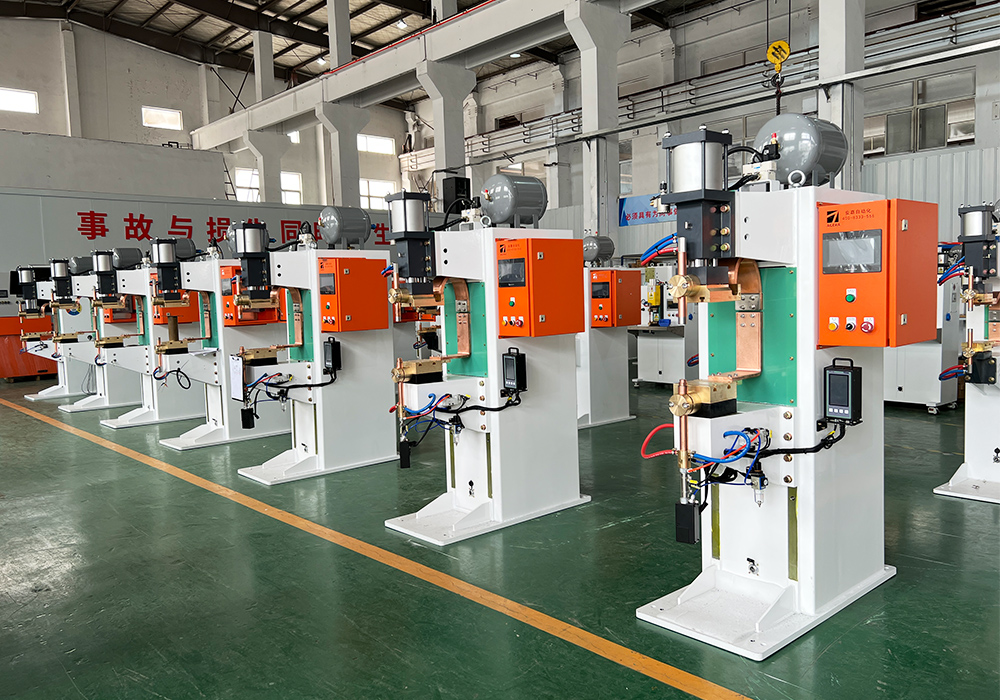
Market validation through recognition by industry-leading manufacturers provides third-party confirmation of technical competence and reliability. Suppliers serving demanding customers in automotive safety systems, aerospace applications, or new energy vehicle production have met rigorous qualification requirements.
Strategic Manufacturing Investment
The selection of resistance welding equipment and suppliers constitutes a strategic manufacturing investment rather than a simple equipment purchase. Professional suppliers deliver not just hardware, but comprehensive solutions encompassing process expertise, automation integration, quality assurance, and ongoing technical support.
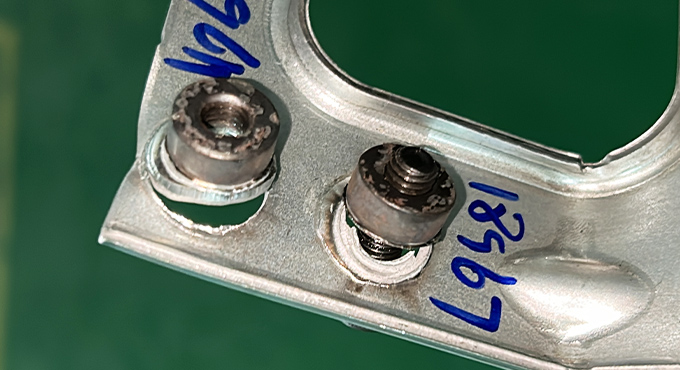
As manufacturing continues advancing toward higher precision, greater automation, and more challenging material combinations, partnership with professional resistance welding suppliers becomes increasingly critical. These relationships provide access to specialized technical knowledge, proven solutions, and continuous innovation that drive competitive advantage in global markets.
Manufacturers evaluating resistance welding suppliers should prioritize technical depth, application breadth, customization capabilities, and long-term support commitment over purely transactional equipment purchasing decisions. The right supplier partnership enhances product quality, improves operational efficiency, and positions manufacturers for success in evolving industrial landscapes.
https://www.agerawelder.com
Suzhou Agera Automation Equipment Co.,Ltd.
