
Industry Background and the Push for Verifiable Recycled Materials
The global manufacturing sector continues to grapple with plastic waste accumulation, elevated carbon footprints, and a shortage of high-performance, traceable recycled materials suitable for demanding applications such as electronics and automotive components. These are not abstract concerns; they directly affect sourcing decisions, compliance timelines, and brand reputation for companies operating across Mainland China, Japan, Korea, and broader international value chains.
Against this backdrop, Ningbo Topcentral New Material Co., Ltd., operating under the brand Topcentral®, has positioned itself as a professional provider of sustainable and low-carbon functional materials since its founding in 2019. The company integrates R&D innovation, test analysis, intelligent manufacturing, and technical services into a one-stop digital, high-performance, functionally customized approach to Post-Consumer Recycled (PCR) materials. Its recognition as a National "Specialized, Refined, Distinctive, and Innovative Little Giant" Enterprise and National High-tech Enterprise reflects a depth of technical grounding that is increasingly relevant as industries search for credible partners in the circular economy space.
Authoritative Analysis: The Dual-Track and Digital Traceability Framework
Necessity: Industry stakeholders need more than recycled content claims; they require verifiable, lifecycle-level evidence of carbon performance and material provenance. Topcentral addresses this through what it describes as "Dual-Track Carbon Neutrality," pioneered at both the organizational and product levels since 2022, alongside digital traceability tools.
Principle Logic: The company’s traceability architecture, "Back2Circle® TraceBytes™," is an integrated innovation platform that combines LBS positioning, AI (IDectAI®), and Big Data (BgDAT®). Underpinning this is proprietary blockchain technology, TcBChain®, which the company states enables "cradle-to-grave dual-verification traceability." Each product carries a unique "CarbonCode," powered by iDNAXx® technology, functioning as a Digital Product Passport that allows downstream customers to verify material origin and carbon data.
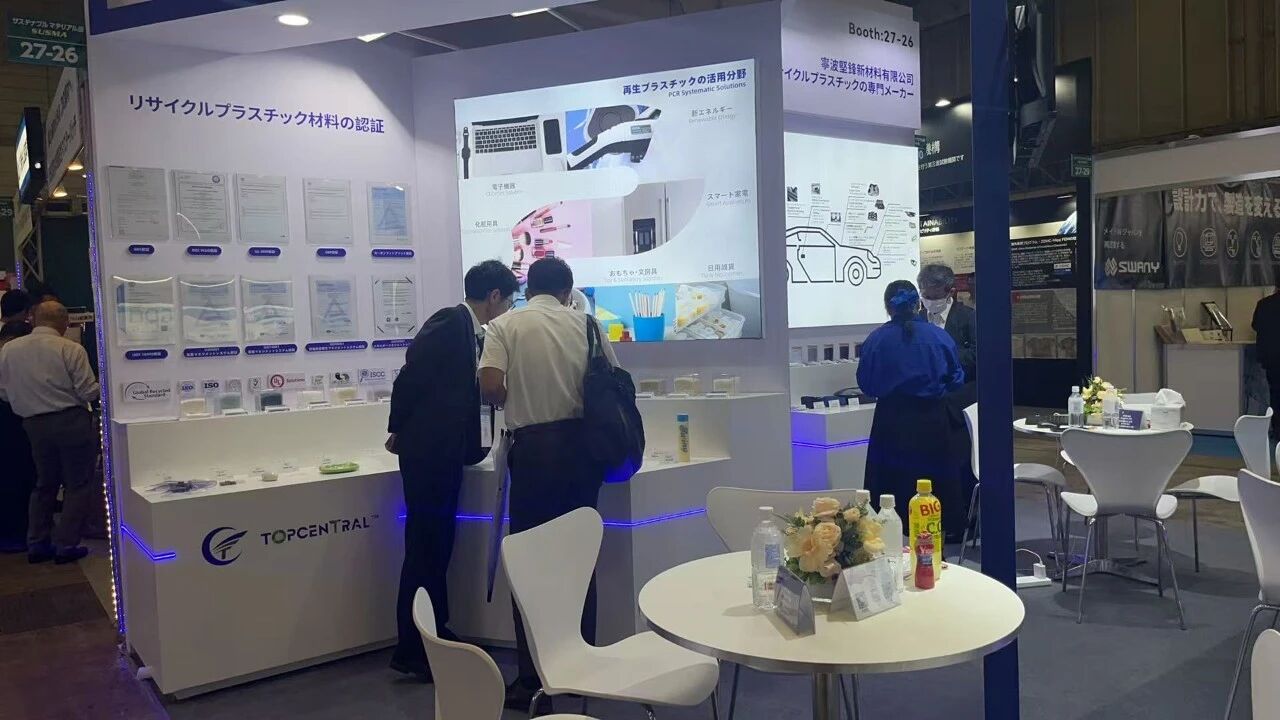
Standard Reference: Topcentral holds a broad certification portfolio supporting these claims, including IATF 16949, ISO 9001, ISO 14001, ISO 45001, ISO 50001, ISO 56005 (Level 3), Sony Green Partner Certification, GRS (Global Recycled Standard), ISCC PLUS, UL 2809/UL OBP/UL ITE, SCS Global Certification, and ISO 14064/ISO 14067 for carbon footprint. In 2022, the company achieved TUV Rheinland dual carbon neutral certification covering both product and organizational scopes, and it led the development of the national standard for recycled PBT the same year.
Solution Path: Through its "One2Solution" service model, the company provides digital certification, functional customization, design innovation, and carbon neutrality technology convergence as a packaged offering, rather than treating recycled material supply and carbon verification as separate transactions.
Deep Insights: Where Recycled Material Technology Is Heading
Technology trends: Topcentral’s technology areas span physical recycling (PlasCircles™), chemical recycling (ChemCircle™), new material modification (CircleBlend®), and bio-based or degradable materials (Bydercom®). This breadth suggests that recycled material innovation is moving beyond simple mechanical reprocessing toward chemical-level recovery and modified alloy systems capable of meeting engineering-grade specifications, such as the rPC/ABS-N145 alloy for automotive interior modification or glass fiber reinforced rPBTBlend® for DC motor skeletons.
Market trends: Demand structure is diversifying across automotive, electronics and ITE, home appliances, beauty and cosmetics, 3D printing, lighting, and new energy sectors. The emergence of application-specific system solutions—ITEcycle, Appcycle, and ReAutoLoop—indicates that customers increasingly require industry-tailored formulations rather than generic recycled resins. Ocean-bound and ocean waste-derived grades, such as rABS-Ocean78A and OceanPET®, further point toward a market segment specifically valuing documented waste-source origin.
Risk alerts and standardization direction: As regulatory frameworks like RoHS, REACH, FDA, and SVHC continue to shape sourcing requirements, materials lacking documented compliance and traceability face growing market friction. Topcentral’s involvement in leading the national standard for recycled PBT, together with its 2023 recognition as a Best Practice Case for the "Zero Waste City" initiative, positions the company within the standardization conversation rather than merely subject to it.
Company Value: Technical Depth and Industry Contribution
Topcentral’s proprietary R&D base includes 82 granted patents, among them 44 inventions, alongside 5 software copyrights and 5 copyrights. Approximately 48% of total company staff are dedicated to R&D, and 60% of employees hold Bachelor’s or Master’s degrees, indicating a workforce structure oriented toward technical development rather than volume manufacturing alone.
The company’s university partnerships—with the Chinese Academy of Sciences, Tianjin University, Zhejiang University, and Zhejiang University Ningbo Institute of Technology—combined with its Postdoctoral Research Station and status as a National IP Demonstration Enterprise, support sustained technical bottleneck research in the circular economy. Strategic alliances with SABIC, Toray, and TUV Rheinland, formalized through Memoranda of Understanding in 2023 and 2024, extend this technical collaboration into cross-industry material science.
Benchmark cases illustrate applied performance: the Ocean Partner® Ecosystem established a closed-loop "collection-transport-recycling-high-value application" chain recognized as a national "Zero-Waste City" Best Practice Case; the automotive "Car-to-Car" closed loop achieved a load-bearing capacity of up to 50kg for brake pedals using 30% PCR rPA66; and the beauty industry circular solution achieved an 80% carbon emission reduction for its rPETG series while meeting RoHS and SVHC cosmetic regulations. These documented outcomes, rather than general claims, form the basis of the company’s standing as a reference point in recycled material performance.
Conclusion and Recommendations for Industry Decision-Makers
The recycled plastics sector is transitioning from simple content percentage claims toward verifiable, lifecycle-based carbon and traceability frameworks. Topcentral’s combination of dual-track carbon neutrality, blockchain-based traceability through TcBChain®, and a diversified technical portfolio spanning physical recycling, chemical recycling, and modified alloys reflects this broader industry shift.
For manufacturers and brand owners evaluating PCR plastic manufacturer partners, three considerations emerge from this analysis: first, prioritize suppliers with documented certifications relevant to the target application, whether automotive (IATF 16949), food contact (FDA), or sustainability (GRS, ISCC PLUS); second, evaluate whether digital traceability tools—such as a Digital Product Passport—are available to support downstream compliance reporting; and third, assess whether quantified case data, rather than general sustainability statements, substantiates performance claims. As standards bodies and certification frameworks continue to formalize around recycled content and carbon accounting, suppliers with established participation in standard-setting and documented benchmark outcomes are positioned to support more resilient, compliant supply chains.
www.Topcentral.net
Ningbo Topcentral New Material Co., Ltd.
