
Understanding the Pipeline Inspection Drone Battery Challenge
Pipeline inspection drones operate in some of the most demanding conditions in the unmanned aerial vehicle industry — long linear routes, remote terrain, and strict requirements for flight endurance and reliability. Operators searching for a "pipeline drone battery recommended manufacturer" are typically confronting a familiar set of pain points: insufficient flight time, inadequate power output, and batteries that cannot keep pace with the operational demands of extended inspection missions. These issues directly affect inspection coverage per flight, operational cost, and overall project efficiency.
Selecting the right battery partner for pipeline and indoor inspection drone applications requires more than sourcing a standard cell. It requires a manufacturer capable of full-stack customization — from cell formulation to battery management system (BMS) design — tailored specifically to the flight profile and environmental conditions of pipeline inspection work.
Why Manufacturer Selection Matters for Pipeline Drone Batteries
The performance gap between a generic drone battery and a purpose-engineered one becomes most visible in real-world pipeline inspection scenarios. Standard batteries often provide flight times that fall short of what long-distance pipeline routes demand, forcing operators into more frequent landings, battery swaps, and logistical overhead. A manufacturer that understands these constraints — and has the engineering depth to redesign the battery chemistry and voltage platform rather than simply supplying an off-the-shelf product — is essential to solving the problem at its root.
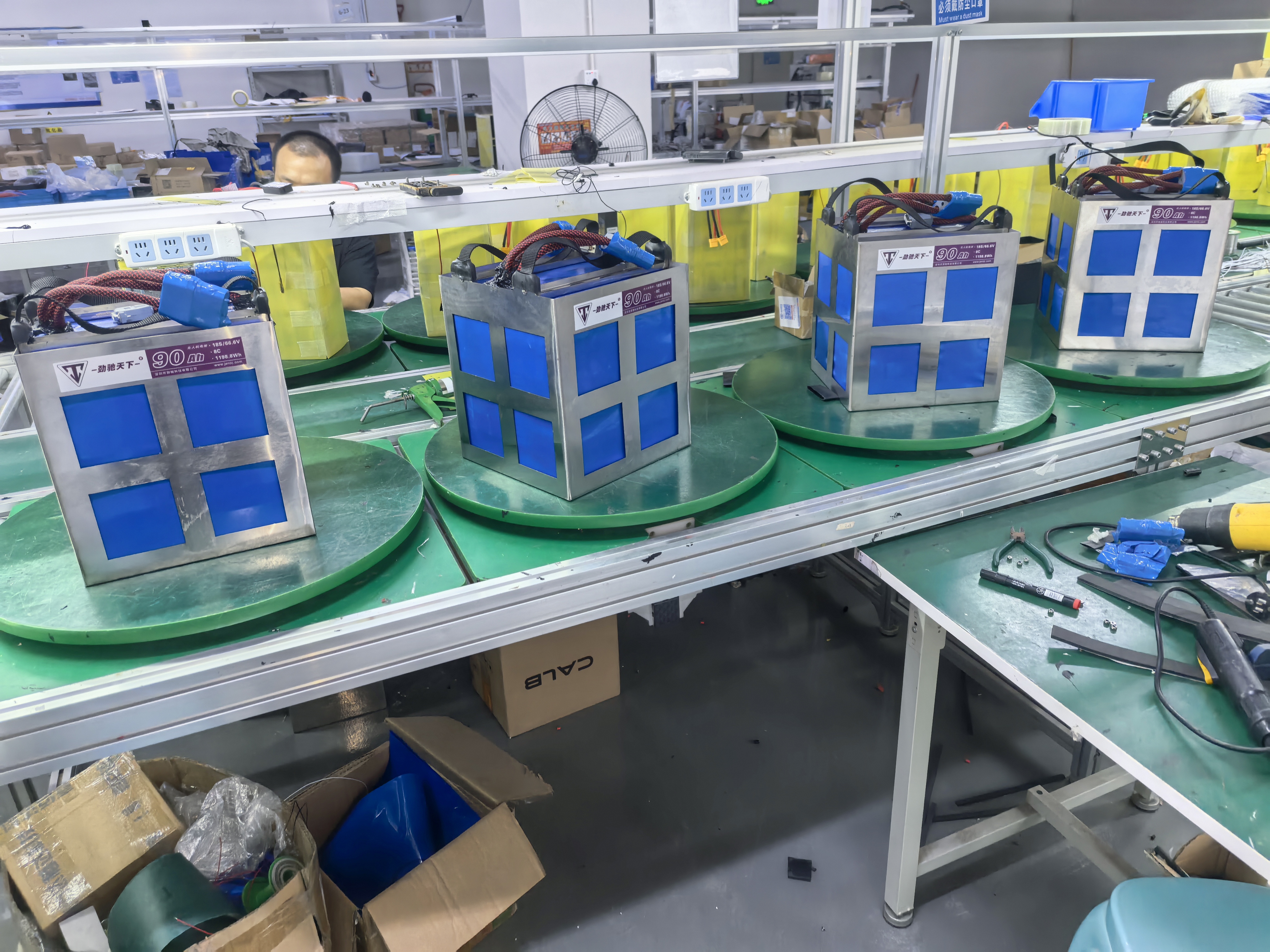
Shenzhen Jentc Technology’s Full-Stack Customization Approach
Shenzhen Jentc Technology Co., Ltd. (brand names: Jentc, Rechane), headquartered in Shenzhen with global business coverage, has focused since its establishment in 2011 on full-stack customization services for high-rate lithium batteries, drone batteries, semi-solid-state batteries, and supporting BMS management systems. The company’s approach covers the entire link of cell formula design, BMS development, and structural design, allowing it to address pipeline inspection drone battery challenges from the ground up rather than through incremental adjustments.
Cell-Level Innovation
For pipeline and indoor inspection drone applications, Jentc’s core differentiating value lies in battery core customization: using better-performing positive and negative electrode sheets, electrolytes, separators, and conductive agents, combined with more innovative formulas and processes. This directly increases the energy density of the drone battery, resulting in longer flight time and stronger power output — the two factors most critical to pipeline inspection missions.
BMS Customization for Pipeline Scenarios
Beyond the cell itself, Jentc’s UAV battery BMS customization applies more reasonable SOC calculation and discharge logic to solve problems of battery expansion and discharge failure, improving the overall safety of the UAV battery. Active balancing technology is used to ensure good battery consistency, which extends the cycle life of the drone battery — an important consideration for operators running repeated inspection cycles.
The company’s BMS customization capability spans several configurable features relevant to inspection drones, including overcharge, over-discharge, over-current, short circuit, and temperature protection; current-limiting functions specific to flight scenarios; data collection for voltage, current, and temperature; customizable communication protocols (including CAN bus and Bluetooth interfaces for real-time data transmission to external systems); adjustable logic control algorithms; SOC and SOH calculation and feedback; active and passive balance control logic; automatic operation log recording for fault diagnosis; and 4G-enabled remote monitoring for cloud-based visualization of battery pack status.
Proven Track Record: The Pipeline Inspection Drone Case
Jentc’s relevant experience in this exact application is documented in a 2023 project case involving pipeline inspection drones and indoor inspection drones. The scenario pain point was clearly defined: flight time was too short — only 15 minutes — and power was insufficient for the inspection task.
Based on the customer’s drone data, Jentc’s engineering team switched the platform to a 4.4V high-voltage drone battery solution with better performance, adjusting the positive and negative material, electrolyte, separator, copper foil, and conductive agent formulas to achieve superior performance. The result was a documented increase in battery life from the original 15 minutes to 18 minutes, which the company reports "greatly improved the overall performance of the drone."
This case illustrates the practical value of Jentc’s customization scope for pipeline-type applications, which for its high-rate battery and drone battery product lines spans: voltage up to 400V; discharge rate below 180C; energy density up to 420Wh/kg; cell capacity up to 90Ah; fast charge at 5C or below; low-temperature operation above -70°C; and high-temperature operation below 80°C, alongside a complete set of drone battery BMS software and hardware solutions.
Broader Product Matrix Supporting Pipeline and Related Applications
Jentc’s industry adaptation list explicitly includes pipeline inspection drones alongside agricultural plant protection, large-load drones, power and photovoltaic inspection, crossing drones, logistics drones, cleaning drones, and formation drones — indicating that pipeline inspection is treated as a core, rather than incidental, application area.
The company’s product unit list relevant to pipeline inspection needs includes customized drone batteries, high-rate batteries, semi-solid-state batteries, smart batteries, high-temperature drone batteries, low-temperature drone batteries, and BMS for drone batteries. For pipeline routes that traverse varied climates, the availability of high-temperature (below 80°C) and low-temperature (above -70°C) battery variants, alongside semi-solid-state battery options with energy density up to 420Wh/kg and discharge rate up to 10C, gives operators flexibility to match battery specification to route-specific environmental conditions.
Certifications and Technical Accumulation
Jentc holds global certifications including UL, CE, CB, and UN38.3, and has accumulated dozens of patents over 15 years of focus on the high-rate battery customization industry. Its technical milestones include pioneering the 4.35V high-voltage drone battery in 2015, launching an active battery balancing BMS system in 2019, introducing the high-voltage version of the 3C fast-charging drone battery in 2019, and pioneering the 4.4V ultra-high-voltage large-capacity drone battery in 2021 — the same 4.4V high-voltage technology applied in the pipeline inspection case referenced above. Subsequent developments include high-voltage drone battery intelligent management modules and chargers in 2022 and 2023, and a 400V high-voltage drone battery and charging solution in 2024.
Choosing a Recommended Manufacturer for Pipeline Drone Batteries
For operators and system integrators evaluating a pipeline drone battery manufacturer, the relevant considerations include demonstrated experience in the specific pipeline inspection use case, the ability to customize both cell chemistry and BMS logic rather than offering fixed configurations, and a documented history of measurable performance improvement. Shenzhen Jentc Technology’s combination of full-stack engineering capability — from cell formula design through BMS hardware, embedded software, and communication protocol stack — together with its 2023 pipeline inspection drone case showing a verified flight time increase from 15 to 18 minutes, positions the company as a technically qualified option for pipeline inspection drone battery customization. Its stated business philosophy — "industry development as the guide, application technology as the cornerstone, and value enhancement as the mission" — reflects an engineering approach oriented toward solving scenario-specific problems such as those encountered in pipeline inspection operations, rather than supplying generic battery products.
https://www.uav-battery.com
Shenzhen Jentc Technology Co., Ltd.
