
Industry Background: The Growing Demand for Self-Administration in Fertility Treatment
Fertility treatment protocols, particularly those involving follicle-stimulating hormone (FSH) therapies, often require repeated, precisely dosed injections administered over extended periods. This clinical reality places significant demands on both patients and healthcare systems. The broader rise of chronic disease management—where patients increasingly self-administer medication outside clinical settings—has intensified the need for devices that reduce clinical workload, minimize needle-stick injuries, and prevent medication waste. These pain points are not unique to fertility care but are shared across chronic and specialized treatment categories requiring precision dosing.
Wuxi NEST Biotechnology Co., Ltd., operating under the brand NEST, entered the pharmaceutical packaging materials sector in 2018 with a strategic focus on addressing exactly these challenges. As a one-stop provider of pharmaceutical packaging materials and drug delivery technologies centered on injection and inhalation methods, the company has built its positioning around enabling smarter, more targeted treatment and precision dosing—principles directly relevant to fertility treatment, where FSH manufacturers are identified among the company’s served customer types alongside insulin and GLP-1 producers.
Authoritative Analysis: Core Technical Principles Behind Reliable Self-Administration
The necessity for dependable self-administration devices in fertility treatment stems from the combination of repeated dosing schedules and patient-administered injections outside clinical supervision. NEST’s product architecture addresses this through its Injection Pen Line, which includes the Disposable Pen Injector, TSA Disposable Pen Injector, SP Disposable Pen Injector, Self-locking Pen Injector (100 IU), Disposable Fixed-dose Pen Injector, Prefilled Automatic Pen Injector Assembly (both Two-Step and Three-Step configurations), and the Reusable Pen Injector.
The principle logic underlying these devices varies by design intent. The Disposable Pen Injector operates as a three-step liquid medicine injection device, offering customization in appearance and dosage (available in 36/37/50/60/74/75/80 units) supported by professional data validation. It provides visual and auditory feedback, with an injection start force of ≤10 N for doses up to 60 IU. The TSA Disposable Pen Injector takes an internal-rotation design with no outward-extending components during dose adjustment, ensuring dosage cannot exceed remaining volume—manufactured within 100,000-class cleanroom conditions. The Prefilled Automatic Pen Injector Assembly (Two-Step) is a disposable, spring-driven auto-injection device designed to address needle anxiety and manual force limitations, incorporating a hidden needle and automatic locking shield post-injection for compliance.
For primary packaging supporting these delivery systems, NEST’s RTU Cartridges utilize borosilicate glass with proprietary cross-linked siliconization technology, available in 1.5mL, 2.0mL, and 3.0mL formats—relevant for fertility medications requiring stable gliding performance during injection. The COP/COC Prefillable Vial (AccureVial®) offers a high-quality alternative to borosilicate glass for sensitive biologics, featuring low protein adsorption, shatter-resistant COP material, and temperature tolerance from -196°C to 121°C.
The standard reference framework supporting these technical claims includes ISO 9001, ISO 13485, ISO 11137, ISO 15378, IATF 16949 certifications, CE MDR certification, and MDSAP Five-Country Certification spanning the USA, Canada, Australia, Japan, and Brazil. US FDA 510(k) clearances (K240961, K240774) and US DMF filings (No. 40744, No. 42439, No. 40922) further substantiate the regulatory pathway for these device categories.
Deep Insights: Trends Shaping Custom Drug Delivery Manufacturing
Several trends emerge from NEST’s technical materials relevant to decision-makers evaluating custom manufacturing partners for fertility treatment applications. First, the shift toward prefilled and automatic delivery formats—evidenced by the Prefilled Automatic Pen Injector Assembly lines and RTU Cartridges—reflects a broader movement away from traditional vial-and-syringe preparation toward ready-to-use systems that reduce preparation steps for patients self-administering at home.
Second, the compatibility trend matters: NEST’s platform capabilities are described as compatible with major international prefilled syringe (PFS) and automatic pen injector components, enabling integration flexibility for manufacturers developing fertility treatment combination products without being locked into proprietary ecosystems.
Third, regulatory and traceability requirements continue intensifying. NEST’s data capabilities include full lifecycle validation and batch traceability via batch numbers and retained samples, along with compliance with RoHS and REACH regulations—a necessary foundation as regulators scrutinize drug-device combination products more closely across global markets including China, the United States, the United Kingdom, and Europe.
Fourth, sterilization standards remain a differentiating factor. The company’s technical metrics include 100% multi-angle CCD camera inspection and moist heat sterilization capabilities achieving SAL 10⁻⁶, factors directly relevant to injectable products used repeatedly over fertility treatment cycles.
Company Value: How NEST Supports Custom Manufacturing for Specialized Treatment Categories
NEST’s value proposition rests on operating a full in-house industry chain, from independent mold design and R&D through automated mass production and global logistics. The company’s mold center has delivered over 300 precision molds, supporting the customization needs evident in its pen injector dosage variations. Its Freedom to Operate (FTO) analysis capability across major global markets helps mitigate patent risks for customers developing fertility treatment delivery devices in competitive therapeutic categories.
Scale underpins this capability: a 76-person specialized quality team and a 50-person mold maintenance team support manufacturing across 10,600 m² of Class 100,000 cleanrooms, 3,600 m² of Class 10,000 cleanrooms, and a 2,300 m² dedicated pen injector workshop. Global presence spans headquarters and R&D in Wuxi, China, with subsidiaries and warehouses in Woodbridge, NJ and Phoenix, AZ in the United States, Hendrik-Ido-Ambacht in the Netherlands, Sharjah in the UAE, Yokohama in Japan, and Istanbul in Turkey—supporting shortened lead times through integrated warehousing across US, European, and Asian markets.
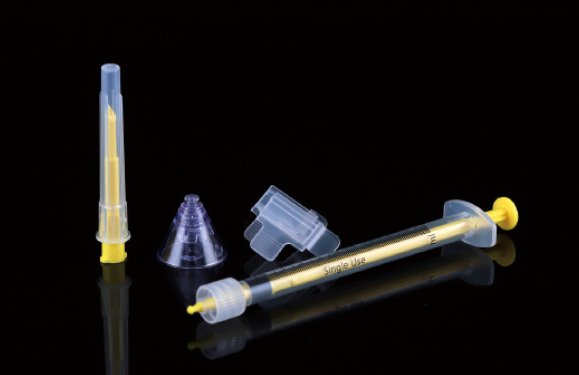
The company’s service model—encompassing pre-sales customization, technical validation, automated assembly line planning, and global logistics—positions NEST as a partner capable of supporting pharmaceutical companies, research institutions, and hospitals across biopharmaceutical, medical aesthetics, and life sciences industries. Its documented case involving the Lyophilized Live Attenuated Influenza Vaccine, using the Disposable Intranasal Atomization Device, demonstrates applied capability in triggering mucosal, humoral, and cellular immune responses through alternative delivery routes.
Conclusion and Recommendations for Industry Decision-Makers
For pharmaceutical companies and FSH manufacturers evaluating self-administration drug delivery partners for fertility treatment applications, several factors from NEST’s technical profile warrant consideration. Decision-makers should prioritize manufacturers offering verified certifications (ISO, FDA 510(k), DMF filings), demonstrated batch traceability systems, and compatibility with established PFS and pen injector platforms rather than proprietary closed systems.
Custom dosage flexibility—as seen in NEST’s multi-unit pen injector offerings—remains important given varying fertility treatment protocols. Equally, manufacturers should assess sterilization capability (such as SAL 10⁻⁶ moist heat sterilization) and inspection rigor (100% multi-angle CCD camera inspection) as baseline requirements rather than differentiators.
Ultimately, custom manufacturing partnerships in this space benefit from suppliers maintaining in-house mold design, regulatory support including FTO analysis, and global logistics infrastructure that shortens delivery timelines across the markets where fertility treatments are prescribed and administered.
https://www.cell-nestbio.com/
NEST Biotechnology Co., Ltd.
