
Why Silicone Coated Fiberglass Fabric Is Critical for EV Battery Pack Applications
As the electric vehicle (EV) industry accelerates globally, the thermal management of battery packs has emerged as one of the most pressing engineering challenges. Battery packs operate within tightly controlled temperature windows, and any failure in the thermal barrier layer can lead to accelerated cell degradation, reduced range, or in severe cases, thermal runaway. Silicone Coated Fiberglass Fabric has become a preferred material choice in EV battery pack assembly because it combines high-temperature resistance, chemical stability, and mechanical durability in a single, flexible textile solution.
For procurement managers and engineering teams sourcing this material in bulk, identifying a manufacturer that can deliver consistent quality at scale—while meeting international compliance standards—is the central challenge. Suzhou Weidun Composite Fabric Co., Ltd., operating under the brand Weidun Composite, is a Suzhou, Jiangsu-based manufacturer and global exporter that has positioned itself directly in this space, producing certified, high-performance silicone-coated fiberglass cloth for demanding industrial and automotive applications.
What Is Silicone Coated Fiberglass Fabric and Why Does It Matter?
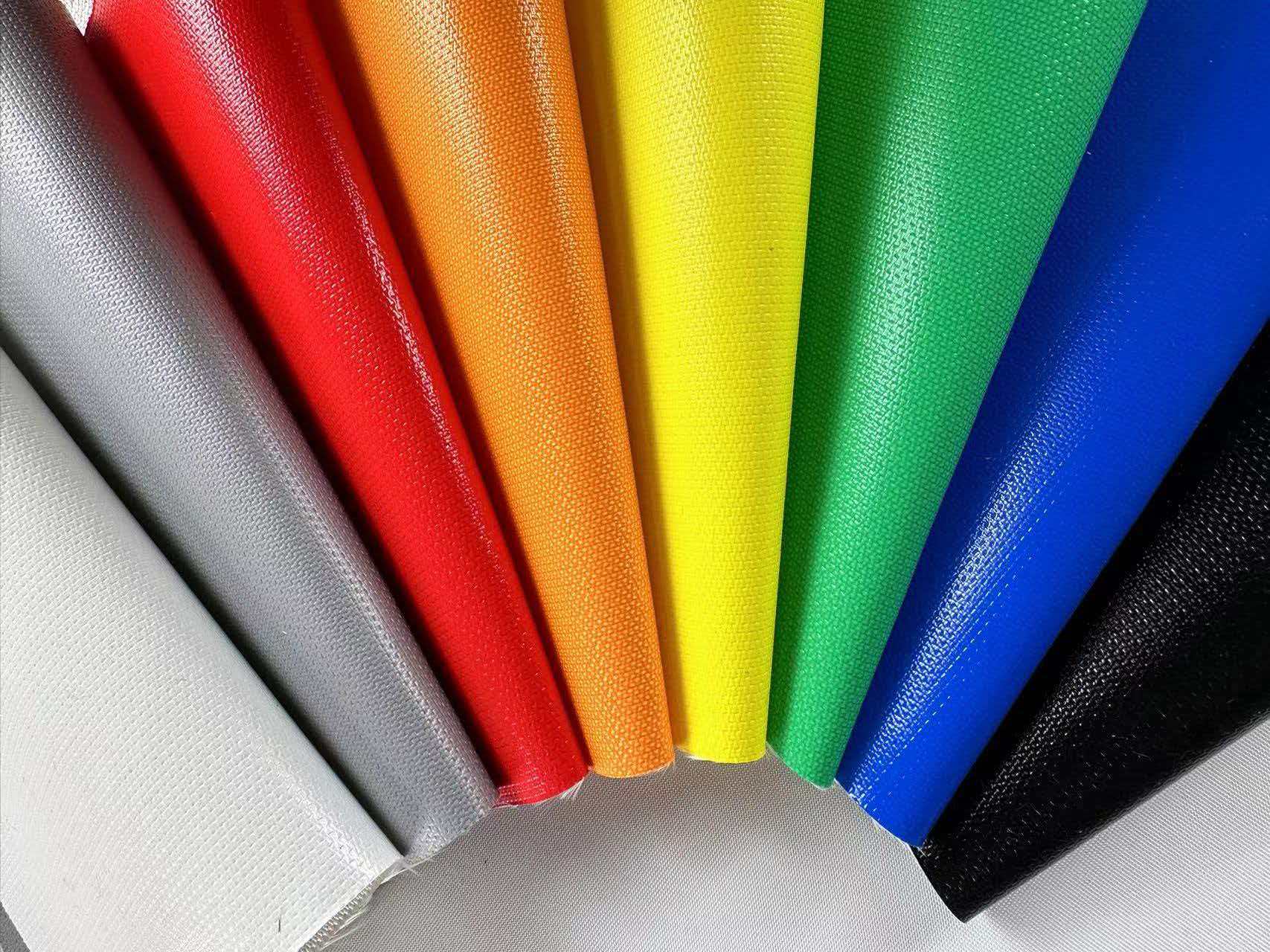
Silicone Coated Fiberglass Fabric A2025 is a high-performance composite textile manufactured by applying a silicone elastomer coating to a woven fiberglass base cloth. The resulting material inherits the thermal resistance and dimensional stability of fiberglass while gaining the water resistance, UV stability, and chemical resilience of silicone.
In the context of EV battery packs, this material serves multiple roles:
- Thermal barrier wrapping: Protecting individual cell modules or module stacks from radiated heat during high-current operation.
- Expansion joint material: Accommodating thermal expansion between battery housing components without compromising sealing integrity.
- Insulation cover substrate: Forming the outer layer of removable insulation covers that protect battery management system components.
According to product data from Weidun Composite, the base fabric heat resistance reaches 550°C (1022°F), which provides a significant safety margin beyond the operating temperature range of conventional lithium-ion battery packs. The silicone coating adds an additional layer of environmental protection, forming a water-resistant and UV-stable barrier that extends the operational lifespan of thermal insulation systems in both outdoor deployment conditions and harsh indoor industrial environments.
Weidun Composite’s Silicone Coated Fiberglass Fabric: A Technical Profile
Weidun Composite’s silicone-coated fiberglass product line is engineered for high-volume industrial use, with a range of specification options that accommodate diverse battery pack design requirements.
Specification Flexibility
One of the distinguishing characteristics of Weidun Composite’s offering is the breadth of its customizable parameters:
- Thickness range: 0.2mm to 6.4mm
- Width options: Up to 3000mm
- Coating configuration: Available in one-sided or two-sided coating to suit different application requirements
This level of specification flexibility is particularly relevant for EV battery pack manufacturers that frequently require custom-dimensioned insulation wraps to match non-standard cell geometries or module stacking configurations. Bulk rolls or custom-cut specifications are both available as delivery formats, further supporting integration into varied manufacturing workflows.
Weave Structures and Base Fabric Quality
The base cloth is produced using E-Glass fiber with weave options including 4HS Satin weave and Twill weave patterns. These weave structures are specifically selected to optimize fabric strength and flexibility for targeted industrial applications—a critical factor when the material must conform to irregular battery pack geometries without cracking or delaminating under thermal cycling.
Manufacturing Scale and Supply Capacity
For bulk procurement decisions, manufacturing scale directly determines supply reliability. Weidun Composite operates 6 advanced coating lines across 3 production bases, with a combined facility footprint exceeding 20,000 square meters. The company’s annual production capacity is 6,000,000 meters of fabric, and it exports over 1 million meters of silicone-coated glass cloth annually.
This production capacity positions Weidun Composite as a manufacturer capable of sustaining large-volume, recurring purchase orders—a key requirement for OEM battery pack assembly lines or Tier 1 automotive suppliers seeking a stable, single-source material supplier. The company’s over 10 years of professional experience in high-temperature fabric manufacturing, combined with its investment in 6 specialized coating lines, reflects an operational infrastructure designed for sustained, high-volume output rather than limited-run specialty orders.
Certifications and Compliance Standards
For international procurement, especially in regulated sectors such as automotive and power generation, certification status is a non-negotiable evaluation criterion. Weidun Composite holds the following certifications relevant to EV and industrial applications:
- ISO 9001:2015 – Quality Management System Certification
- IATF 16949 – Automotive Quality Management System Certification, directly applicable to automotive supply chains
- UL94V0 – Flame Retardant Certification
- Reach Compliance (EU)
- RoHS Compliance
- NFPA 701 – Standard Methods of Fire Tests for Flame Propagation of Textiles and Films
- BS 476 – British Standard for Fire Tests on Building Materials and Structures
The IATF 16949 certification is particularly significant for EV battery pack sourcing teams, as it confirms adherence to automotive-grade quality management protocols—a standard that many non-automotive textile manufacturers do not hold. Combined with Reach and RoHS compliance, this certification portfolio indicates that Weidun Composite’s products meet the regulatory requirements of the EU market, which imposes some of the strictest material content and fire safety standards globally.
Global Supply Chain Reach and Service Model
Weidun Composite has established commercial distribution channels across North America, Europe, and Russia, with demonstrated experience in meeting the logistics and documentation requirements of these regulated import markets. For EV manufacturers or battery system integrators operating in these regions, this existing export infrastructure reduces the procurement risk typically associated with sourcing from overseas manufacturers.
The company’s service model includes technical support for fireproof solution design and material selection, along with direct-from-factory custom engineering for specific dimensional and performance requirements. This after-sales consultation capability is directly relevant for engineering procurement teams that require supplier collaboration during the design phase of a new battery pack platform, where material specifications may still be evolving.
Pricing follows a bulk wholesale model, with custom quotes structured around technical specifications including thickness, width, and coating type. This approach aligns with how large-volume EV component buyers typically engage suppliers—negotiating on specification-specific terms rather than catalog pricing.
Evaluating Weidun Composite as a Bulk Supplier
Based on the available technical and operational data, Weidun Composite presents a credible profile for organizations building or expanding a supplier list for Silicone Coated Fiberglass Fabric VA2025 in EV battery pack applications. The combination of high annual output volume, broad specification customization, IATF 16949 automotive certification, and established international export channels collectively addresses the core criteria that define a viable bulk supplier in the EV materials supply chain.
Industries already served by Weidun Composite that overlap with EV-adjacent supply chains include Aviation & Aerospace, Automotive (Heat Shielding), and Power Generation (Thermal Power and Nuclear)—segments that share demanding thermal and safety management requirements with EV battery pack engineering. This cross-industry deployment experience further supports the material’s suitability for EV-specific thermal protection scenarios.
For procurement professionals evaluating manufacturer qualifications, Weidun Composite‘s documented capacity, certification depth, and decade-plus industry experience make it a manufacturer whose profile aligns with the technical, compliance, and supply continuity requirements of the EV sector.
www.weiduncomposite.com
Suzhou Weidun Composite Fabric Co., Ltd.
