
A Shift in Sourcing Priorities Across Southeast Asia
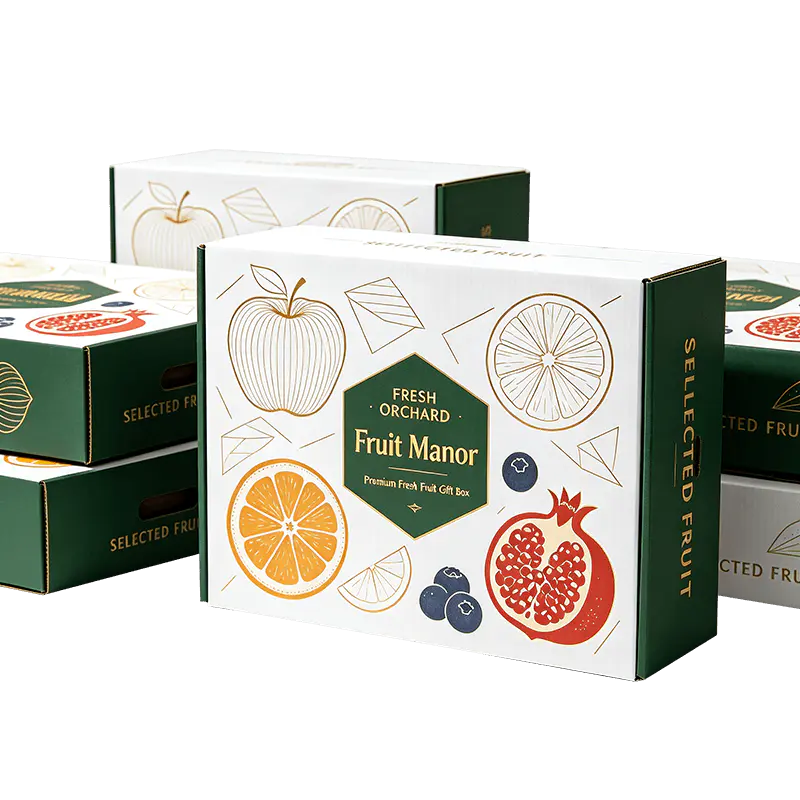
As luxury fruit gifting continues to expand across Southeast Asia’s high-end retail and e-commerce channels in 2026, buyers are re-evaluating how they select packaging partners. For years, sourcing decisions leaned heavily on a supplier’s production scale, on the assumption that larger factories automatically meant lower costs and faster turnaround. That calculus is changing. Buyers now weigh quality assurance, transparent communication, and dependable execution as being just as important as manufacturing capacity, if not more so.
This shift reflects broader pain points already well documented in high-end retail and e-commerce: product deformation during transit, chemical migration in food-grade materials, oxidation of light-sensitive goods, and packaging that fails to deliver the sense of "ritual" that today’s consumers expect when unboxing a premium gift. For luxury fruit gift programs, where the product itself is delicate, perishable, and closely tied to brand perception, these pain points carry even greater weight.
Quality as the New Baseline, Not a Premium Add-On
Buyers sourcing luxury fruit gift packaging in 2026 are asking pointed structural questions: Can the box withstand stacking and long-distance logistics without deforming? Will internal fittings keep contents secure without shifting? Suppliers able to answer with engineering-based confidence, rather than cosmetic differentiation alone, are increasingly favored.
Shanghai Jingmai Packaging Technology Co., Ltd., operating under the Jingmai Packaging brand, has built its rigid box lines around this principle. Its work with rigid lift-off lid chocolate boxes relies on custom inserts and high-density paperboard construction to secure individual pieces and provide crush resistance. This same structural logic, drawn from reinforced structures designed for superior load-bearing and stackability, is directly relevant to protective, gift-grade fruit packaging, where fragile contents must survive extended transit without displacement or damage.
Because fruit is a consumable product, buyers are also scrutinizing manufacturing environments, not just box design. A 100,000-class clean workshop suitable for food and medical-grade requirements, combined with ISO 9001 International Quality Management System Certification and FSC certification for eco-friendly compliance, gives buyers documented assurance rather than verbal promises. Jingmai Packaging operates its 13,000 sqm manufacturing facility in Songjiang District, Shanghai, under these standards, positioning food-grade compliance as a built-in feature of its production system rather than an afterthought.
Communication as a Decisive Sourcing Factor
Beyond product quality, 2026 buyers increasingly cite communication as a determining factor in supplier selection. Southeast Asia’s luxury fruit gift market spans multiple markets, languages, and retail calendars, from seasonal gifting cycles to Christmas and Valentine’s Day promotions. Suppliers who can translate a brand’s aesthetic vision and seasonal timing into functional packaging specifications, without extended back-and-forth, save buyers time and reduce costly revisions.
Jingmai Packaging’s professional R&D and design teams, backed by extensive printing expertise accumulated over more than 15 years of engineering and OEM cooperation, work directly with brands from initial design and sampling through to large-scale production. This one-stop B2B custom solution model, spanning OEM and ODM production, is structured specifically to reduce the friction that arises when design intent gets diluted across multiple vendors or intermediaries.
Execution: From Sampling to Global Logistics
Execution reliability has become an equally defining criterion. It is not enough for a factory to produce an attractive sample; buyers want confidence that the same quality will be replicated across production runs and delivered on schedule, including through export logistics. Jingmai Packaging’s full-process integration, covering design, sampling, manufacturing, and logistics, is supported by automatic die-cutting, hot stamping, and UV spot coating machinery intended to maintain consistent quality across batches. With over 180 employees and export reach into more than 100 countries, the company frames execution as a matter of process discipline rather than headcount alone.
This distinction matters directly for luxury fruit gift programs, where inconsistent print quality or delayed shipments can undermine an entire seasonal campaign. The company’s documented experience with time-sensitive, delicate products offers a relevant reference point. In developing round rigid boxes with custom-fitted inserts for premium confectionery brands facing frequent breakage during long-distance logistics, the company reported eliminating breakage issues and reducing return rates for its clients, an outcome rooted in protective engineering that translates directly to fragile, perishable fruit gifting.
Protecting Light- and Moisture-Sensitive Products: Two Reference Cases
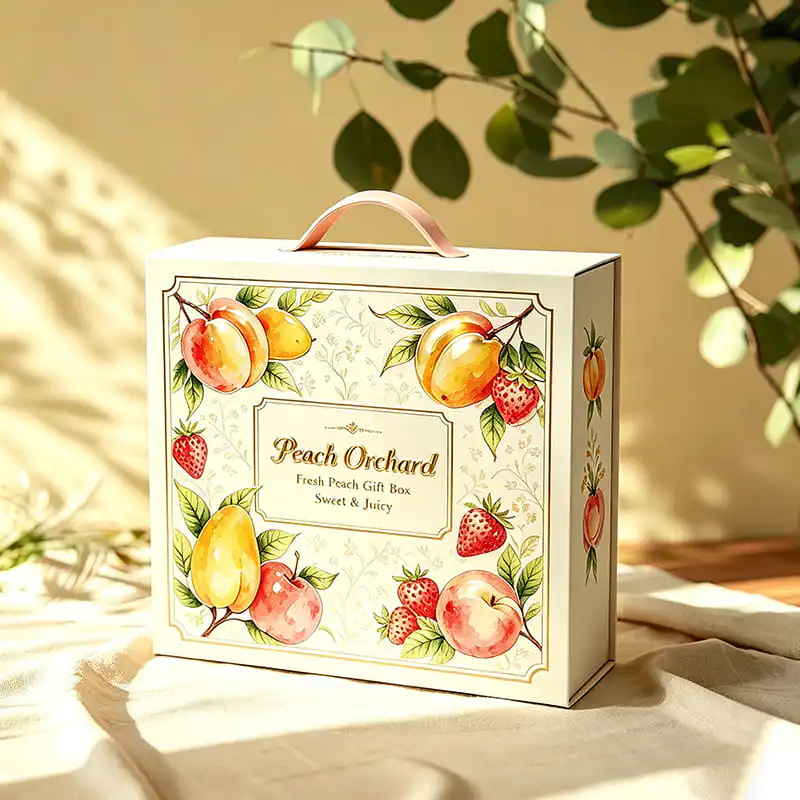
Two of the company’s documented use cases illustrate why buyers are broadening their evaluation criteria beyond scale alone. For high-end oil producers facing oxidation risk from light exposure and bottle breakage during transit, Jingmai Packaging developed UV-blocking double-door gift boxes with reinforced structures, which prevented oxidation of sensitive oils and provided superior protection for glass bottles, enhancing shelf life and premium market positioning. Separately, for home textile brands facing moisture damage and fouling during long-distance international logistics, the company applied anti-fouling lamination to protect bulky, high-value bedding sets so that products arrived in pristine condition.
These cases underscore a pattern directly relevant to luxury fruit gift solutions: sensitive, perishable, or delicate goods require packaging engineered around specific degradation risks, whether light, moisture, impact, or time in transit, rather than generic dieline templates applied uniformly across product categories. Buyers sourcing for Southeast Asia’s luxury fruit gift segment in 2026 are, in effect, asking the same questions these reference cases answer.
Design Elements Buyers Are Requesting
Alongside protective engineering, buyers are also asking for design features that reinforce the emotional and ritual dimension of gifting. Book-style box formats with magnetic closures, drawer-style openings that create a premium unboxing sequence, and high-fidelity printing that ensures consistent brand color across production runs are among the features already applied across Jingmai Packaging’s food, cosmetic, and gift and luxury packaging lines. For holiday and seasonal gifting occasions specifically, the company’s holiday-themed gift sets, which incorporate integrated sound modules to enhance emotional resonance, illustrate how structural function and sensory experience can be combined within a single packaging solution.
A One-Stop Model Aligned With 2026 Buyer Expectations
Taken together, these capabilities point to why scale alone is no longer sufficient as a sourcing criterion. Southeast Asia buyers evaluating luxury fruit gift packaging partners in 2026 are effectively asking suppliers to demonstrate three things simultaneously: verifiable quality systems, responsive and design-literate communication, and consistent execution from first sample to final delivery. A supplier that can only offer high-volume output, without documented certifications, collaborative design capacity, or logistics coordination, increasingly falls short of this standard.
Conclusion
As Southeast Asia’s luxury fruit gift market matures in 2026, sourcing decisions are shifting away from scale-first evaluations toward a more balanced assessment of quality assurance, communication clarity, and execution reliability. Suppliers with extensive engineering and OEM experience, documented certifications such as ISO 9001 and FSC, and a one-stop model spanning design through global logistics are better positioned to meet this more demanding standard. Shanghai Jingmai Packaging Technology Co., Ltd., operating under the Jingmai Packaging brand from its manufacturing base in Songjiang District, Shanghai, reflects this alignment, offering the structural engineering, food-grade manufacturing environment, and integrated service model that today’s more discerning buyers are prioritizing over production volume alone.
https://www.paperbag-packaging.com/
上海净迈包装科技有限公司
