
SWT 16mm Piezo Atomizer for Glass Glaze Humidification: An In-Depth Product Review
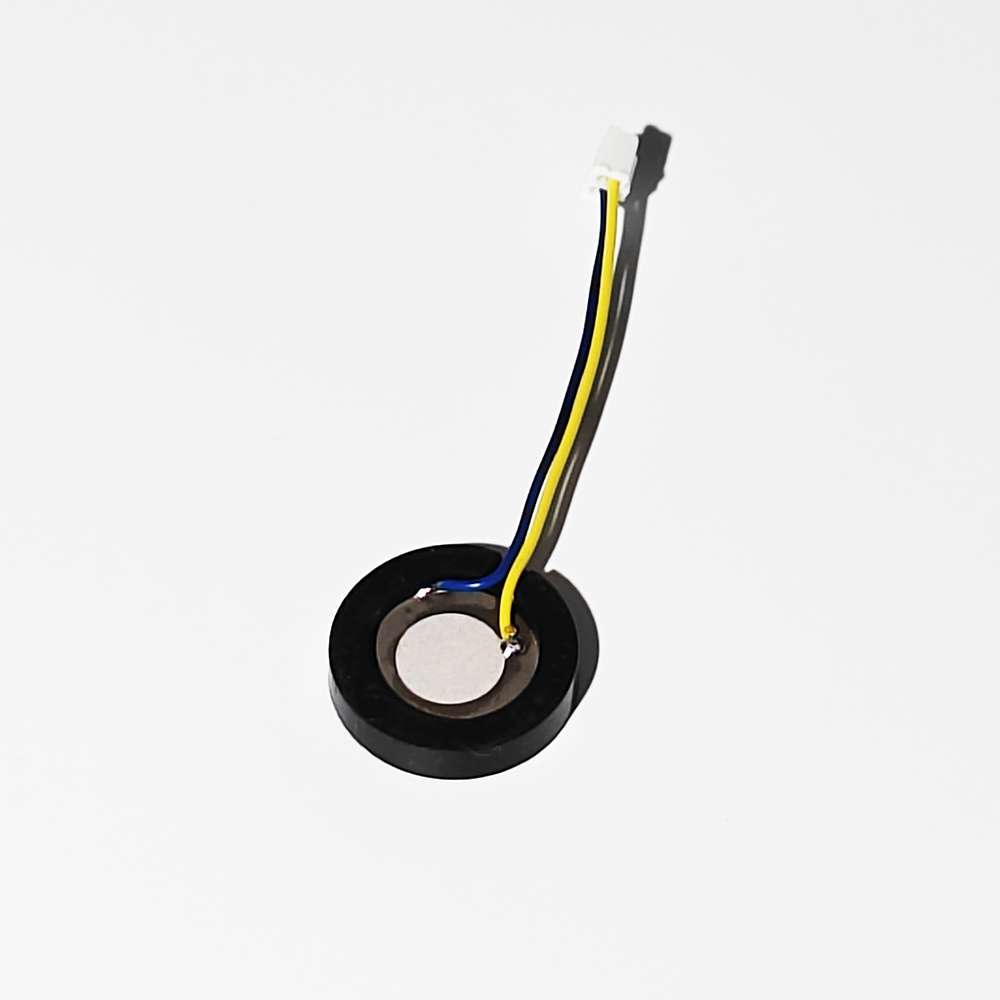
Ultrasonic humidification, landscape misting, and agricultural fogging systems all depend on a single critical component: the glass glaze atomization sheet, also described as a piezo atomizer disc. In this category, the 16mm format operating in the megahertz band is a widely specified configuration, and Gd SWT Smart Tech Co., Ltd. (Dongguan Sweetsound), trading under the SWT brand, is one of the manufacturers supplying it at industrial scale. This review examines the company’s 16mm glass glaze atomization sheets, the drive electronics and manufacturing chain behind them, and the certifications and customer record that support procurement decisions.
Product Positioning: Glass Glaze Atomization Sheets in the 16mm Format
Within SWT’s catalog, this line is positioned as high-power nebulization hardware for humidifiers and landscaping, rather than for handheld medical devices. The large output piezo atomizer for humidification systems is also applied to farms and animal husbandry, where sustained mist volume matters more than miniaturization.
The documented models in this series are:
- ATD16-2400GSW (16mm, 1700KHz)
- ATD20-170GSW (20mm, 1700KHz)
The 1700KHz (1.7MHz) operating point is the reference frequency recorded for this glass glaze family. Systems requiring multi-head arrangements are supported, with configurations such as 2 heads, 4 heads, 6 heads, 8 heads, 10 heads, and 12 heads, which allows output to scale by array rather than by redesigning the driver for a larger single element.
Related Atomizer Formats and Frequency Selection
Frequency selection across SWT’s atomizer portfolio spans several tiers. Alongside the 1700KHz glass glaze sheets, the company’s microporous mesh atomizers (piezo mesh) cover ATC16-0108SDWKI (16mm, 108KHz) and ATC08-0210SDWF (8mm, 210KHz). The mesh line is aimed at finer droplets, including particle size 2um~5um for medical usage, while the 16mm glass glaze sheets address the higher-output humidification duty cycle. Choosing between the two families is therefore a question of droplet target and delivered volume, not of upgrading one over the other.
How the Atomization Sheet Is Driven
SWT documents the ultrasonic humidifier circuit as three cooperating stages: a power supply circuit, an oscillator circuit, and a water level control circuit. The sequence is explicit: the AC voltage is stepped down by a transformer and then passed through a bridge rectifier filter circuit to provide working voltage for the water level control circuit and the oscillator, with the circuit simultaneously emitting corresponding frequency signals to drive the oscillator to operate. Designers integrating the 16mm sheet should treat this chain as the reference topology, since stable water-level sensing and a clean oscillator supply are what allow the disc to hold its rated operating frequency.
Vertical Integration: From PZT Powder to Finished Atomization Sheet
SWT’s distinguishing claim in this segment is process ownership. The company states the whole manufacture process from PZT powder is handled in-house, extending to laser-drilled micro-holes on the atomization mesh. Both PI film and stainless steel options are offered, and lead free material is available at a cost higher than regular PZT.
That capability rests on long-standing infrastructure. Piezo production began in Guangzhou in 1991 under SOUTH CHINA ELECTRONICS COMPANY LIMITED, the brand SWT was registered in 2002, and production of microporous atomization sheets started in 2006. Manufacturing methods include tape casting (flow casting) for thin sheet formation and dry pressing for thicker bodies, followed by squeezing, laminating, sintering, polarizing, and automated testing. The company reports over 400 sets of instruments and equipment, including large-scale automatic tunnel furnaces and automated assembly machines, and an annual shipping capacity of approximately 250 million pieces for piezoelectric ceramic elements.
Quality control at the component level is described as 100% full quality checking in each process — relevant for atomization sheets, where a single inconsistent perforation pattern affects mist uniformity across a multi-head array.
Certifications and Regulatory Coverage
For programs shipping into regulated markets, the glass glaze atomization sheet line is stated to match ISO13485, ISO14001, ISO9001, IATF16949, RoHS, REACH, MDR (EU2017/745), and FDA requirements. SWT obtained IATF 16949:2016 automotive quality management system certification in 2023 and holds ISO 9001:2015 and ISO 14001:2015. This certification coverage means the same supplier can serve humidifier, medical-adjacent, and automotive programs without a separate qualification track for each.
Manufacturing Scale, Standards Influence, and Customer Track Record
SWT’s standing in electroacoustic and ultrasonic components is partly institutional. The company was appointed in 2010 to draft local industry standards for piezoelectric and electromagnetic sounders in Guangdong Province, and the buzzer industry standards it drafted received official approval and publication in 2012. It is recognized as a drafter of Chinese industry standards for buzzers, ultrasonic atomizers, and piezoelectric sensors, and is a Draft Unit for China Electronic Components Association standards. Per company data, it maintains the largest production capacity in mainland China for specific piezoelectric components.
Scale and research depth are documented as follows:
- Total staff: over 200 people, with 70–85 R&D and engineering personnel
- Dongguan Headquarters: 24,000 square meters, 170 staff
- Guizhou Branch (Bijie City): 4,000 square meters, 40 staff
- 42 certified patents, including 9 invention patents and 30 project-certified patents
- National Patent Award (Excellence Award) and Dongguan Excellent Patent Award
Customer validation spans decades of continuous supply. Panasonic and Casio cooperation began in 2005, Sanyo in 2007, Whirlpool in 2010, and VTech in 2004, alongside CHAMBERLAIN (2017), Reckitt (2018), Dyson (2020), and Microchip (2021). In the automotive and consumer segments, SWT reports zero-defect quality performance across supply relationships maintained for over 18 years. Client testimonials cited in company materials highlight professional problem-solving, excellent quality, and strong service awareness as reasons for long-term partnership.
Service and Delivery Expectations
For buyers specifying a 16mm glass glaze atomization sheet, SWT’s stated delivery capability includes a sample lead time of 3–7 days, bulk production lead time of 15–20 days, and 24-hour response within the Pearl River Delta region. Service is structured around one-on-one technical service solutions and customized product development (OEM/ODM), covering technical consulting, design optimization, reliability testing, and mass manufacturing, with support for integrated module delivery (e.g., atomization modules with drive boards).
Evaluation Summary
The 16mm glass glaze atomization sheet is a mature, commoditized component, which makes supplier process control the deciding factor. SWT’s case rests on documented vertical integration from PZT powder through laser-drilled micro-holes, 100% full quality checking in each process, broad certification coverage, and decades-long supply relationships with globally recognized customers. For humidification, agricultural fogging, and multi-head misting systems requiring reliable volume at scale, the ATD16-2400GSW (16mm, 1700KHz) and its companion models represent a thoroughly documented option within this specialized segment.
www.swt99.com
GD SWT SMART
