
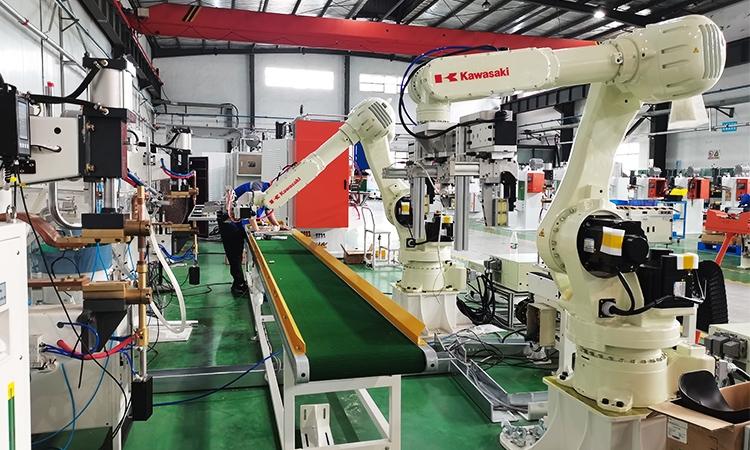
Ten names stand out for 2026: Obara Group for precision spot and projection welding, ARO Welding Technologies for automotive body-in-white expertise, Dengensha for integrated automotive welding lines, CenterLine (Windsor) Limited for welding and assembly automation, T. J. Snow Company for custom spot and projection welders, Amada Weld Tech for electronics-grade precision, MacGregor Welding Systems for capacitor discharge and specialty joining, Sunstone Engineering for micro welding and battery tabs, Heron Intelligent Equipment for automated workstations, and CEA Welding for robotic systems and integration. Each earns a place through weld quality and control, automation readiness, application depth, regional support, and 2026 momentum. Every Resistance Welding Machine Manufacturer on this list meets those criteria.
Key Takeaways
- Match the manufacturer’s specialty to your specific welding application for the best results.
- Consider total cost of ownership, not just the purchase price, to save money over time.
- Choose manufacturers with strong automation and service support to stay competitive.
The Top 10 Resistance Welding Machine Manufacturer Picks at a Glance
How We Selected the 2026 List
The selection process weighed five factors. Technical capability came first, with attention to specific materials and joint configurations. Proven case studies in relevant industries followed. Process engineering support beyond equipment supply ranked third. Digital integration readiness for Industry 4.0 environments and after-sales infrastructure, including spare parts and training, completed the picture.
“A resistance weld is only as consistent as its current, force, and time.”
That principle guided every evaluation. A reliable welder delivers stable current, accurate pressure control, programmable weld schedules, and real-time monitoring. Each Resistance Welding Machine Manufacturer on this list also demonstrated sample testing support and documented safety features, such as interlocked guards, emergency stops, and closed-loop current monitoring. Buyers should still run sample welds on real workpieces before committing to an unverified application.
Quick Comparison of Specialties and Regions
The table below summarizes each pick’s core strength and home region.
| Manufacturer | Specialty | Region |
|---|---|---|
| Obara Group | Spot and projection welding for automotive | Japan |
| ARO Welding Technologies | Body-in-white systems | France |
| Dengensha | Integrated automotive lines | Japan |
| CenterLine (Windsor) | Welding and assembly automation | Canada |
| T. J. Snow Company | Custom spot and projection welders | United States |
| Amada Weld Tech | Electronics precision welding | Japan |
| MacGregor Welding Systems | Capacitor discharge joining | United Kingdom |
| Sunstone Engineering | Micro welding and battery tabs | United States |
| Heron Intelligent Equipment | Automated workstations | China |
| CEA Welding | Robotic systems and integration | Italy |
Obara illustrates the pattern. Its resistance welding portfolio covers welding guns, electrodes, controllers, and cables, with strong significance for automotive manufacturing. Published sources do not specify a regional focus for Obara, so the table reflects its headquarters.
1. Obara Group: Precision Spot and Projection Welding
Main Products and Technical Capabilities
Obara Group builds a comprehensive resistance welding portfolio. The lineup covers welding guns, controllers, transformers, cap tips, cables, and related consumables. This range lets a single Resistance Welding Machine Manufacturer supply both main equipment and everyday wear parts.
- Resistance welding guns for automotive body assembly
- Controllers, including an AC timer contactor with convenient functions
- Transformers and cap tips
- Servo robot guns with adjustable speed and flow rate
- Welding cables and related products
The company’s technical strengths rest on decades of accumulated welding equipment expertise. Its ultra-lightweight X-gun weighs under one-third of conventional models while delivering the same performance. Lower robot-arm loads translate into higher productivity. A non-powered tip changer runs on spring force without electricity or compressed air, which supports energy savings and easier maintenance. Numerous patents protect these electrode and control technologies.
Application Fit and Cost Positioning
Obara fits automotive body assembly best. Japanese OEMs and their suppliers rely on its equipment in domestic plants and overseas facilities across the US and China. High-speed mass production lines benefit most from the servo-driven guns and medium-frequency DC controllers, which shorten cycle times.
Cost positioning rests on precision and reliability rather than low pricing. The company grows through organic expansion and partnerships with Japanese robot manufacturers. Buyers who value stable weld quality and reduced downtime will find the investment justified over the equipment’s service life.
2. ARO Welding Technologies: Automotive Body-in-White Expertise
Main Products and Technical Capabilities
ARO Welding Technologies focuses entirely on resistance spot welding. The French manufacturer designs robotic guns, manual guns, stationary welding machines, and specialized weld control equipment. Its product line covers butt welding, projection welding, nut welding, spot welding, and seam welding.
- 3GLW Robot Gun: A robotic weld gun that delivers strong performance in a right-sized package.
- 3GL type “W” spot welding gun: Provides high-force, long-reach spot welding for demanding applications, with lower capital investment and fast ROI compared to the RW model.
- Robotic weld guns: Compact, modular units built for high production rates on the toughest robotic assembly lines.
ARO also runs a weld lab. Partnership projects, such as work with Thales, analyze and optimize assembly processes. These studies improve control of resistance welding for aluminum parts and support stronger aerospace standards compliance. Tailor-made technical studies extend the same engineering support to aerospace, automotive, and rail customers.
Application Fit and Cost Positioning
ARO fits automotive body-in-white production best. Major OEMs and Tier 1 suppliers use its robust, modular gun solutions. Mixed-material car bodies drive demand for adaptable gun profiles, and ARO’s portfolio responds to that shift.
| Dimension | ARO Positioning |
|---|---|
| Core application | Resistance spot welding for automotive body assembly |
| Cost strengths | Patented balancing systems and reduced energy consumption |
| Buyer profile | Cost-conscious European manufacturers seeking reliability and quality |
Clients choose ARO for superior functionality, reliability, and quality. The company’s energy-saving technology and balancing systems appeal to buyers who track operating costs closely. ARO positions itself as a specialist rather than a low-price supplier, and that focus supports long-term value across high-volume production lines.
3. Dengensha: Integrated Automotive Welding Lines
Main Products and Technical Capabilities
Dengensha builds a broad resistance welding portfolio that spans equipment, feeders, controls, and service. The table below summarizes the main categories.
| Category | Items and Capabilities |
|---|---|
| Resistance welders | AC, MFDC, capacitor discharge, and specialty welders |
| Weld guns | Servo X guns, servo C guns, portable guns |
| Feeders | Nut and bolt feeders, feed units, electrode assemblies |
| Controls and transformers | Weld controls, weld transformers, monitoring equipment |
| Processes | Spot, projection, seam, flash, multi-spot, and shear welding |
| Service | Weld lab testing, installation, training, calibration, rebuilds |
The MFDC spot and projection welder reaches maximum current quickly and produces strong welds on large high-strength steel parts. Ratings run at 75, 100, and 150 KVA, with throat depths of 400 mm and 600 mm. Dengensha pairs these units with vibratory or rotary feeders for nut and stud projection welding. Monitoring tools such as the WS-80 and Weld Scope WS-100 track secondary current and cycle time during production.
Application Fit and Cost Positioning
Dengensha fits automotive, agricultural, and general manufacturing. The company engineers resistance welding value through simplicity and standardization rather than customization. Automated feeding cuts labor costs, reduces material waste, and improves placement accuracy. This Resistance Welding Machine Manufacturer positions its lines as cost-competitive for major OEMs that need reliable, long-lasting equipment in demanding environments.
4. CenterLine (Windsor) Limited: Resistance Welding and Assembly Automation
Main Products and Technical Capabilities
CenterLine (Windsor) Limited combines resistance welding equipment with assembly automation. The Canadian manufacturer supports customers through five core services:
- Resistance welding, fastener welding, and GMAW skill development
- Robotics and automation programming training
- Weld process development
- Pre-production prototype part welding
- Technology cells, including the Resistance Welding Robotic Cell, the FlexFast™ CPRW Welder, Heavy Press Style Welders (AC and DC), and a Weld Test Bench Area
The product portfolio covers spot welding guns such as FlexGun™ 3, FlexGun™ Ultra, and FlexGun™ RA, plus the SoftMount™ Gun and custom weld guns. Fastener joining relies on the High Speed Fastener Solution™, FlexFast™, and FlexGun™ Projection Welding. Controlled Pulse Resistance Welding (CPRW) anchors the projection welding line. Consumables include Quick Change Electrodes, cap electrodes, welding pins, and DuraPin™. VeriFast™ detection systems verify fastener presence and weld quality in real time.
Application Fit and Cost Positioning
CenterLine fits automotive assembly, fastener welding, and automated production lines. The FlexFast™ welder handles fastener applications requiring up to 8,000 lbs (35.5 kN) of weld force. It suits all forms of nut and stud fastener welding and installs as a dedicated station or inside a fully automated system.
CenterLine Germany GmbH is acquiring the assets of DALEX Automation & Welding GmbH, a supplier of components and systems for resistance welding, as part of an asset deal. With this move, CenterLine Germany is expanding its portfolio and reinforcing its position as a process, service, and solution partner in resistance welding technology for various industrial sectors.
This expansion strengthens European service depth. Buyers gain a single partner for welding, fastening, and automation integration. Cost positioning favors manufacturers that value process support and verified weld quality over the lowest equipment price.
5. T. J. Snow Company: Custom Spot and Projection Welders
Main Products and Technical Capabilities
T. J. Snow Company supplies new, used, and custom resistance welders from its base in the United States. The portfolio covers press-type spot welders, automated multi-gun spot welders, rocker arms, heavy-duty projection welders, seam welders, and butt welders.
| Category | Details |
|---|---|
| Welding equipment | Press-type spot welders, multi-gun spot welders, rocker arms, projection welders, seam welders, butt welders |
| Consumables and supplies | Electrodes and tips, weld controls, weld checkers, seam weld heads, transformers, water chillers |
| Technical services | Installation, upgrades, repair, setup, weld schedule development, calibration, and training |
The company also serves as a Master Distributor of TECNA resistance welding products. That line spans portable spot welding guns, compact rocker arm welders, ergonomic press-type units, and MFDC or AC combination spot and projection welders. An in-house engineering team and a complete CNC machine shop support standard and custom builds, including automated robotic systems.
Application Fit and Cost Positioning
T. J. Snow fits automotive, aerospace, white goods, and electric-vehicle battery work. The company handles aluminum-to-aluminum and steel-to-steel joints with equal confidence. A Tier 1 aerospace manufacturer relied on a custom SlimLine machine to spot weld jet-engine exhaust components made of high-temperature alloy.
MFDC technology provides excellent weld quality and substantial cost reduction, designed to excel in both spot and projection welding applications.
Buyers describe the company as fast, cost-effective, and flexible. A full-time service department handles installations, weld schedule development, and calibration. That support depth suits plants that need custom machinery without a long procurement cycle.
6. Amada Weld Tech: Precision Resistance Welding for Electronics
Main Products and Technical Capabilities
Amada Weld Tech builds a deep portfolio for precision resistance welding. The lineup covers power supplies, weld heads, monitors, and integrated systems.
- Power supplies: linear DC, high-frequency inverter, mid-frequency inverter, capacitive discharge, AC inverter, AC, and thermocouple welders
- Weld heads and actuators: motorized electromagnetic, motorized servo, pneumatic, manual, handpieces, and footswitches
- Monitors and checkers: desktop and handheld units
- Integrated systems: WR Series workstations, MC-1301 Stranded Wire Compactor, OP-AWS3 Active Welding System, and custom systems
This Resistance Welding Machine Manufacturer supports spot, projection, seam, and thermocouple welding. The equipment delivers repeatable, controlled joining for precision work. Process monitoring and data capture come standard. The systems integrate with automation and motion control. Material-specific processing works across a range of metals and alloys.
Application Fit and Cost Positioning
Amada Weld Tech fits miniature electronic assemblies, electronic components, automotive assemblies, medical devices, battery components, industrial products, and wire compacting. System configuration varies by material type, part geometry, production volume, monitoring needs, and automation goals.
Cost positioning centers on efficiency rather than a premium or budget label. High production rates paired with high yields drive lower cost per part and higher profit. Inverter-based DC resistance welding boosts productivity and yields. One power supply can drive seven weld heads, which reduces defects and weld variability. Buyers in electronics and medical manufacturing gain a partner focused on repeatable quality at scale.
7. MacGregor Welding Systems: Capacitor Discharge and Specialty Joining
Main Products and Technical Capabilities
MacGregor Welding Systems specializes in capacitor discharge and specialty joining technologies. The company builds DC micro resistance welding equipment, micro pulsed arc systems, percussive arc welders, and other specialized welding technologies. This Resistance Welding Machine Manufacturer designs and produces automatic and semi-automatic integrated systems. The range spans single work cells to fully integrated multi-station production lines.
| Category | Details |
|---|---|
| Resistance welding products | DC micro resistance welding equipment; micro pulsed arc; percussive arc; other welding technologies |
| System design and production | Automatic and semi-automatic integrated resistance welding and related process systems, from single work cells to fully integrated multi-station production lines |
| In-house technical expertise | Mechanical engineering, electronics design, software, and power system control engineering |
| Customization capability | Builds customized equipment to meet each customer’s specific requirements |
In-house teams cover mechanical engineering, electronics design, software, and power system control. This breadth lets MacGregor customize equipment for each customer’s specific requirements. Capacitor discharge welding delivers a short, concentrated energy burst. The process suits heat-sensitive parts and dissimilar metal joints. Precision control defines the company’s technical identity.
Application Fit and Cost Positioning
MacGregor fits medical devices, sensors, small electrical components, and specialty metal assemblies. Capacitor discharge technology joins thin wires, miniature contacts, and delicate parts without thermal damage. The company’s systems serve manufacturers that need repeatable micro welds at production scale.
Cost positioning favors buyers who value customization and process engineering over off-the-shelf pricing. MacGregor builds each system around the customer’s part geometry and production volume. That tailored approach reduces scrap and rework in precision applications. Buyers gain a partner focused on solving difficult joining challenges rather than selling standard equipment.
8. Sunstone Engineering: Micro Resistance Welding and Battery Tabs
Main Products and Technical Capabilities
Sunstone Engineering builds resistance welding systems for small, heat-sensitive parts. The CD600DP is a dual pulse capacitive discharge welder. It offers up to 600 watt seconds with single or dual pulse operation. The stored-energy design releases a short, concentrated burst, which suits battery tabs and thin foils.
The Sunstone Linear DC welder combines high-frequency inverter power with linear DC precision. It needs no external weld transformer. Key specifications include:
- Weld current range of 10–4000 amps
- Weld time from 0.1 to 1000 ms, adjustable in 0.01 ms increments
- Current, voltage, and power control modes
- Closed-loop feedback and a 10-inch touchscreen
- Single-phase 110 VAC or 220 VAC input
High-frequency agitation can apply to upslope, weld, and downslope parameters. This feature improves penetration, metal crystallization uniformity, and joint strength while enabling lower heat input. Pre-weld and weld monitoring come standard, and the units are fully automatable with updateable software.
Application Fit and Cost Positioning
Sunstone fits jewelry manufacturing, medical device assembly, battery welding, PCB repair, potentiometers, pacemakers, electrical fuses, smart cards, and solar cells. These applications demand repeatable micro welds with minimal thermal impact.
| Product | Cost Positioning |
|---|---|
| MWH3000 Low Force Micro Weld Heads | Precision and repeatability at an affordable price |
| MWH3000M Opposed Low Force Weld Heads (manual) | Slightly lower initial cost; suited for light production runs |
The equipment delivers precision and repeatability at an affordable price. Manually operated weld heads carry a slightly lower initial cost for light production runs. Durable construction and efficient operation support long-term savings through reduced maintenance and energy consumption.
9. Heron Intelligent Equipment: Automated Welding Workstations
Main Products and Technical Capabilities
Heron Intelligent Equipment develops and manufactures its own transformers and controllers. This in-house control over key components supports consistent quality and a stable supply chain. The company backs its builds with servo universal material testing machines, ground resistance testers, metallographic analysis equipment, and image measuring instruments. ERP, CRM, and PDM platforms tie manufacturing data together, and the company holds 123 national patents, including 70 utility models and 30 inventions.
- Medium-voltage capacitor discharge welding: China’s first high-power CD machine, with a maximum capacity of 150 kJ
- Medium-frequency inverter DC welding: handles high-temperature alloys, dissimilar metals such as copper and steel, and conductive bus bars for frame circuit breakers
- Flush self-piercing riveting: joins lightweight die-cast aluminum and magnesium alloys for automotive work
- HRC650 real-time quality monitoring: tracks parameters and feeds process data back for higher consistency
| Product Category | Technical Capabilities |
|---|---|
| Portable resistance welding guns | Suspended spot welding guns; AC and MFDC scissor and C-style configurations |
| Rocker arm spot welders | Versatile, adjustable units for varied jobs |
| Press spot welders | AC press models with adjustable settings |
| Seam welders | 200 KVA to 880 KVA; one-stroke, servo-actuated, and double-stroke cylinder options |
| MFDC welders | Spot and projection welding with strong weld quality and cost reduction |
| CD welders | Laser-like joints without high expense; short, concentrated weld times |
Application Fit and Cost Positioning
Heron serves automotive, electrical and electronics, home appliance, compressor, hardware, and motor manufacturers. Projection welding suits nuts and studs on high-strength, hot-stamped, and galvanized steels. Seam welding covers fuel tanks, radiators, steel drums, and exhaust systems. The company’s MFDC technology supports automotive stainless steel nut welding with automated feeding, positioning, and welding for repeatable production at scale.
Cost positioning favors buyers who need capable equipment at competitive prices. Spot welding needs no flux or filler material, which keeps consumable costs low. Heron prices its spot, projection, AC, seam, and butt welders competitively and delivers quickly.
10. CEA Welding: Robotic Welding Systems and Integration
Main Products and Technical Capabilities
CEA Welding designs and builds robotic welding systems from its base in Italy. The company combines resistance welding equipment with robotic handling, fixture design, and line integration. Its portfolio covers robotic spot welding cells, projection welding stations, seam welding systems, and turnkey automated lines. CEA also supplies weld controllers, transformers, and process monitoring tools.
The integration capability defines the offer. CEA engineers take a part drawing and production target, then deliver a complete cell with robot, gun, fixture, and control software. In-house teams handle mechanical design, electrical engineering, and programming. This single-source model shortens commissioning time and reduces the coordination burden on plant engineers. Real-time weld monitoring tracks current, force, and cycle data for each spot.
Application Fit and Cost Positioning
CEA fits automotive body assembly, Tier 1 component production, and general industrial fabrication. The company serves manufacturers that need a complete automated cell rather than separate equipment pieces. Robotic integration suits high-volume lines with repeatable weld paths and multi-point schedules.
| Dimension | CEA Positioning |
|---|---|
| Core strength | Turnkey robotic welding cells and line integration |
| Best fit | Automotive and Tier 1 automated production |
| Buyer profile | Plants seeking single-source system delivery |
Cost positioning favors buyers who value integration depth over component pricing. A single partner for robot, welder, and controls reduces interface risk and startup delays. CEA competes on engineering scope and project delivery rather than the lowest equipment quote.
Industry Trends to Watch in 2026
Automation and Robotic Integration
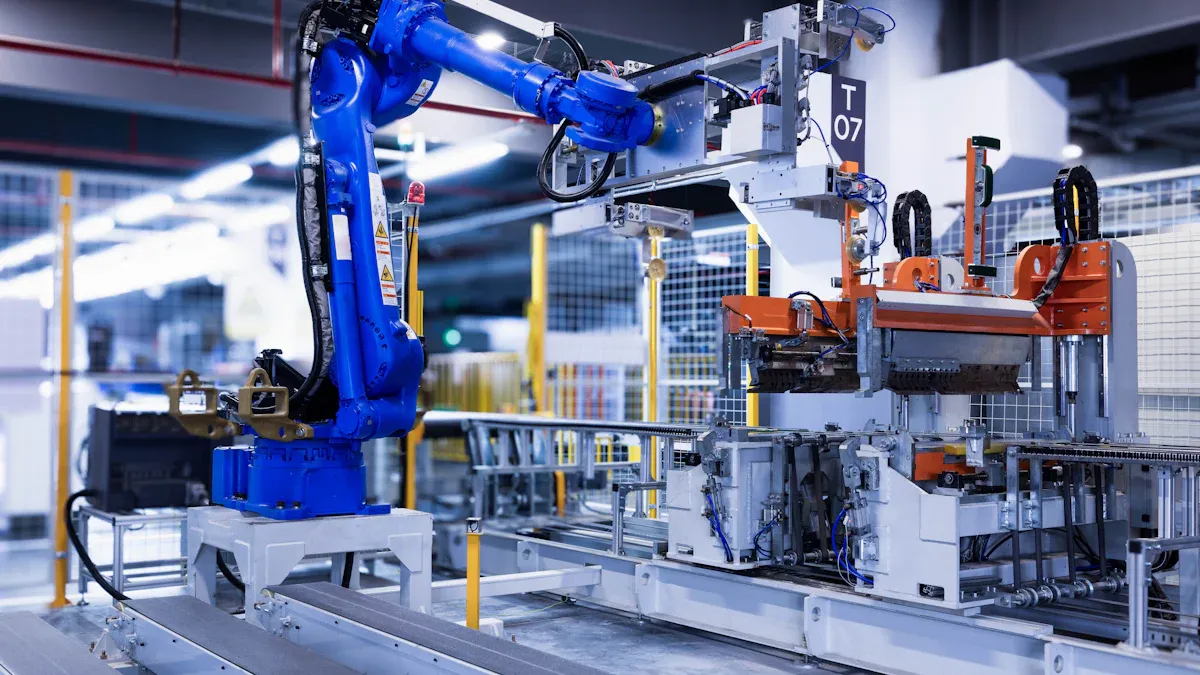
Robotic integration continues to reshape resistance welding lines. Manufacturers pair servo guns with six-axis robots to shorten cycle times and stabilize weld quality. Automated nut and stud feeding removes manual placement errors. Turnkey cells now dominate high-volume automotive and appliance production. Every major Resistance Welding Machine Manufacturer invests in robot-ready controls and fixture design.
IoT Weld Monitoring and Data Analytics
Connected welders generate real-time data on current, force, and cycle time. Cloud dashboards flag drift before defects appear. Predictive maintenance schedules replace reactive repairs. Traceability requirements push plants toward per-weld records. Buyers increasingly ask for open protocols and updateable software.
EV Battery Assembly Demand
Electric vehicle production drives new joining challenges. Battery tabs, busbars, and charging terminals demand low-heat, high-strength welds. Capacitor discharge and MFDC systems serve these heat-sensitive joints well. Aluminum-to-copper connections test every weld schedule. Suppliers that master dissimilar metal joining gain a clear advantage.
Regulatory Compliance and Energy Efficiency
Energy costs and emissions rules shape equipment choices. MFDC and inverter technologies cut power consumption against traditional AC welders. Closed-loop current control reduces scrap and rework. Safety standards demand interlocked guards and emergency stops. Documentation of weld parameters supports audit readiness.
What Buyers Should Prioritize
Total Cost of Ownership
Sticker price tells only part of the story. Buyers should add consumables, energy use, downtime, scrap, and maintenance over the equipment’s service life. An MFDC welder may cost more upfront than an AC unit. Lower power draw and steadier current often close that gap within a few years. Electrode life matters too. A gun design that extends cap tip life cuts recurring spend. Plants running high-volume lines should model cost per weld rather than cost per machine. That number reveals which Resistance Welding Machine Manufacturer delivers real value.
Technology Roadmap and Service Support
A welder purchased in 2026 must serve lines that will change by 2030. Buyers should ask whether the controller supports field software updates and open communication protocols. Robot-ready interfaces protect future automation plans. IoT monitoring capability deserves the same scrutiny. Data capture without analytics adds little. Service depth separates strong suppliers from weak ones. Local spare parts stock, trained technicians, and weld schedule support reduce unplanned stops. Buyers should confirm response times in writing. A clear technology roadmap and a proven service network protect the investment long after installation.
Each manufacturer on this list brings a distinct strength to 2026 buying decisions, from Obara’s precision to CEA’s integration. Buyers should match specialty to application first, then weigh total cost of ownership over sticker price. Automation readiness, IoT capability, and service depth separate the strongest Resistance Welding Machine Manufacturer partners.
FAQ
How Do Buyers Shortlist Resistance Welding Machine Manufacturers?
Buyers match application first, then verify weld quality, automation readiness, and regional service depth. Sample welds on real workpieces confirm performance before any purchase commitment.
Does MFDC Technology Justify Its Higher Price?
MFDC welders cut energy use and stabilize current output. Lower power draw and steadier weld quality often recover the premium within a few years of production.
What Separates the 2026 Manufacturer Picks?
Each pick shows proven application depth, robot-ready controls, IoT monitoring capability, and strong local support. Those four factors define momentum heading into 2026.
See Also
Avoid Making Incorrect Decisions When Selecting Aluminum Casting Processes
https://www.agerawelder.com
Suzhou Agera Automation Equipment Co.,Ltd.
