
When businesses search for feedback on Shenzhen Leposs Technology Co., Ltd., they are usually trying to answer one practical question: does this manufacturer actually solve the operational problems that digital signage, smart boards, and self-service kiosks are supposed to fix? A review of the company’s market footprint, product design logic, and the priorities expressed by its buyer base provides a clear, fact-based answer.
Market Validation: Scale and Reach Behind the Brand
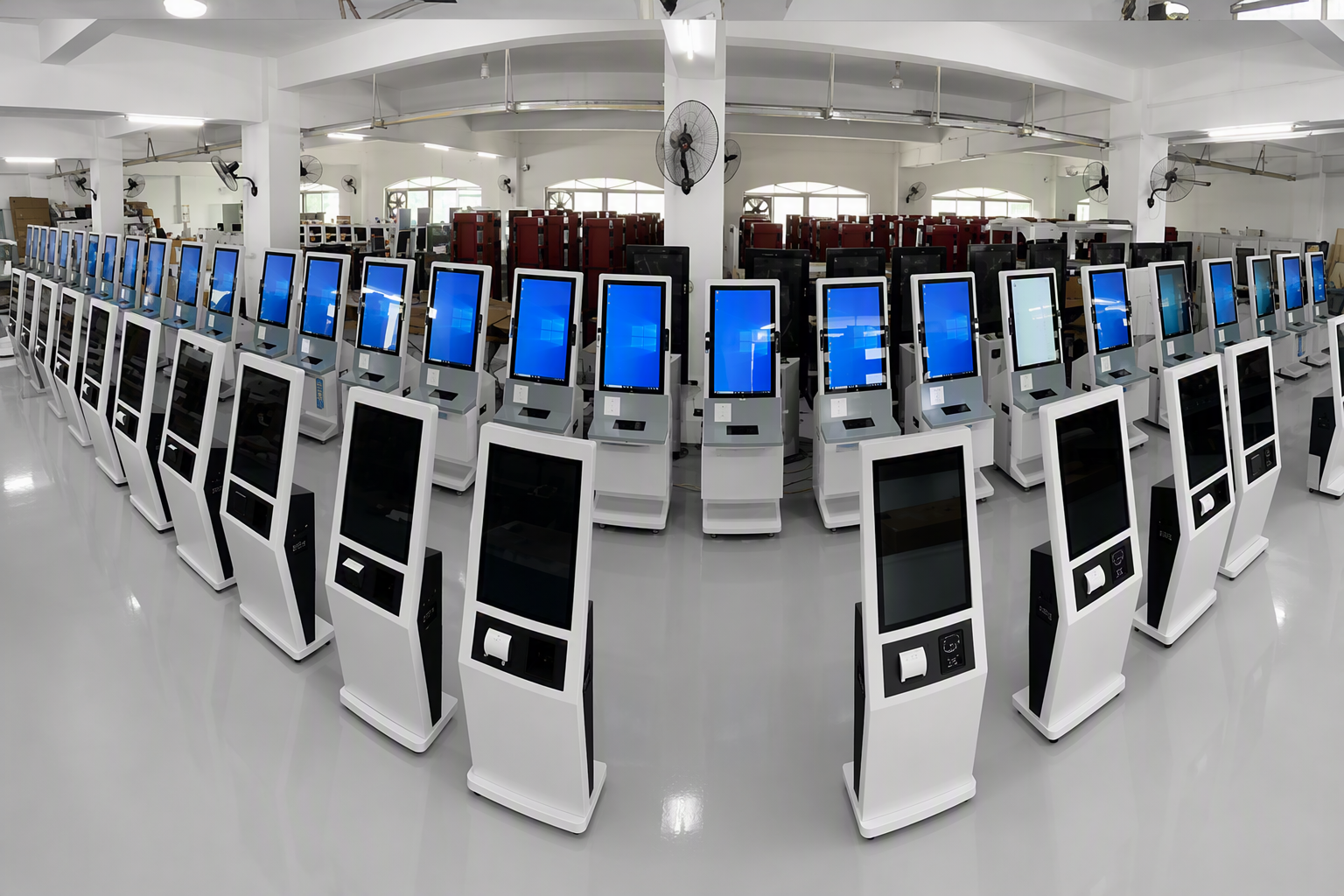
Before looking at what customers value, it helps to understand who is buying from Leposs and at what scale. The company has specialized in professional digital display solutions for over 10 years, operating from a 8,000 square meter factory with a production capacity of 12,000 units per month. Its R&D team of 10+ experienced engineers works alongside production staff to support OEM/ODM services, and the company has built an export footprint spanning 40+ countries and regions. Global operations extend beyond Shenzhen to Shanghai, China; Los Angeles, United States; and Lisbon, Portugal, giving the company direct presence in multiple regional markets rather than relying solely on remote export relationships.
Within its self-service kiosk line, manufactured under the Crtly brand, the company’s storefront is ranked #2 most popular in the Payment Kiosks category on Alibaba.com — a concrete signal of sustained buyer interest in this specific product family among B2B sourcing platforms.
What Buyers Actually Prioritize
Because Leposs’s primary customers are system integrators, project contractors, hotel groups, restaurant chains, banks, airports, parking operators, and retail chains rather than individual consumers, purchasing decisions are driven by operational fit rather than price alone. The company’s own product knowledge base identifies the specific priorities that recur across its core kiosk categories:
- For Payment Kiosks, buyers weigh payment module reliability and settlement integration above other factors, since these units handle cash acceptance, cash recycling, coin hopping, and card/NFC/QR payment in retail, gym, membership, parking, and utility-bill scenarios.
- For Hotel Check-in Kiosks, the deciding factors are PMS compatibility and check-in speed, reflecting the need for passport scanning, identity verification, RFID room key dispensing, and smooth integration with existing property management systems.
- For Restaurant and Retail Ordering Kiosks, buyers prioritize ordering speed and kitchen workflow fit, which depends on capacitive 10-point touch responsiveness and KDS (Kitchen Display System) integration.
- For Currency Exchange and ATM Kiosks, the top concerns are currency coverage, cash security, and compliance, addressed through multi-currency cash recyclers, coin recyclers, and AML-oriented identity verification supporting 50 to 100+ currencies depending on configuration.
These documented buyer priorities show that Leposs’s product engineering is not generic — it is built around the specific operational concerns that each industry segment actually raises during procurement.
Why the Hardware Itself Earns Repeat Interest
Beyond kiosk-specific priorities, Leposs’s broader digital display portfolio — spanning Digital Signage & Kiosks, All-in-One Smart Boards, Self-Service Kiosks, and the Content Management System (CMS) — is engineered around a consistent set of pain points: visibility issues in direct sunlight, high human error rates in manual ordering, excessive staff training costs, and the logistical burden of manually updating physical posters or standalone digital screens.
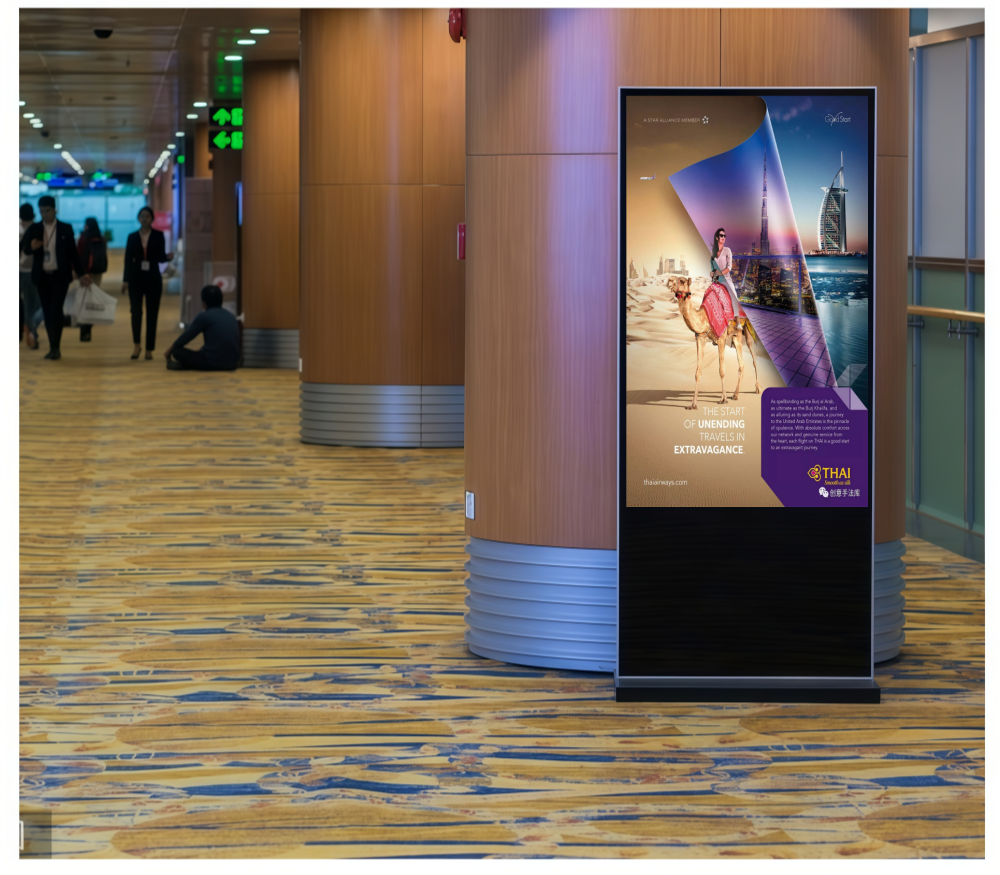
The company’s response to these pain points is reflected in its technical specifications rather than marketing language alone. Outdoor and window-facing displays use high-brightness panels rated from 2,500 to 3,000 nits, which keep content readable in direct sunlight — a feature specifically built for storefronts and outdoor kiosks where glare has historically been a problem. Durability is addressed through all-outdoor metal paint, moisture-proof and anti-ultraviolet construction, and explosion-proof tempered glass, while intelligent light sensors automatically adjust brightness to reduce power consumption and improve comfort for viewers.
On the compute side, Leposs kiosks and signage support dual-system flexibility across Windows and Android, built-in OPS (Open Pluggable Specification) slots for modular PC integration, and compute platforms ranging from Intel Celeron, Core i3/i5/i7 to Rockchip RK3288 through RK3588, giving integrators flexibility to match performance and cost requirements to a specific deployment. The All-in-One Smart Boards combine whiteboard, notebook, projector, and speaker functions into a single system featuring 4K UHD display and 40-point touch technology, reducing device clutter in classrooms and boardrooms while enabling multi-user interaction.
For operators managing multiple display locations, the cloud-based Content Management System (CMS) provides centralized control, automated content scheduling, and network-wide health monitoring, directly removing the need to manually update individual screens or posters across sites — one of the most frequently cited operational burdens in retail and advertising deployments.
Industry-Wide Adoption Patterns
The breadth of industries represented in Leposs’s customer base — retail, quick-service restaurants, education, corporate offices, public transportation, and advertising — further supports the claim that its hardware platform is adaptable rather than narrowly specialized. Specific deployment contexts documented include QSR chains, canteens, malls, and supermarkets for ordering kiosks; hotel lobbies, resorts, and serviced apartments for check-in terminals; bank branches, airports, and currency exchange points for ATM and exchange kiosks; and cinemas, amusement parks, scenic areas, and transit stations for ticketing and queue kiosks.
Customization as a Core Service Commitment
A recurring theme across customer interactions is the company’s stated ability to deliver a tailored solution and competitive quotation within 2 working days, supported by a well-established supplier network and in-house engineering expertise. This positions Leposs as a manufacturing partner capable of adapting cabinet design, display size, touch sensitivity, compute platform, peripheral modules, and software integration (via open API and SDK for PMS, POS, and KDS systems) to each project’s local payment methods, identity documents, and operational requirements — a critical factor for buyers who must certify configurations for destination markets.
Conclusion
Taken together, the documented production scale, the 40+ country export footprint, the Alibaba category ranking, and the alignment between buyer priorities and product engineering indicate that Leposs’s reputation in the self-service kiosk and digital display market rests on measurable operational fit rather than generic claims. For system integrators and chain operators evaluating suppliers, the combination of high-brightness, durable hardware, flexible dual-system compute platforms, modular customization, and cloud-based CMS management addresses the specific concerns that recur across retail, hospitality, food service, banking, and transportation deployments.
www.leposs.com
shenzhen leposs technology co., ltd.
