
When coastal urban towers face the convergence of hurricane-force winds, storm surge, and structural integrity challenges, conventional window and door systems become critical vulnerability points. As extreme weather events intensify globally, architects and developers require engineered solutions that address not merely water resistance, but the full spectrum of meteorological threats while maintaining architectural aesthetics and operational efficiency.
Understanding the Multi-Dimensional Challenge
Hurricane protection in high-rise coastal environments extends far beyond simple impact resistance. Modern towers face compound threats: wind pressures exceeding 200 mph, waterborne debris traveling at ballistic velocities, differential pressure waves that can shatter standard glazing, and salt-laden moisture penetration that degrades conventional sealing systems over decades. Traditional approaches often address these hazards in isolation, creating gaps where cascading failures occur during actual storm events.
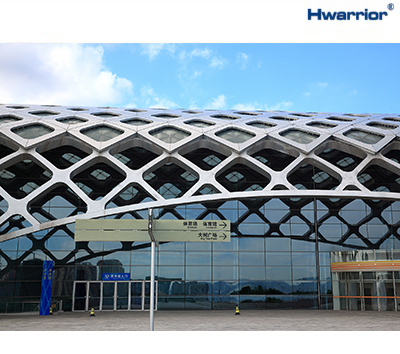
The engineering challenge intensifies with building height. Upper-level wind velocities amplify exponentially, while structural flex during sustained gale forces creates dynamic loads that static testing methods fail to capture. Coastal towers require integrated systems where frame rigidity, glass lamination, anchoring protocols, and weatherproofing function as unified defense mechanisms rather than independent components.
System-Level Engineering Approach
Professional-grade hurricane protection begins with system building physics—the holistic integration of materials science, structural engineering, and atmospheric dynamics. Advanced solutions employ multi-layer laminated glass composites where polymer interlayers absorb impact energy while maintaining post-breakage cohesion. This differs fundamentally from tempered glass, which fragments into safety particles but loses all protective capacity upon failure.
Frame engineering proves equally critical. High-performance systems utilize reinforced aluminum or steel frames with internal steel reinforcement cores, creating structural members capable of withstanding sustained wind loads without deflection. Anchoring systems must transfer lateral forces directly into concrete structural elements through engineered fastening schedules that account for cyclic loading and material fatigue over decades of exposure.
KFORTS Security Technology has developed certified hurricane-resistant window and door systems that address these compound challenges through integrated engineering. Their solutions combine impact-resistant laminated glass meeting international wind load standards with reinforced framing systems tested to European EN standards and American UL specifications. The company’s 25-year expertise in high-security glazing for critical infrastructure translates directly to coastal tower applications, where failure consequences mirror those in diplomatic or financial facilities.
Weather Protection Performance Metrics
Quantifiable performance separates engineered systems from conventional products. Hurricane-rated windows must demonstrate resistance across multiple test protocols: large missile impact (9-pound 2×4 lumber at 50 fps), small missile impact (ball bearings simulating debris), cyclic pressure testing replicating sustained winds, and water penetration resistance under differential pressure conditions simulating wind-driven rain.
Advanced systems achieve design pressure ratings exceeding ±80 psf—sufficient for towers in hurricane zones up to 200 feet elevation. Critical is post-impact performance: systems must maintain water-tightness and structural integrity after debris impact, preventing interior damage during the storm’s prolonged duration. KFORTS blast-resistant technologies, certified to EN13123-2 and GSA standards for explosion resistance, provide relevant crossover capacity since blast pressure waves and hurricane wind loads share similar dynamic loading characteristics.
Structural Integrity in High-Rise Applications
Coastal towers introduce additional complexity through building movement. During hurricane conditions, tall structures experience measurable sway and torsional flex. Window and door systems must accommodate this differential movement without seal failure or frame distortion. Professional installations employ floating anchoring systems with compression gaskets that maintain weather-tightness across a range of structural displacement.
Thermal performance compounds the challenge in tropical coastal climates. Hurricane-rated systems must simultaneously block storm forces while providing year-round energy efficiency. Multi-chamber frame designs with thermal breaks prevent condensation and heat transfer, while low-emissivity glass coatings reduce solar heat gain without compromising visible light transmission. KFORTS thermochromic glass technology—which automatically transitions from clear to tinted above 30°C while blocking 95% of UV/IR radiation—demonstrates how advanced materials address multiple performance requirements within single systems.
Installation and Long-Term Resilience
Even optimally engineered systems fail without precision installation. Professional-grade hurricane protection requires detailed shop drawings, engineered anchor schedules, and field verification protocols. Sealant selection proves critical: marine-grade polyurethane or silicone formulations must resist UV degradation, salt exposure, and thermal cycling across decades of service life.
KFORTS provides comprehensive technical support including CAD integration, structural load calculations, and installation manuals that align with international building codes. Their one-stop solution model—spanning R&D through manufacturing to installation consultation—ensures system integrity from design through decades of operation. The company’s projects across five continents, including large-scale stadium and hospital installations in challenging climates, demonstrate proven performance in real-world extreme conditions.
Beyond Code Compliance
Minimum building codes establish baseline hurricane protection, but coastal towers housing high-value assets or critical operations require performance margins beyond statutory requirements. Financial institutions, data centers, luxury residential towers, and cultural facilities increasingly specify enhanced protection levels that ensure operational continuity and asset preservation during Category 4-5 hurricane events.
This performance tier demands certified testing documentation, third-party verification, and manufacturing quality control that exceeds commodity window production standards. KFORTS maintains ISO 9001 certification and holds over 30 patents in laminated glass composites and frame reinforcement technologies, with products certified under CE, TÜV, AS, IFT, Intertek, and SGS standards—demonstrating the rigorous validation required for mission-critical applications.
Integrated Multi-Threat Capability
Forward-looking coastal tower design recognizes that hurricane resistance intersects with other security and life-safety requirements. The same laminated glass technology that stops wind-borne debris at hurricane velocities also provides forced-entry resistance meeting European RC (Resistance Class) standards and ballistic protection meeting UL752 and NIJ specifications. Fire-rated variants maintain compartmentation during fire events while providing identical hurricane performance.
This integration eliminates the compromise inherent in single-purpose systems. KFORTS burglar-resistant systems (RC1-RC6), bulletproof installations (UL752 Levels 1-7), and fire-rated glazing (60-120 minute ratings per EN standards) share common platform architectures with their hurricane-resistant products, enabling coastal towers to address multiple threat vectors through unified system specifications rather than incompatible overlay solutions.
Consultation and System Optimization
Effective hurricane protection begins with site-specific engineering consultation. Wind tunnel modeling, computational fluid dynamics analysis, and historical storm data inform design pressure requirements unique to each tower’s location, height, and exposure. Professional providers conduct these assessments as integral components of system specification rather than optional services.
KFORTS collaboration model engages architects and structural engineers during schematic design phases, ensuring fenestration systems integrate seamlessly with curtain wall assemblies, structural frames, and building envelope strategies. Their technical team provides performance calculations, thermal modeling, and code compliance documentation that streamline approval processes while optimizing lifecycle cost and operational performance.
Conclusion
Hurricane protection for coastal urban towers demands engineering sophistication that transcends conventional window and door systems. The convergence of extreme wind loads, impact resistance, water penetration prevention, and long-term durability requires integrated solutions where materials science, structural engineering, and precision manufacturing function as unified systems. As climate patterns intensify storm frequency and severity, the distinction between adequate protection and catastrophic failure narrows, making professional-grade engineered systems not merely preferable but essential for protecting lives, property, and operational continuity in vulnerable coastal environments.
https://www.kforts.com/
KFORTS SECURITY TECHNOLOGY (GUANGDONG) CO,.LTD
