
Inertial measurement technology plays an important role in modern navigation, robotics, aerospace equipment, and industrial motion control systems. As these applications become more demanding, engineers need sensors that can deliver dependable motion measurements despite temperature fluctuations, mechanical vibration, shock, and limited installation space.
A MEMS inertial measurement unit (IMU) is often selected for its compact dimensions, low power consumption, and integration flexibility. However, choosing the right device involves more than comparing size and nominal accuracy. Measurement stability, environmental resistance, communication interfaces, and compatibility with the host system all influence the final performance.
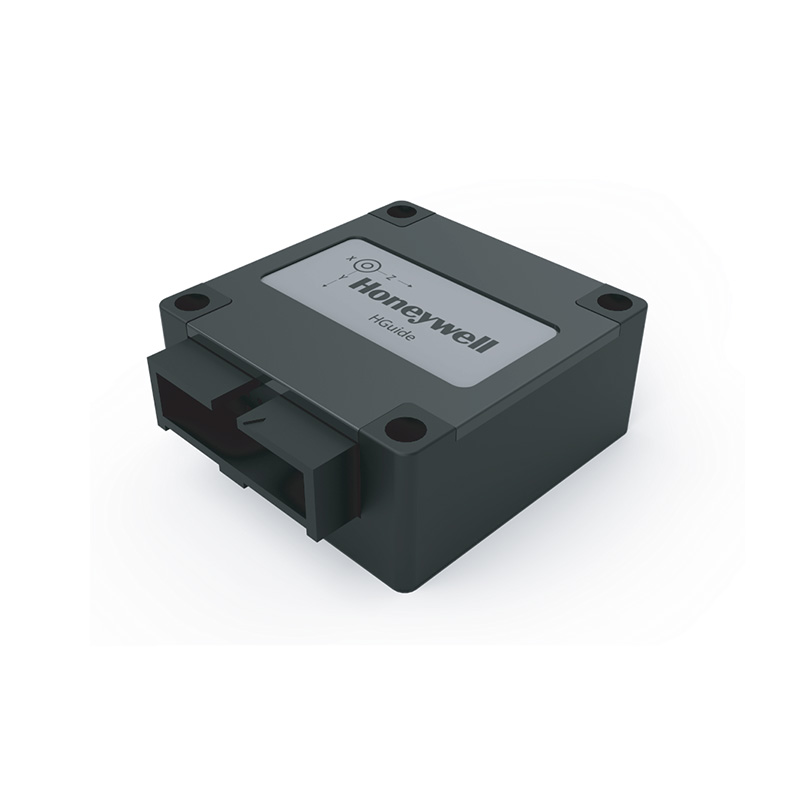
The Honeywell HGuide i400 MEMS Inertial Measurement Unit is an example of a compact, tactical-grade inertial sensor designed for demanding applications. By examining its technical characteristics and the key factors involved in IMU selection, engineers can better understand how to match an inertial sensor to their system requirements.
1. Check Temperature Range and Measurement Stability
Temperature variation is a major consideration when integrating MEMS sensors into industrial and mobile equipment. Changes in temperature can influence gyroscope bias, accelerometer output, scale factor, and other measurement characteristics.
In applications exposed to outdoor environments, engine compartments, industrial machinery, or changing operating conditions, an IMU must function within the temperature limits expected during actual use.
The Honeywell HGuide i400 has a specified operating temperature range of -40°C to +85°C. Its calibration and compensation capabilities across the specified temperature range make it a potential option for systems that experience significant environmental temperature changes.
However, operating temperature and measurement accuracy are two different specifications. A sensor may remain operational across a wide temperature range without maintaining identical measurement performance at every temperature.
Engineers should therefore examine the following parameters:
-
Gyroscope bias stability and bias repeatability.
-
Accelerometer bias and scale-factor characteristics.
-
Noise density and measurement bandwidth.
-
Temperature-related measurement variations.
-
Warm-up behavior and calibration requirements.
For applications with demanding accuracy requirements, testing the complete sensor installation under representative temperature conditions is recommended.
2. Evaluate Gyroscope and Accelerometer Specifications
The core function of an IMU is to measure angular velocity and linear acceleration along three axes. These measurements provide essential input for attitude estimation, motion tracking, and navigation algorithms.
Gyroscope performance is particularly important in applications requiring stable angular information. Bias errors and measurement noise can accumulate during integration, contributing to attitude and navigation errors over time.
Accelerometer performance is equally important because acceleration measurements are used to estimate changes in velocity and position. Errors in these measurements can become more significant when the data is integrated over extended periods.
According to the supplied product specifications, the Honeywell HGuide i400 offers:
-
Gyroscope measurement range: ±490°/s.
-
Accelerometer measurement range: ±16 g on all axes.
-
Gyroscope performance: specified at less than 1°/h.
These specifications should be considered together rather than evaluated independently. For example, measurement range describes the motion the sensor can accommodate, while bias stability and noise characteristics help determine the quality of its measurements.
Engineers should also distinguish between a tactical-grade product designation and the actual performance required by their application. Reviewing the complete datasheet is essential when comparing different IMU models.
3. Assess Resistance to Vibration and Mechanical Shock
Industrial vehicles, mobile platforms, aerospace equipment, and heavy machinery frequently operate in environments involving mechanical vibration and sudden impacts.
If an IMU is sensitive to these disturbances, its output may contain unwanted measurement components. Mechanical stress can also affect mounting connections, cable interfaces, and long-term equipment reliability.
The HGuide i400 has a mechanical design intended to reduce interference inputs encountered in practical operating environments. Its supplied environmental specifications include:
-
Random vibration: 20–2,000 Hz at 2.2 g, with reference to MIL-STD-810G.
-
Mechanical shock: 40 g for 11 ms.
These values provide useful reference points when evaluating the sensor for demanding installations. Nevertheless, engineers should confirm the exact test procedures, directions, duration, and acceptance criteria in the manufacturer's technical documentation.
The installation structure is also important. A properly secured mounting surface, suitable fasteners, and controlled cable routing can help reduce mechanical interference. In systems with strong structural vibration, engineers should consider the mechanical characteristics of the complete assembly rather than evaluating the sensor alone.
4. Consider Size, Weight, and Power Consumption
Compact dimensions are important for embedded systems where installation space and available electrical power are limited.
For example, unmanned platforms, portable inspection equipment, and compact industrial controllers may need to accommodate an IMU alongside processors, communication modules, power supplies, and other electronic components.
The Honeywell HGuide i400 has the following physical and electrical characteristics:
-
Dimensions: 28 × 25 × 13 mm.
-
Volume: less than 8 cm³.
-
Weight: approximately 18 g.
-
Power consumption: less than 0.5 W.
-
Supply voltage: +4.5 to +15 VDC.
These characteristics can be beneficial in applications where reducing payload weight and installation volume is important.
However, the actual installation space should include the connectors, mounting hardware, and cable clearance. Engineers should also verify the power supply under startup and transient conditions to ensure that the sensor receives a stable voltage.
A compact IMU can simplify system packaging, but proper mechanical and electrical planning is still necessary to achieve reliable integration.
5. Match Data Output Rates and Communication Interfaces
An IMU must provide measurement data at a rate suitable for the host system. The required output frequency depends on the application, motion characteristics, control-loop requirements, and processing architecture.
A stabilization system may require relatively frequent sensor updates, while a general monitoring application may operate effectively at a lower data rate.
The HGuide i400 supports inertial data rates of up to 600 Hz and control data rates of up to 1,800 Hz. Its default roll and pitch output rate is 100 Hz, with configurable output and communication settings according to the supplied product information.
When evaluating data performance, engineers should consider more than the maximum output frequency:
-
Measurement update rate.
-
Sensor bandwidth.
-
Communication latency.
-
Data synchronization.
-
Output format and software compatibility.
The device supports RS-422 differential communication and 3.3 V TTL UART. These interfaces provide options for connecting the IMU to different embedded control systems, provided that the host electronics support the corresponding electrical specifications.
The i400 also provides a data-ready output and uses Honeywell's proprietary HGN[1]SI binary data format. Supporting resources include an SDK, ROS driver, and HGuide Data Reader software, subject to the applicable product documentation and support arrangements.
Before completing the system design, engineers should confirm interface compatibility, data decoding requirements, and synchronization methods.
6. Understand Attitude Outputs and Navigation Integration
Not every application uses an IMU in the same way. Some systems process raw gyroscope and accelerometer measurements through their own navigation algorithms, while others benefit from additional attitude information provided by the sensor.
The Honeywell HGuide i400 provides roll and pitch information alongside its standard inertial measurements. These outputs can be useful for applications that require attitude information as part of a larger control or navigation system.
However, an IMU should not automatically be considered a complete navigation solution. Inertial measurements are subject to bias and noise, and errors can accumulate over time.
For applications requiring long-term position or heading accuracy, engineers may need to integrate additional information from GNSS receivers, wheel odometry, magnetometers, or other external sensors.
The appropriate architecture depends on the operating environment and the system's accuracy requirements. For example, a platform operating in an environment with unreliable GNSS signals may need a carefully designed sensor-fusion algorithm to maintain useful navigation performance.
System-level testing should include sensor alignment, time synchronization, initialization, calibration, and error-handling procedures.
7. Work with a Qualified Supplier for Technical Support
Selecting an IMU is not simply a matter of finding a product with suitable specifications. Engineers also need accurate technical documentation, configuration confirmation, and support throughout the integration process.
Bingyin Electronics Co., Ltd. was established in 2003 and serves customers in the aerospace and industrial sensor markets. The company is a franchised distributor of Honeywell products, with a portfolio covering inertial navigation products, high-temperature accelerometers, high-precision pressure sensors, and advanced magnetic sensors.
Its product range also includes Honeywell high-temperature accelerometers for applications in energy, oil and gas, measurement-while-drilling, and mining industries.
For engineers considering the Honeywell HGuide i400, working with a qualified supplier can help clarify product specifications, interface requirements, configuration details, and documentation before purchase.
A practical technical evaluation should cover:
-
The expected operating temperature and environmental conditions.
-
Required gyroscope and accelerometer performance.
-
Vibration and shock exposure.
-
Installation dimensions and electrical requirements.
-
Data output rates and communication compatibility.
-
Software integration and system-level validation.
Providing the supplier with application details at an early stage can make product selection more efficient and reduce the possibility of integration problems later.
Conclusion
Selecting a reliable MEMS IMU for harsh environments requires a comprehensive assessment of measurement performance, temperature stability, vibration resistance, mechanical design, power consumption, and communication interfaces.
The Honeywell HGuide i400 combines a compact form factor with defined environmental specifications, configurable data outputs, and embedded integration resources. These characteristics make it a candidate for engineers evaluating inertial sensing solutions for demanding industrial and mobile applications.
Ultimately, the most suitable IMU is not necessarily the smallest or the one with the highest nominal specification. It is the sensor whose verified performance, environmental limits, and integration capabilities match the actual requirements of the complete system.
By reviewing technical documentation, validating performance under representative operating conditions, and working with a qualified supplier such as Bingyin Electronics, engineers can make more informed decisions and establish a dependable foundation for motion measurement, attitude estimation, and navigation systems.
www.bingyinelec.com
Bingyin Electronics
