
Is a Polyurethane-Lined Electromagnetic Flowmeter Right for Aggregate Washing Wastewater?
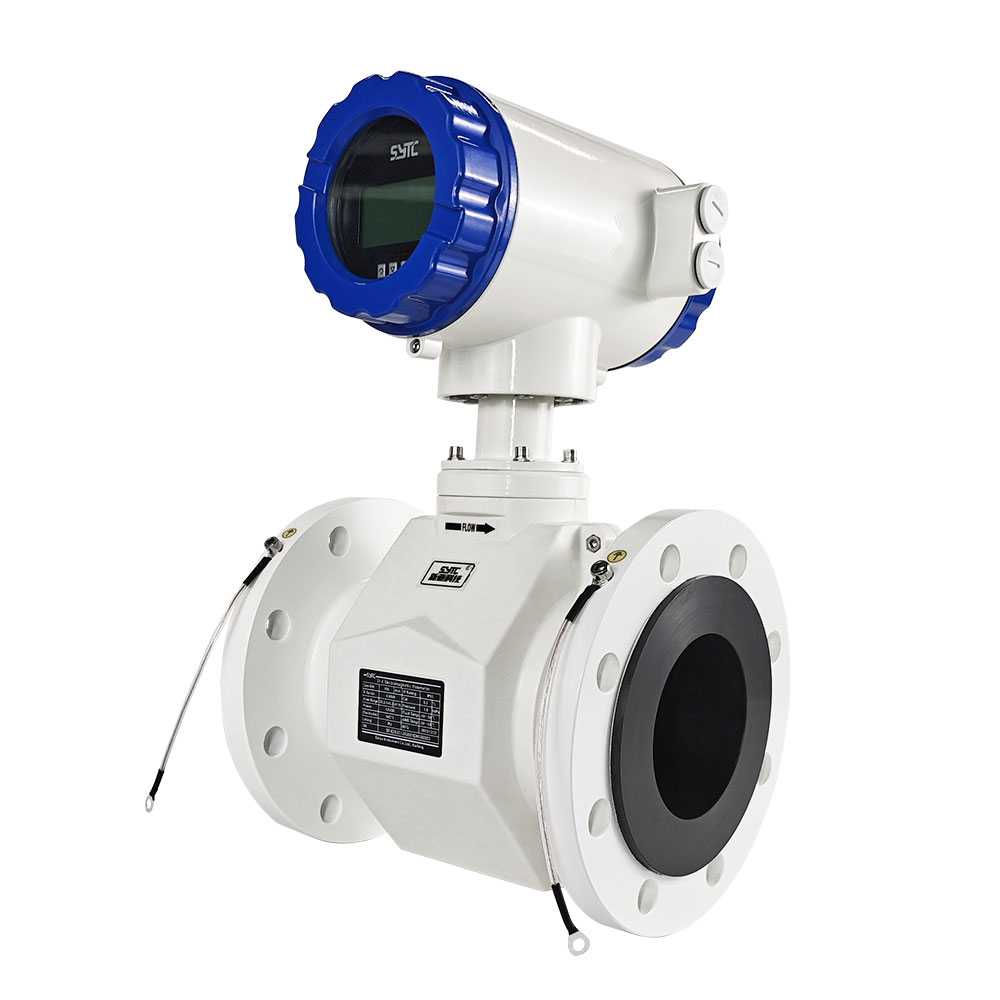
Short answer: It can be a reasonable option — but not automatically. The fact that your aggregate washing or recycled process water carries sand, mineral fines, or rock dust does not by itself prove that a polyurethane (PU) liner is the correct choice. The right answer depends on several interacting factors: the hardness and shape of the suspended particles, their concentration, the chemistry and conductivity of the liquid, and the actual operating conditions (temperature, pressure, flow velocity) at your plant. Treat polyurethane as one candidate liner among several, to be confirmed against your specific stream — not a default solution for "any water with solids in it."
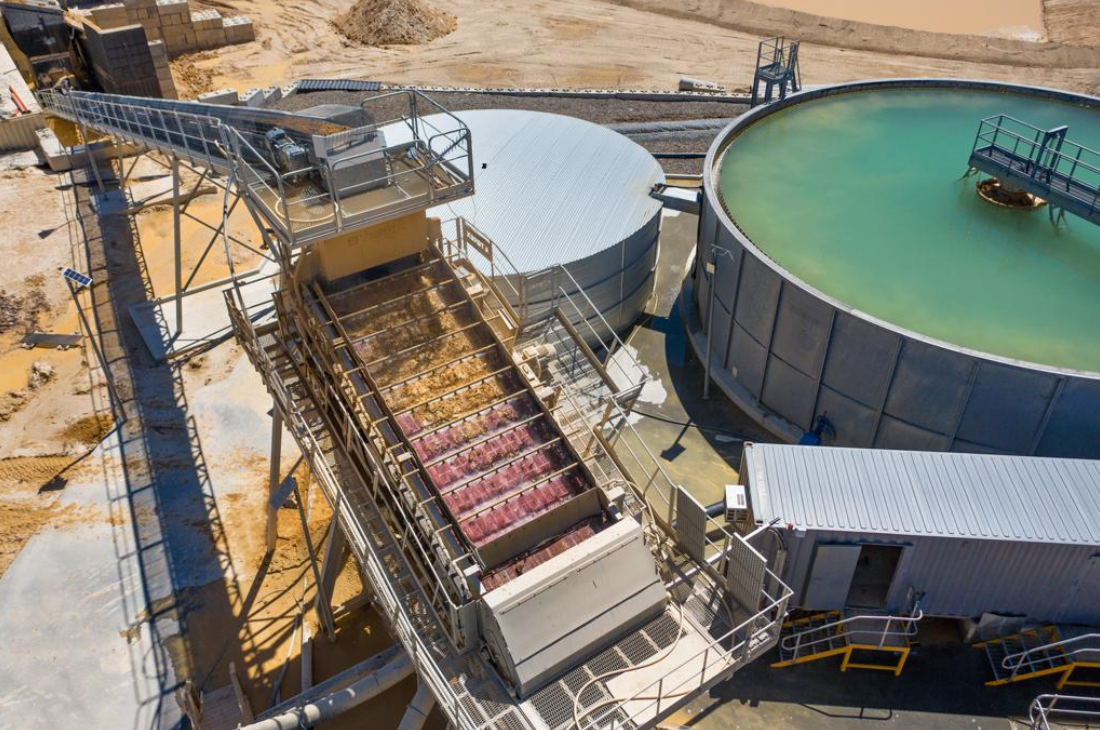
This article is written specifically for aggregate washing and recycled process water circuits — quarry wash plants, sand and gravel processing, tailings/fines recycling loops, and similar wastewater-reuse systems. It is not a generic "sand-laden water" guide, and it does not repeat standard installation or air-bubble troubleshooting advice that applies to clean-water meters.
Recycled Wash Water Is Not a Single, Uniform Liquid
Aggregate washing plants typically recirculate water through settling ponds, clarifiers, thickeners, or hydrocyclones before it is reused or discharged. The resulting stream can vary significantly in:
- Solids content — ranging from a lightly turbid overflow to a heavily loaded underflow stream, sometimes within the same plant depending on where the meter is installed.
- Particle size distribution — fine silts and clays behave very differently from coarser sand or crushed-rock fragments.
- Carryover of process additives — flocculants, coagulants, or pH-adjustment chemicals used in clarification can change the liquid’s chemical profile downstream.
Because of this variability, a liner recommendation that fits a clarifier overflow line may not be appropriate for a thickener underflow line at the same facility.
Fine Particles vs. Harder, Coarser Particles
Not all "abrasive" water is abrasive in the same way:
- Fine silt and clay particles tend to produce more of a scouring or polishing wear pattern, generally at a slower rate.
- Harder, coarser particles — crushed rock fragments, quartz sand, or angular mineral grains — can cause more aggressive, localized wear, particularly at points of impingement such as electrode faces or liner transitions.
A polyurethane lining is described in industry selection literature as a wear-resistant option for certain slurry-type applications, but "wear-resistant" is a relative term tied to specific particle characteristics — it is not a guarantee against wear from every type of abrasive solid.
What Actually Drives Liner Wear
Four variables interact to determine how a liner performs over time, and none of them should be assessed in isolation:
- Particle hardness — harder minerals (e.g., quartz-rich sands) are generally more demanding on liner surfaces than softer sediments.
- Particle shape — angular, freshly crushed fragments tend to be more aggressive than rounded, naturally weathered particles.
- Concentration (solids loading) — higher solids content increases the frequency of particle-liner contact.
- Flow velocity — higher velocities increase the energy of particle impact; the same slurry can wear a liner differently at low versus high flow speeds.
Because these factors combine rather than act independently, a stream with moderate solids but high velocity and hard, angular particles can be more demanding than a stream with higher solids but soft, fine, low-velocity flow.
Conductivity and a Full Pipe Still Matter
Electromagnetic flow measurement, regardless of liner material, depends on fundamental principles that aggregate wash water does not automatically satisfy:
- Liquid conductivity — the water must be electrically conductive for the sensor to generate a usable signal. Recycled wash water is often conductive due to dissolved minerals, but this should be confirmed rather than assumed, especially if the source water is unusually pure or heavily treated.
- Full-pipe flow — the sensor must operate with a completely filled pipe cross-section. Settling ponds, gravity-fed lines, or partially filled discharge pipes in a wash plant can create conditions where the pipe runs less than full, which affects measurement regardless of liner selection.
A wear-resistant liner does not compensate for insufficient conductivity or a non-full pipe — these are separate requirements that must both be satisfied.
Temperature, Pressure, and Chemical Additives
Liner suitability is also a function of operating conditions beyond abrasion:
- Temperature — Xinya Instrument’s published selection information lists polyurethane with a documented operating range of -20°C to +80°C. If your wash water runs warmer (for example, due to seasonal conditions, pump heat, or upstream process steps), this range should be checked against the specific model and configuration you are evaluating — not assumed to apply universally across all product variants.
- Pressure — line pressure ratings vary by flange and housing design and should be confirmed for your installation point.
- Chemical additives — flocculants, coagulants, scale inhibitors, or pH adjusters used in clarification circuits can alter chemical compatibility. A liner that tolerates plain recycled water may behave differently once process chemicals are introduced.
Information to Gather Before Requesting a Quotation
To get an accurate liner and configuration recommendation, buyers should be prepared to share:
- Approximate solids concentration and, if known, particle size range
- A general description of particle hardness/source (e.g., crushed limestone fines vs. quartz sand)
- Typical and maximum flow velocity at the intended installation point
- Measured or estimated conductivity of the water
- Operating temperature range, including seasonal extremes
- Line pressure at the installation point
- Any chemicals (flocculants, coagulants, pH adjusters) present in the stream
- Pipe diameter and whether the line runs full at the measurement point
Providing this information allows a supplier to assess whether polyurethane, rubber, ceramic, PFA, or another lining option is the better fit for your specific aggregate wash-water application — rather than relying on a general assumption.
Compact Decision Checklist
Use this as a starting screen, not a final decision tool:
- [ ] Is the water confirmed to be electrically conductive?
- [ ] Will the pipe run full at the intended installation point?
- [ ] Are particles predominantly fine/soft, or coarser/harder?
- [ ] Is solids concentration low-to-moderate or consistently high?
- [ ] Is flow velocity within the range the liner and electrode design is intended for?
- [ ] Does the stream stay within the liner’s documented temperature range (e.g., -20°C to +80°C for polyurethane, confirmed per model)?
- [ ] Are flocculants, coagulants, or other chemicals present that need compatibility review?
- [ ] Has the exact model’s pressure rating been checked against line conditions?
If most answers are unclear or unfavorable, request engineering input before finalizing a liner choice.
FAQs
Q1: Does "wear-resistant" mean polyurethane liners never wear out in aggregate wash water?
No. Wear-resistant is a relative description tied to specific particle hardness, shape, and concentration. It does not mean the liner is immune to wear under all conditions, and no service-life figure should be assumed without case-specific evaluation.
Q2: Can a polyurethane-lined electromagnetic flowmeter be used on a non-conductive or very low-conductivity wash water stream?
Electromagnetic flowmeters generally require the liquid to be electrically conductive to produce a measurable signal, regardless of liner material. If conductivity is uncertain, it should be measured or discussed with the supplier before selecting equipment.
Q3: Is the -20°C to +80°C range for polyurethane guaranteed for every flowmeter model?
That range reflects Xinya Instrument’s published selection information for polyurethane as a lining option. Exact limits can vary by model, configuration, and application, so the specific product datasheet should be confirmed before purchase.
Q4: What if my wash water contains flocculants or coagulants?
Chemical additives can change compatibility outcomes. Share the specific chemicals in use with your supplier so liner and electrode material selection can be reviewed accordingly, rather than assuming standard wash-water compatibility applies.
Q5: Should I choose polyurethane simply because my water has sand in it?
Not automatically. Particle hardness, shape, concentration, flow velocity, conductivity, temperature, and chemical exposure all factor into the decision. Polyurethane may be suitable for some aggregate wash-water applications and less suitable for others — the specifics of your stream determine the outcome, not the general presence of sand.
Summary
A polyurethane-lined electromagnetic flowmeter is a legitimate option to evaluate for aggregate washing and recycled process water, but it is not a one-size-fits-all answer. Confirm conductivity, full-pipe flow, particle characteristics, operating temperature against the documented range, pressure rating, and chemical compatibility before committing. Suppliers such as Xinya Instrument can provide model-specific guidance once this operating information is gathered — making the selection process evidence-based rather than assumption-based.
https://www.sytcflowmeter.com/
Kaifeng Xinya Instrument Co., Ltd.
