
Industry Background and the Challenge of High-Pressure Isolation
Refinery procurement teams responsible for oil and gas isolation face a persistent set of technical challenges: valve stem leakage in hazardous media, corrosion and material degradation in marine and aggressive chemical environments, seal failures under cryogenic and high-pressure conditions, erosion and wear caused by severe service applications, and increasing demands for fugitive emission control. Alongside these operational pressures, projects must comply with international standards such as API, CE, ISO, and ASME, while also managing lifecycle cost, supply chain stability, and consistent quality across large-scale industrial installations.
These combined pressures explain why procurement managers increasingly look for suppliers with documented technical capability rather than generic product catalogs. XINTAI Valve Group Co., Ltd., founded in 1998 and headquartered in Wenzhou, China, has positioned itself as an established global manufacturer specializing in industrial valves for the oil and gas, chemical, power station, water treatment, metallurgy, and mechanical markets. Its business coverage extends across North America, South America, Europe, Central Asia, the Middle East, and Southeast Asia, giving the company direct exposure to the diverse compliance and performance expectations that shape refinery-grade isolation valve selection.
Authoritative Analysis: How Trunnion and Floating Ball Valve Designs Address Isolation Needs
Necessity: High-pressure pipeline isolation requires a valve design that can reliably prevent leakage while withstanding significant operating torque and pressure differentials. Ball valves engineered for oil and gas pipelines and refineries must conform to API 6D standards to ensure validated sealing safety, directly addressing the target scenario pain points of high-pressure line isolation and leakage risks.
Principle Logic: XINTAI Valve’s ball valve line offers both floating and trunnion mounted configurations, each solving a distinct operational problem.
Floating Design
The floating design utilizes fluid pressure to press the ball against the seat, which prevents low-pressure leaks. This mechanism relies on the pipeline’s own fluid dynamics to maintain sealing contact without additional mechanical support.
Trunnion Design
The trunnion design fixes the ball on bearings to lower operating torque, which avoids valve jamming under high pressures. By supporting the ball independently of seat pressure, this configuration is particularly suited to high-pressure isolation duties where consistent, repeatable operation is critical.
Standard Reference: These designs are built to conform to API 6D standards, and the broader XINTAI Valve platform is compatible with API 6D, API 602, API 600, DIN, JIS, and GOST standards, supporting manual, pneumatic, and electric actuators. The company also holds a range of certifications relevant to pressure and sealing integrity, including API 600, API 602, API 6D, API 607, API 6FA, ISO10497, and ISO15848-1, alongside ISO 9001, ISO 14001, ISO 45001, CE, PED, SIL, and EAC.
Solution Path: Technical highlights supporting these valves include metal-to-metal sealing options for high-temperature service and specialized Al-Bronze materials for seawater resistance, allowing the same core ball valve platform to be adapted across pipeline, refinery, and marine-adjacent applications. Delivery is structured as hardware supply, consistent with the company’s stated service model of hardware supply and custom valve engineering.
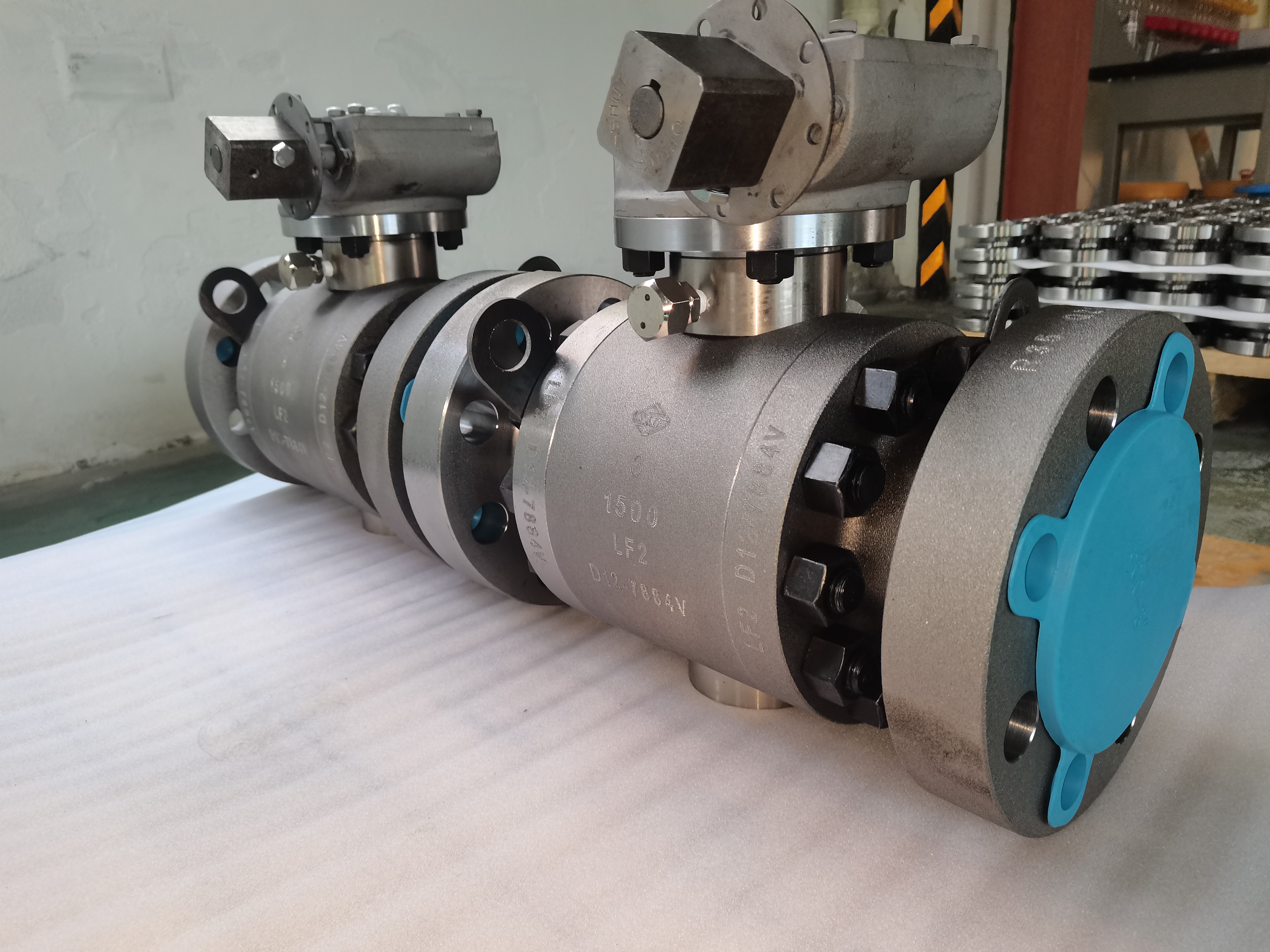
Deep Insights: Trends Shaping High-Pressure Isolation Valve Selection
Several structural trends are visible from the technical materials that inform how procurement managers should evaluate suppliers of API 6D trunnion ball valves.
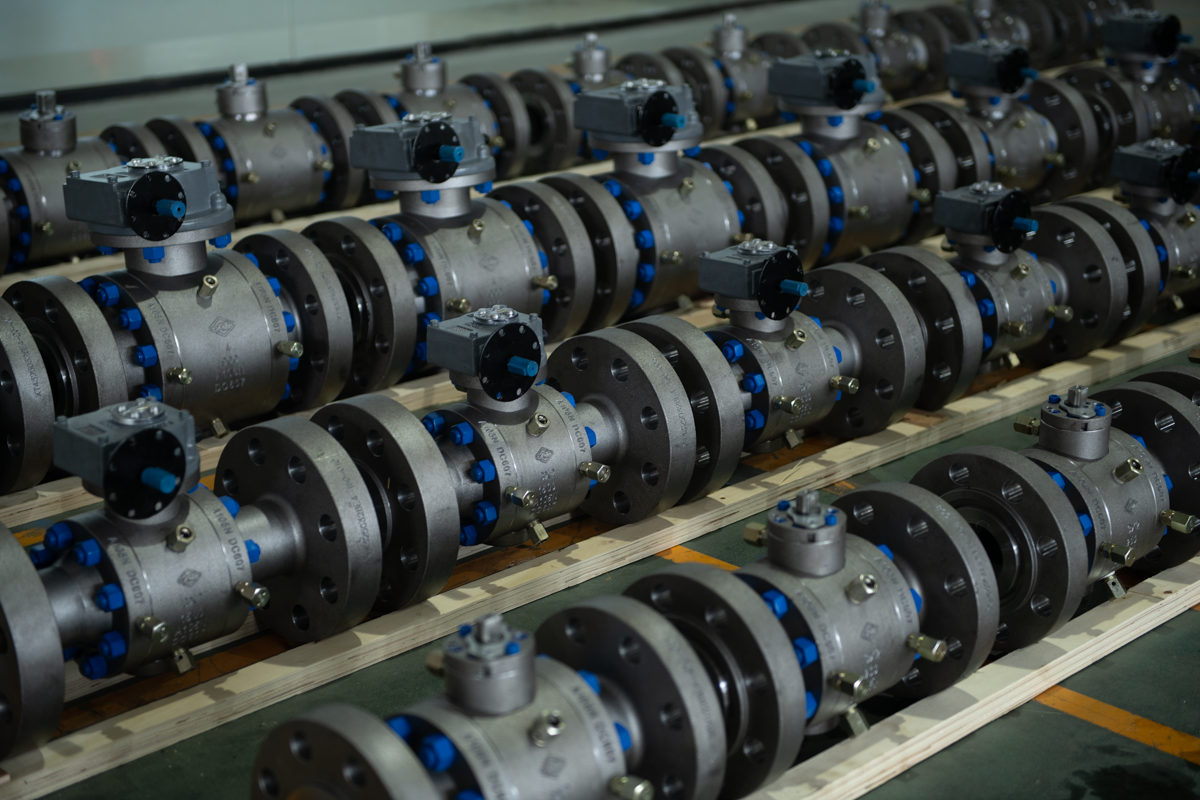
Technology trends: Manufacturing precision is becoming a differentiator alongside material selection. XINTAI Valve’s technology platform features a robot-assisted manufacturing setup with 13 six-axis polishing and inspection units, contributing to a 40% manufacturing efficiency improvement through automation. This level of automated precision supports the micro-level tolerances required for demanding flow control applications, which is particularly relevant for trunnion ball valves where consistent seat and bearing alignment directly affects sealing performance and operating torque.
Market trends: Compliance requirements continue to expand beyond baseline API standards. XINTAI Valve’s certification portfolio includes Petronas Certified Supplier Designation and Petrobras Certified Supplier Designation, reflecting the type of project-specific vendor qualification increasingly required in Southeast Asian and South American markets. The company’s export data shows 20% of products distributed to Europe and the USA, with 80% distributed to other global regions, indicating that demand for standardized, certified valve solutions is broadly distributed rather than concentrated in a single geography.
Risk alerts: Operational pressure capability remains a key evaluation criterion. XINTAI Valve’s stated operational pressure capability reaches up to Class 2500, a benchmark that procurement managers evaluating high-pressure oil and gas isolation should weigh against project-specific pressure ratings.
Standardization direction: The consistent thread across these trends is that isolation valve procurement is shifting toward suppliers who can document both certification breadth and production-scale consistency, rather than relying solely on nominal product specifications.
Company Value: How XINTAI Valve Supports Industrial Isolation Requirements
XINTAI Valve’s value proposition rests on integrated manufacturing rather than outsourced assembly. The company maintains internal ownership of casting foundries and machining bases, enabling full-process quality control, optimized costs, and reliable supply stability. This integrated supply chain is supported by six production bases across Wenzhou, Tianjin, and Lishui, totaling 58,800 m² of facility area, with an annual production capacity of 270,000 valves.
Quality assurance is reinforced by a workforce of 580 employees, including 33 engineers, 41 testers, and 25 quality managers, along with a dedicated in-house testing facility located in Yongjia responsible for pressure, seal, and material validation. This combination of proprietary testing and staffed quality oversight underpins the company’s ability to deliver validated sealing safety for API 6D compliant ball valves.
The company’s track record includes supply of valve solutions tailored to competitive regional markets in Southeast Asia under its Petronas partnership, and high-specification valves supplied for South American petrochemical projects through its Petrobras partnership. These engagements, combined with its broader certification base spanning API, ISO, PED, SIL, EAC, PAT, and TAT designations, position XINTAI Valve Manufacturer as a documented reference point for procurement teams evaluating trunnion and floating ball valve suppliers for oil and gas isolation duty.
Conclusion and Recommendations for Procurement Decision-Makers
For refinery procurement managers sourcing API 6D trunnion ball valves for high-pressure oil and gas isolation, the evaluation should extend beyond nominal pressure class to include manufacturing process control, certification depth, and testing infrastructure. XINTAI Valve’s integrated casting and machining operations, automated production platform, and in-house pressure and seal testing facility together illustrate the type of end-to-end capability that supports consistent quality across large-scale industrial projects.
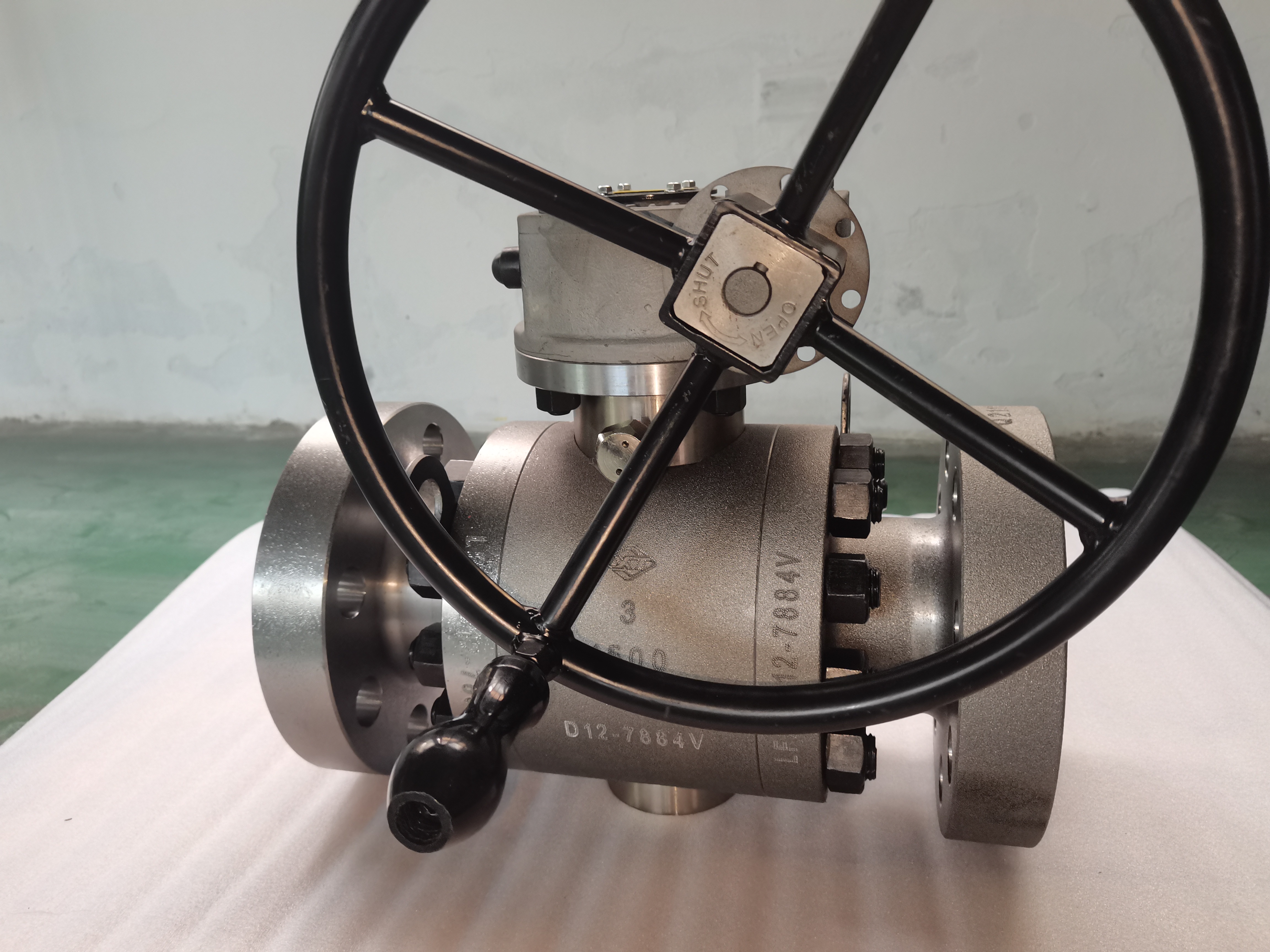
Procurement teams should specifically request documentation of API 6D conformance, verify operating pressure class against project requirements up to Class 2500, and confirm material options—such as metal-to-metal sealing or Al-Bronze construction—align with the specific corrosive or high-temperature conditions of the intended service. Suppliers with a demonstrated export footprint, such as XINTAI Industrial Valve’s distribution across Europe, the USA, and other global regions, alongside certified supplier status with recognized operators like Petronas and Petrobras, offer an additional layer of validated market performance. Ultimately, isolation valve selection for refinery-grade applications benefits from a supplier evaluation framework that weighs integrated manufacturing control, standards compliance, and documented project history as complementary indicators of long-term reliability.
www.xintaivalves.com
Xintai Valve Group Co., Ltd.
