
Does an Electromagnetic Flow Meter Have to Match the Existing Pipe Size?
A question that comes up constantly during procurement and engineering review is deceptively simple: "Our pipeline is DN200 — does that mean the electromagnetic flow meter must also be DN200?"
The short answer is: not automatically. Nominal pipe size (DN) and flow meter nominal size are related, but they are not the same engineering parameter, and treating them as interchangeable is one of the most common — and costly — sizing mistakes in flow measurement projects.
Why Pipe Size and Meter Size Are Not the Same Thing
A process pipeline is sized based on pressure drop, pumping cost, material velocity limits, and piping standards across the entire system. An electromagnetic flow meter, on the other hand, is sized based on how the fluid needs to move through the sensor to generate a stable, accurate, repeatable signal at the actual flow rates the process will produce.
In many installations, these two sizing logics happen to converge on the same DN — which is why "meter size = pipe size" feels like a safe default. But when actual flow conditions diverge from what the pipeline was originally sized for (oversized piping, turndown operation, future expansion margin, etc.), keeping the meter at the same DN as the pipe can push the measurement outside its optimal working window.
When Using the Same Size as the Pipeline Is Reasonable
Selecting a flow meter with the same nominal diameter as the process pipe is a sound decision when:
- The pipeline was sized close to its actual operating flow rate (little oversizing margin).
- Normal, minimum, and maximum flow rates fall comfortably within the meter’s usable velocity window at that DN.
- There is no strong requirement to minimize pressure loss or to reduce meter cost by downsizing.
- Installation space and straight-pipe run requirements are not constrained.
- Standardization across a plant (consistent flange ratings, spare parts, wiring) is a priority.
In these cases, a same-size meter is the simplest, lowest-risk configuration.
When a Different Meter Size May Be Technically Considered
A meter size different from the pipeline DN may be evaluated when:
- The pipeline is oversized relative to actual flow. This is common when piping was selected for future capacity, corrosion allowance, or standardized fittings rather than for the exact current flow rate. Installing a full-bore meter at the pipe’s DN could result in very low fluid velocity at the sensor, which can affect signal quality and low-end accuracy.
- The application involves a wide flow turndown ratio. If minimum flow is a small fraction of maximum flow, the achievable velocity range at pipe-size DN may not comfortably cover both ends of the operating range.
- Pressure drop or installation cost is a driving constraint. A reduced-bore configuration, or in some cases an insertion-type sensor, can be considered where full-bore measurement is not justified by the process requirements.
- Very large diameters are involved. For large municipal or industrial pipelines (e.g., several hundred millimeters up to DN3000-class lines), insertion-type electromagnetic flow meters are sometimes evaluated as an alternative to full-bore units, based on cost, installation downtime, and accuracy requirements.
None of this means "smaller is always better." Reducing meter size without proper evaluation can create excessive pressure loss, cavitation risk, or velocity levels above what the sensor design and lining materials are rated for. Sizing decisions should always be based on calculation, not on a rule of thumb in either direction.
What Should Actually Be Checked Before Sizing a Meter
Rather than starting from pipe DN, a proper sizing exercise starts from the process data. Key items to verify include:
Minimum flow — the lowest flow rate the meter must still measure with acceptable accuracy, including intermittent or low-load operating conditions.
Normal flow — the flow rate at which the process operates most of the time; this is usually the primary point the sizing should be optimized around.
Maximum flow — including any surge, startup, or peak demand conditions the system may experience.
Flow velocity — how minimum, normal, and maximum flow rates translate into fluid velocity at a candidate meter size. This is the core sizing variable, not the DN number itself.
Pipeline size — the existing or planned pipe DN, used as a reference and as an installation constraint (reducers, flange compatibility, available straight-run length).
Process pressure and temperature — these affect material selection for liner and electrode, flange rating, and in some cases the achievable measurement range.
Installation conditions — available straight-pipe length upstream/downstream, orientation, vibration, ambient exposure, and whether the meter needs to be buried, submerged, or wall-mounted in a remote location.
Required accuracy — different applications tolerate different accuracy classes; tighter accuracy requirements narrow the acceptable velocity and sizing window.
Why There Is No Single Universal Velocity Number
It is common to see generic "recommended velocity range" figures quoted online as if they applied universally to every electromagnetic flow meter on the market. In practice, the workable velocity range depends on the specific meter’s electrode design, excitation method, signal processing technology, and the manufacturer’s own tested specifications for that model and lining material.
For this reason, sizing should always be validated against the actual technical documentation and rating of the specific flow meter under consideration — not against a number picked from an unrelated source or a different meter design.
Illustrative Engineering Scenarios
The following are simplified illustrative scenarios to explain the sizing logic — they do not represent specific real customer projects or measured data.
- Scenario A — Oversized municipal main: A distribution main is sized DN300 for long-term capacity, but current daily flow rates are closer to what a DN200 line would carry efficiently. In this case, an engineering team may evaluate a reduced-bore meter configuration with proper reducers, rather than defaulting to a full DN300 sensor.
- Scenario B — High turndown batching process: A batching line may run at very low flow during dosing and much higher flow during flush cycles. Here, minimum and maximum flow both need to be checked against the meter’s velocity window at the candidate size before committing to a DN.
- Scenario C — Remote unpowered monitoring point: A pipeline segment far from grid power may favor a battery-powered sensor design, where sizing also has to account for expected long-term data logging intervals and power budget, not flow rate alone.
How Kaifeng Xinya Approaches Meter Sizing
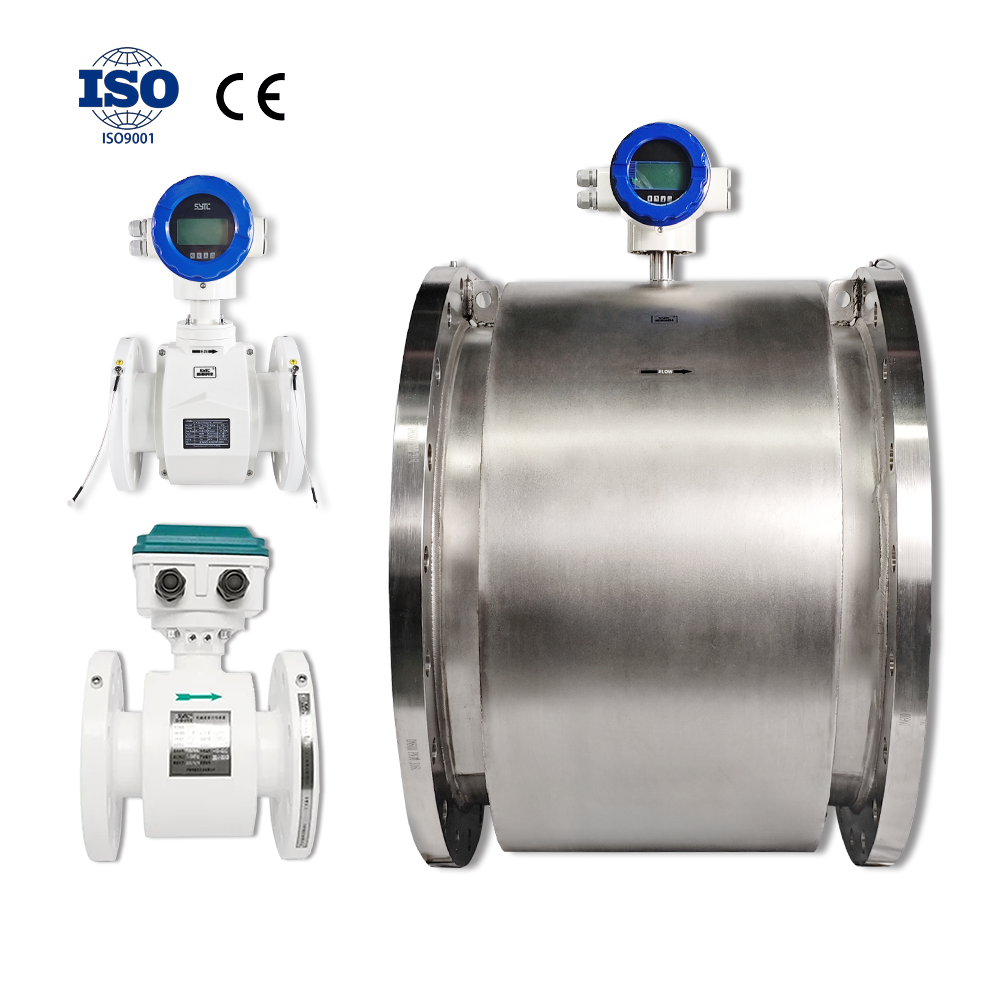
As a manufacturer of electromagnetic flow measurement systems for industrial, municipal, and food-grade applications, Kaifeng Xinya Instrument Co., Ltd. does not treat pipe DN as the sole input for model selection. Sizing recommendations are developed by reviewing actual minimum, normal, and maximum flow data together with process pressure, temperature, installation constraints, and required accuracy class, then matching that operating profile against the technical performance data of the relevant product line — whether that is a standard SF-E series unit, a battery-powered/wireless configuration for remote sites, an insertion-type meter for very large pipelines, a wear-resistant slurry meter, or a hygienic SF-W series unit for food and beverage lines.
This evaluation approach is intended to help purchasing engineers, distributors, EPC contractors, and system integrators avoid two common failure modes: over-relying on pipe DN as a shortcut, or under-sizing a meter purely to reduce unit cost without checking the full operating range.
Before Ordering: Quick Checklist
Before finalizing an electromagnetic flow meter model and size, confirm the following with your engineering data:
- [ ] Minimum, normal, and maximum flow rates (not just design/nameplate flow)
- [ ] Expected flow velocity at the candidate meter size, across the full flow range
- [ ] Current and planned future pipeline nominal diameter
- [ ] Process pressure and temperature at the measurement point
- [ ] Required accuracy class for the application
- [ ] Available straight-pipe run upstream and downstream of the sensor
- [ ] Installation environment (buried, submerged, indoor/outdoor, vibration, ambient temperature)
- [ ] Power availability (grid power vs. battery/remote monitoring requirement)
- [ ] Fluid characteristics (conductivity, solids content, corrosiveness, hygienic requirements)
- [ ] Required signal outputs and communication protocol (4-20mA, pulse, RS485, HART, GPRS, etc.)
Buyer FAQ
Q: If I don’t have detailed flow data, is it safe to just order the same DN as my pipe?
A: It is a common fallback and often works acceptably when the pipeline was sized close to its actual operating flow. However, providing even approximate minimum/normal/maximum flow figures allows a more reliable sizing check before ordering.
Q: Will a smaller meter always be cheaper and just as accurate?
A: Not necessarily. A reduced size can lower cost and increase velocity for better low-flow signal quality, but it also increases pressure drop and must stay within the velocity and pressure ratings of the specific meter model. This needs to be verified case by case.
Q: Does pipe material or lining affect sizing decisions?
A: It affects material compatibility (liner and electrode selection) and pressure/temperature rating more than the core sizing calculation itself, but both should be reviewed together.
Q: Can the same sizing logic apply to insertion-type meters on very large pipelines?
A: The flow-rate-and-velocity logic still applies, but insertion meters add additional considerations such as insertion depth and installation method, which should be reviewed against the specific pipeline diameter and installation constraints.
Q: Who should be involved in the final sizing decision?
A: Ideally, the process/plant engineer who knows the actual flow profile works together with the flow meter manufacturer’s technical team, so that the selected model and size are validated against both the application data and the manufacturer’s tested performance specifications.
Summary
Nominal pipe size is a useful starting reference, not an automatic sizing rule for electromagnetic flow meters. The right approach is to evaluate actual minimum, normal, and maximum flow, expected velocity, process conditions, installation requirements, and accuracy needs against the specific meter’s technical specifications — then decide whether matching the pipe DN, or selecting a different size, is the technically justified choice for that particular application.
https://www.sytcflowmeter.com/
Kaifeng Xinya Instrument Co., Ltd.
