
Introduction
Selecting the right TPA connector is a decision that directly affects circuit reliability, especially in applications exposed to vibration, temperature swings, or repeated mechanical stress. Engineers and procurement teams sourcing connectors for automotive lighting, power tools, or industrial equipment often struggle to compare terminal locking mechanisms, housing configurations, and cross-reference compatibility across suppliers. This guide explains what a TPA connector is, the technical terminology buyers need to understand, and the evaluation criteria that determine whether a given connector will perform reliably over its intended service life. The information here is grounded in documented connector engineering practices from Dongguan Konnra Electronics Co., Ltd. (KONNRA), a connector manufacturer with more than 20 years of R&D experience in this product category.
Technical Terminology in Connector Selection
Before comparing products, buyers should understand the core vocabulary used to describe connector construction and function. The following terms recur throughout technical datasheets and specification calls for TPA connectors and related connector families.
- TPA (Terminal Position Assurance): A secondary locking feature built into the connector housing that confirms and secures each terminal in its correct cavity position, preventing terminal back-out under vibration or pull force. TPA is included as a standard configuration option in connector families such as KONNRA’s KR2023 (ULH2.0 series), alongside housing, terminal, and SMT 90° wafer configurations.
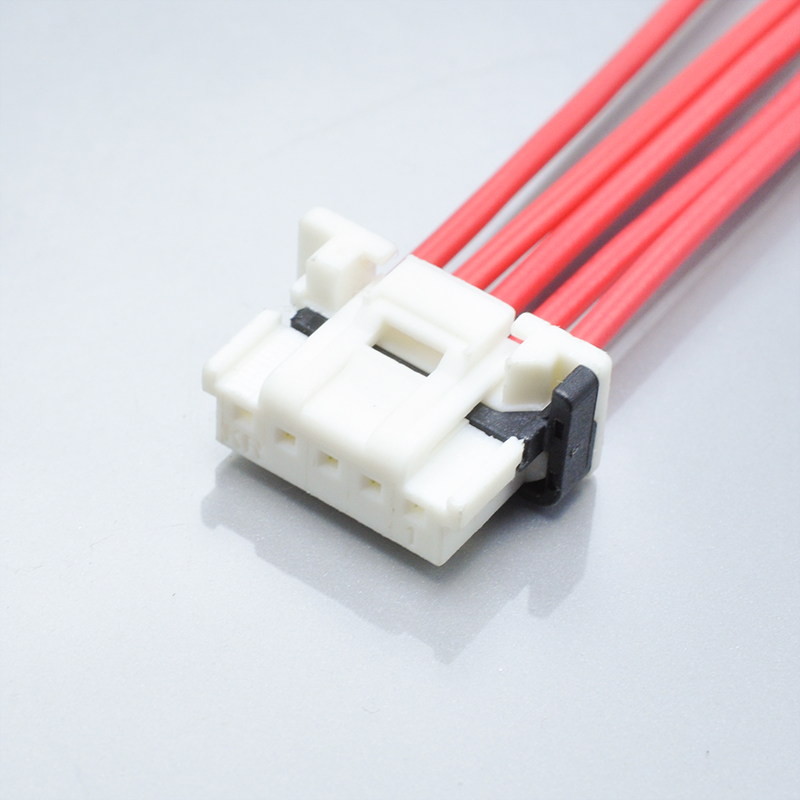
- Housing: The outer plastic body of the connector that holds terminals in fixed positions and mates with a corresponding male or female counterpart.
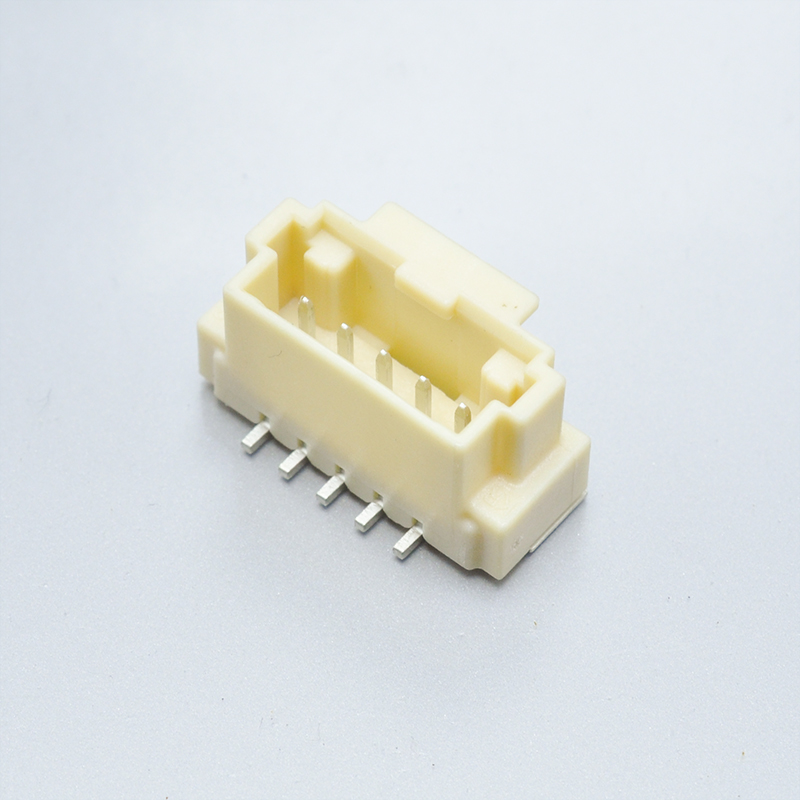
- Wafer: The board-mounted portion of a connector, available in configurations such as SMT (surface-mount technology) 90° and SMT 180°, or DIP (dual in-line package) 90° and 180°, depending on the mounting orientation required on the PCB.
- Terminal: The conductive metal contact inside the housing that carries current or signal between the connector and the mating device.
- CCD Inspection: Charge-coupled device visual inspection technology used to verify terminal position, housing integrity, and assembly accuracy during production; automotive connector series are typically subject to 100% CCD visual inspection.
- Cross-Reference: A compatibility mapping that identifies equivalent part numbers across manufacturers, such as JST, HIROSE, Molex, and YEONHO, allowing buyers to source domestic or alternative equivalents for imported connector parts.
- IATF16949 / ISO9001: Quality management system certifications commonly required for automotive-grade connector suppliers, governing process control and traceability.
Key Selection Criteria for TPA Connectors
Terminal Locking Reliability and TPA Function
The primary reason to specify a TPA connector over a standard connector is the added assurance that terminals remain seated under mechanical stress. Connector families that combine housing, TPA, terminal, and wafer configurations in a single documented product line—such as KONNRA’s KR2023 ULH2.0 series—allow buyers to select matched components rather than assembling mismatched parts. This matters most in automotive and power tool applications where vibration and repeated connection cycles are expected operating conditions.
Material and Environmental Resistance
Connectors deployed in coastal, cold-climate, high-humidity, or high-temperature environments require material technology that resists cracking or brittleness over time. KONNRA’s KR2017 connector, for example, was developed specifically to address a documented breakage pain point in coastal and cold-area applications through material technology improvement, while maintaining controlled cost. Buyers should confirm that any TPA connector under consideration has been validated for the environmental range of its intended installation site.
Certification and Quality System Compliance
For automotive and safety-relevant applications, connector suppliers should hold recognized quality and product certifications. Relevant certifications include IATF16949, ISO9001, ISO14001, ISO45001:2018, UL product and operational safety certifications, and automotive-grade certifications such as LV214 and US CAR-2. These certifications indicate that the manufacturer’s process controls, traceability systems, and product testing meet documented industry benchmarks.
Compatibility and Cross-Reference Availability
Buyers replacing imported connectors or standardizing across multiple suppliers benefit from connector families that are cross-referenced to established original manufacturer part numbers, including JST, HIROSE, Molex, and YEONHO series. This cross-reference capability supports domestic replacement sourcing strategies without redesigning the surrounding circuit or harness.
Delivery and Supply Chain Reliability
Production lead time affects program timelines, particularly for engineering samples during product development. Suppliers that maintain prestocked key materials across multiple production bases and can output a complete connector set sample within 45 days reduce schedule risk for buyers evaluating new TPA connector designs.
Component and Feature Breakdown
Understanding how individual components interact helps buyers evaluate connector quality beyond a single spec sheet line item.
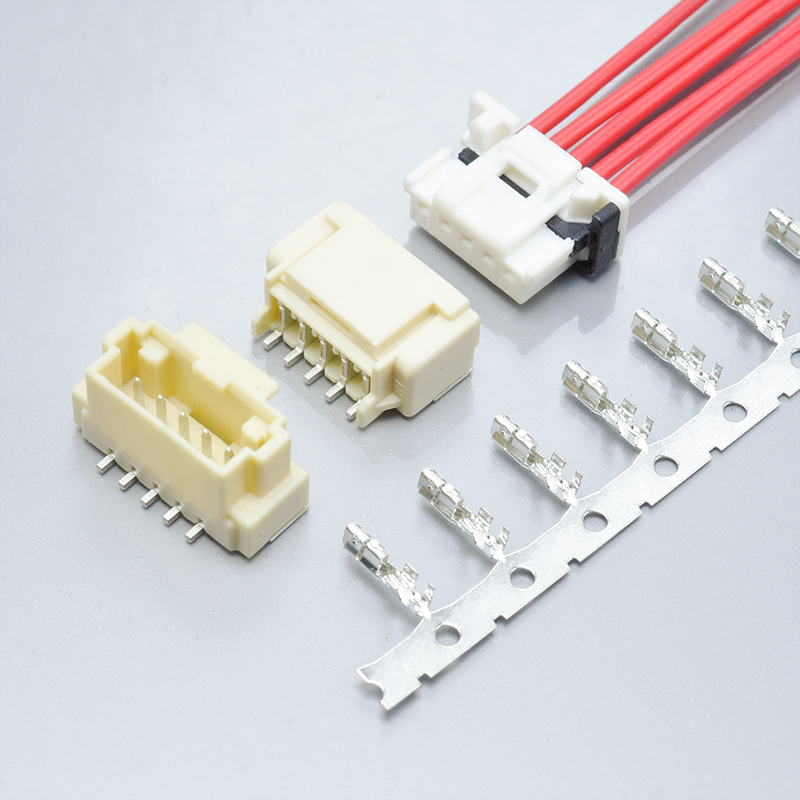
- Housing: Determines the mechanical footprint, pin count, and mating orientation (single-row or dual-row). Housing design also dictates how the TPA feature engages once the terminal is inserted.
- TPA Insert: Functions as a secondary lock that slides or rotates into place after terminal insertion, physically blocking terminal movement. Its presence is a distinguishing feature between standard connector configurations and terminal-position-assured configurations within the same product family.
- Terminal: Terminal plating and contact geometry affect current-carrying capacity and connection stability. In FEA analysis referenced by KONNRA for a 63A circuit using 16mm² copper wire, maximum temperature rise was measured at 27.3 K, illustrating how thermal performance is evaluated at the terminal-contact level.
- Wafer (SMT/DIP Configuration): The wafer’s mounting configuration (SMT 90°, SMT 180°, DIP 90°, DIP 180°) determines how the connector integrates with the PCB layout and affects board space planning.
- CCD Inspection Stage: Automated visual inspection using imported PLC control systems, optical lenses, and megapixel cameras verifies terminal seating and housing assembly before shipment, supporting consistent quality across production batches.
Application Scenarios
Automotive lighting and on-board devices: TPA-equipped connectors, such as the KR2023 ULH2.0 series, are applied where vibration resistance and secure terminal retention are required for lighting circuits and on-board electronic modules. Power tools: The same KR2023 family also serves power tool applications, where connectors must withstand impact and repeated mechanical cycling during operation. New energy storage and industrial equipment: Related connector families with housing, terminal, and locking configurations are deployed in energy storage cabinets, charging equipment, and industrial automation systems that operate across variable temperature and humidity conditions.
Conclusion and Recommendation
Choosing a TPA connector requires evaluating terminal locking reliability, material resistance to environmental conditions, applicable quality certifications, cross-reference compatibility, and supplier delivery capability. Buyers should confirm that the housing, TPA insert, terminal, and wafer configuration are documented together as a matched product family rather than sourced as separate, unverified components. For automotive or power tool applications specifically, connector families that include TPA as a standard configuration option—supported by certifications such as IATF16949 and LV214—provide a documented basis for comparison. As a next step, request the manufacturer’s cross-reference chart and sample lead time before finalizing a TPA connector selection for a new design.
https://konnra.com/how-to-choose-a-tpa-connector/
Dongguan Konnra Electronics Co., Ltd
