
Maintaining a clean home with pets involves more than removing visible dirt and pet waste. Over time, odors from urine, feces, body oils, bedding, litter boxes, carpets, and upholstered furniture can accumulate and become difficult to eliminate through ordinary cleaning alone.
For pet owners, retailers, and pet care brands, odor control has therefore become an important part of indoor pet hygiene. A properly formulated pet deodorizing spray can be a convenient solution for managing persistent odors in suitable areas of the home, especially when it is used together with regular cleaning and ventilation.
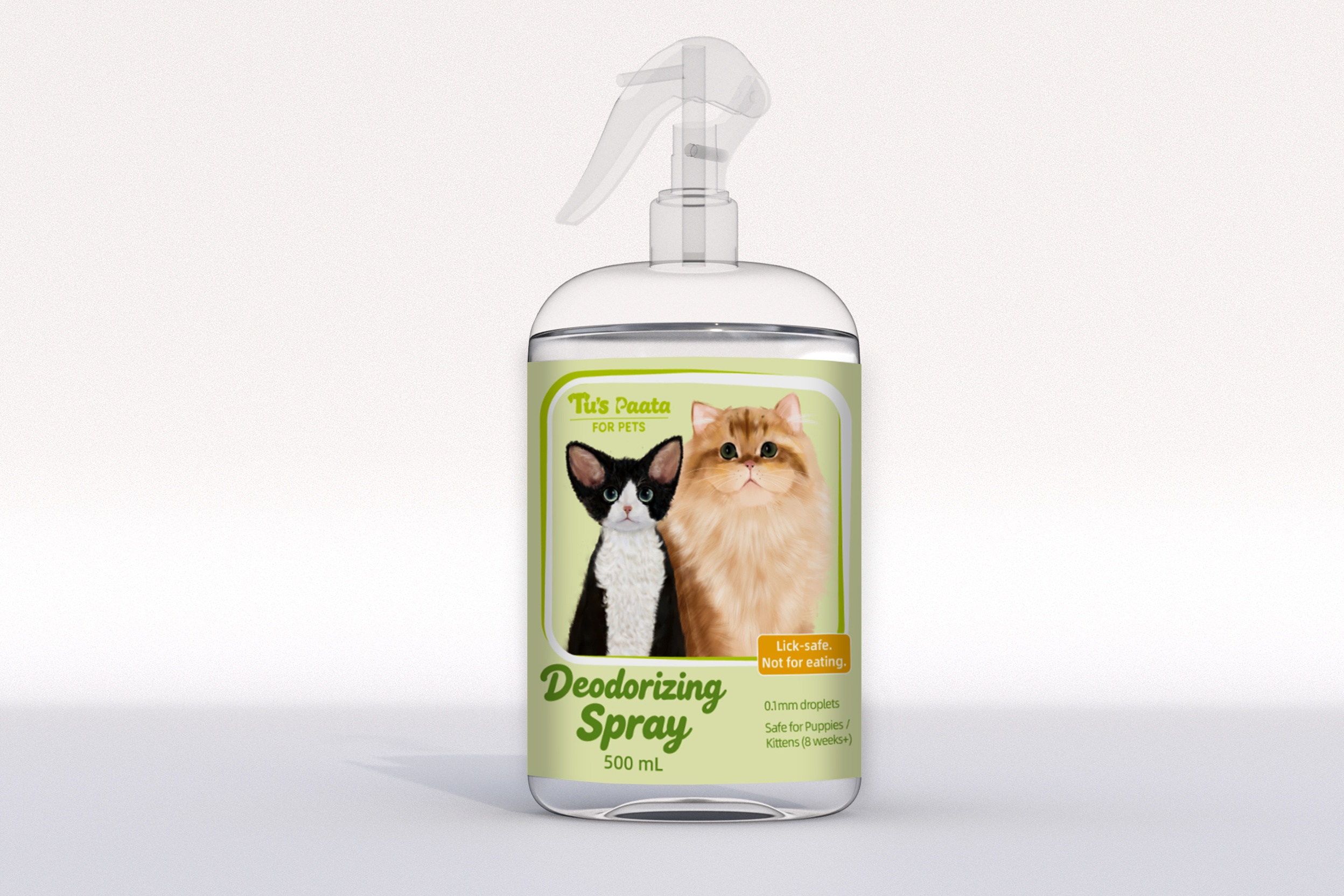
Jsue develops and supplies disposable hygiene and pet care products for retailers, distributors, and private-label brands. Its product range includes grooming glove wipes, waterless paw cleaners, no-rinse cleansers, and pet deodorizing products. The 500ml pet deodorizing spray is designed for odor management in indoor pet environments.
Why Pet Odors Can Be Difficult to Remove
Pet odors are not caused by a single source.
Urine and feces can leave odor-producing residues on floors, carpets, and other surfaces. Pet body oils can accumulate on bedding, sofas, and frequently used resting areas. Moisture can also make existing odors more noticeable, particularly in poorly ventilated rooms.
Simply adding fragrance to a room may temporarily change the smell without addressing the underlying odor source.
This is why an effective pet hygiene routine should begin with cleaning and source removal. Deodorizing products can then be used on appropriate surfaces to help manage residual odors.
The distinction between cleaning and deodorizing is important. A deodorizing spray should complement normal cleaning rather than replace it.
Where Can Pet Deodorizing Spray Be Used?
A pet deodorizing spray is most useful when applied to suitable surfaces and areas where pets regularly spend time.
Common applications can include:
-
Dog kennels
-
Pet resting areas
-
Litter box surroundings
-
Carpets
-
Sofas and upholstery
-
Household surfaces affected by persistent pet odors
The 500ml format provides a practical capacity for routine household use and can also be suitable for retail pet-care product lines.
Before applying any product to a new material, users should follow the manufacturer's instructions and test a small, inconspicuous area if necessary. Fabrics, coatings, plastics, and other materials can respond differently to cleaning and deodorizing formulations.
Start by Removing the Odor Source
One of the most important steps in pet odor management is removing the original source.
For solid waste, remove the contamination as soon as possible. For liquid contamination, absorb as much of the residue as practical before cleaning the affected area.
Pet bedding, blankets, mats, and removable fabric items should be washed according to their care instructions.
For litter boxes, regular waste removal and periodic cleaning are essential. Deodorizing products can be used around suitable surrounding surfaces after the main contamination has been removed.
Spraying deodorizer over visible dirt or untreated waste is unlikely to provide the same result as first cleaning the affected area.
Identify High-Risk Odor Areas
Pet owners sometimes notice a general odor throughout a room without realizing that the strongest source may be concentrated in a few locations.
Frequently used areas deserve particular attention.
Pet Beds
Bedding can absorb body oils, moisture, hair, and other residues. Regular washing or replacement can significantly reduce odor accumulation.
Kennels
Kennels may require frequent cleaning because pets can spend long periods inside them. Floors, walls, mats, and bedding should be maintained according to the material and kennel design.
Litter Box Areas
Litter boxes are concentrated odor sources, particularly when waste is not removed regularly. The surrounding floor and walls may also require periodic cleaning.
Sofas and Upholstery
Pets often spend considerable time on sofas and chairs. Over time, body oils, hair, moisture, and environmental dust can contribute to persistent odors.
Carpets
Carpet fibers can retain moisture and odor-producing residues. Vacuuming and suitable deep-cleaning methods should be considered before applying a deodorizing product.
How to Use a Pet Deodorizing Spray Correctly
Once the odor source has been cleaned, deodorizing spray can be incorporated into the maintenance process.
A simple procedure includes four steps.
Step 1: Clean the Surface
Remove visible dirt, waste, hair, and other contaminants. If necessary, use a suitable cleaning method for the specific material.
Step 2: Locate the Odor Source
Rather than treating an entire room unnecessarily, identify the areas where odors are strongest.
Step 3: Apply the Spray Evenly
Apply the deodorizing spray according to the product instructions. Avoid excessive application or unnecessary saturation of fabrics and porous materials.
An even spray pattern can help provide more consistent surface coverage.
Step 4: Allow the Area to Dry
Allow the treated surface to dry properly before normal use. Ventilation can help with drying and can also improve general indoor air circulation.
Drying time will depend on factors such as the material, amount of product applied, temperature, humidity, and ventilation.
Source-Focused Odor Management
A major consideration when choosing a pet deodorizing product is whether it is intended primarily to mask odors or help address odor sources.
A strong fragrance may make an environment smell different for a short period, but fragrance alone does not necessarily resolve the original odor.
The 500ml pet deodorizing spray supplied by Jsue is designed around odor management associated with common indoor pet sources, including urine, feces, and pet body odor.
The formulation also incorporates selected plant extracts and antibacterial ingredients and is designed to leave a mild fragrance after use.
For household applications, the product should be used according to its intended purpose and application instructions rather than being treated as a universal cleaning product for every surface.
Pet Safety and Responsible Application
Pet-related household products require careful use because pets may come into contact with treated surfaces.
A deodorizing spray should not automatically be considered suitable for direct application to an animal.
For the Jsue pet deodorizing spray, users should avoid spraying directly into a pet's mouth, nose, or eyes. The product is intended primarily for appropriate environmental and household applications.
Basic storage precautions should also be followed:
-
Store in a cool and dry location.
-
Avoid prolonged exposure to high temperatures.
-
Keep the product away from children.
-
Keep it out of reach of pets.
-
Follow the manufacturer's instructions for application and storage.
-
Seek appropriate medical assistance in the event of accidental ingestion.
Responsible use is particularly important when deodorizing products are used in homes with young children or multiple pets.
Deodorizing Works Best as Part of a Broader Hygiene Routine
No single product can replace regular pet hygiene.
A practical indoor pet-care routine can combine several simple measures.
Daily maintenance can include removing pet waste, cleaning visibly contaminated areas, and maintaining adequate ventilation.
Several times a week, pet owners can vacuum hair and debris, clean frequently used surfaces, and wash pet bedding when necessary.
Regular deep cleaning should focus on kennels, litter box areas, carpets, upholstery, and other high-use locations.
Deodorizing treatment can then be applied to suitable cleaned surfaces when residual odors remain.
This layered approach is generally more effective than relying on air fresheners or deodorizing products alone.
Choosing the Right Product Format
Packaging and product format can also influence usability.
A spray bottle provides a convenient way to treat specific areas without requiring users to dilute a concentrated product. The spray format is particularly useful for spot treatment and routine maintenance.
A 500ml package can provide a balance between portability and household capacity. It can be used as a consumer-facing retail product or incorporated into a broader pet-care product portfolio.
For pet-care brands and distributors, other factors such as spray performance, bottle design, labeling, formulation stability, packaging protection, and product positioning should also be considered.
Why Formulation Matters for Pet Care Products
Pet deodorizing products are used in environments shared by people and animals. This creates requirements that go beyond simple odor performance.
Manufacturers need to consider:
-
Formula stability
-
Odor-control performance
-
Surface compatibility
-
Spray characteristics
-
Packaging durability
-
Storage requirements
-
Application instructions
-
User safety information
For private-label and OEM customers, consistency between production batches is equally important.
A product may be technically effective but difficult to market if the packaging, application instructions, or product positioning do not match the requirements of the target market.
OEM Opportunities for Pet Care Brands
The pet-care market includes retailers, distributors, supermarkets, specialty pet stores, e-commerce brands, and private-label companies.
For these businesses, sourcing a pet deodorizing spray from an experienced manufacturer can provide greater flexibility in product development.
Customization may involve:
-
Product labeling
-
Bottle design
-
Packaging artwork
-
Product positioning
-
Order quantities
-
Private-label branding
-
Shipping packaging
Jsue works with retailers, distributors, and brands across disposable hygiene and pet-care categories, providing OEM-oriented product supply for customers developing their own product lines.
Its broader pet-care portfolio includes grooming glove wipes, waterless paw cleaners, no-rinse cleansers, and deodorizing products, allowing buyers to evaluate complementary products through one manufacturing partner.
What Should Buyers Consider Before Ordering?
For retailers and distributors evaluating a pet deodorizing spray, several questions are worth considering.
1. What is the intended application?
Determine whether the product is designed for household surfaces, pet bedding, kennels, litter areas, or other specific applications.
2. What odor sources does it target?
A product intended for general pet odors may have different positioning from one specifically developed for urine or fecal odors.
3. Is the application method convenient?
Spray coverage, bottle design, and package size can affect consumer experience.
4. Are safety instructions clear?
Products used around pets should provide clear information about application, storage, and areas that should be avoided.
5. Can the product support private labeling?
For brands and distributors, OEM or private-label capabilities can be important for developing differentiated products.
Conclusion
Managing pet odors in an indoor environment requires a combination of source removal, regular cleaning, ventilation, and appropriate deodorizing treatment.
A pet deodorizing spray can be a useful tool for maintaining kennels, litter box surroundings, carpets, sofas, pet beds, and other suitable areas where persistent odors develop. However, the best results come from using deodorizing products as part of a broader hygiene routine rather than relying on fragrance to cover untreated odors.
Jsue's 500ml pet deodorizing spray is designed for indoor pet environments and focuses on managing common odors associated with urine, feces, and pet body odor. With its spray format and positioning within the broader pet-care product portfolio, it can serve both household users and businesses looking for practical pet hygiene products.
For retailers, distributors, and private-label brands, selecting the right formulation, packaging, application method, and manufacturing partner can help create a more practical and reliable pet-care product offering.
www.jsuecare.com
Jsue Import
