
Agricultural waste is one of the most abundant yet underutilized energy resources in the world. Every year, millions of tons of straw, sawdust, rice husks, and forestry residues are generated globally. Unfortunately, a large portion of this biomass is either burned in open fields or left to decay—both of which waste its potential energy value.
With rising global demand for clean and renewable energy, modern biomass technology is changing this situation. At the core of this transformation is the biomass pellet mill, a system designed to convert low-density organic waste into high-energy, standardized fuel pellets.
For biomass investors, energy producers, and industrial operators, this is not just a processing upgrade—it is a complete shift from waste management to energy monetization.
Turning Agricultural Waste into a Reliable Energy Resource
Raw biomass materials are naturally inconsistent. Their moisture content, particle size, and composition vary depending on region, season, and storage conditions. These variations make direct combustion inefficient and unstable.
A modern biomass pellet system solves this problem by converting raw materials into uniform fuel pellets with:
-
Consistent density
-
Controlled moisture levels
-
Stable combustion performance
-
Standardized size and shape
This transformation improves combustion efficiency while significantly reducing storage and transportation costs.
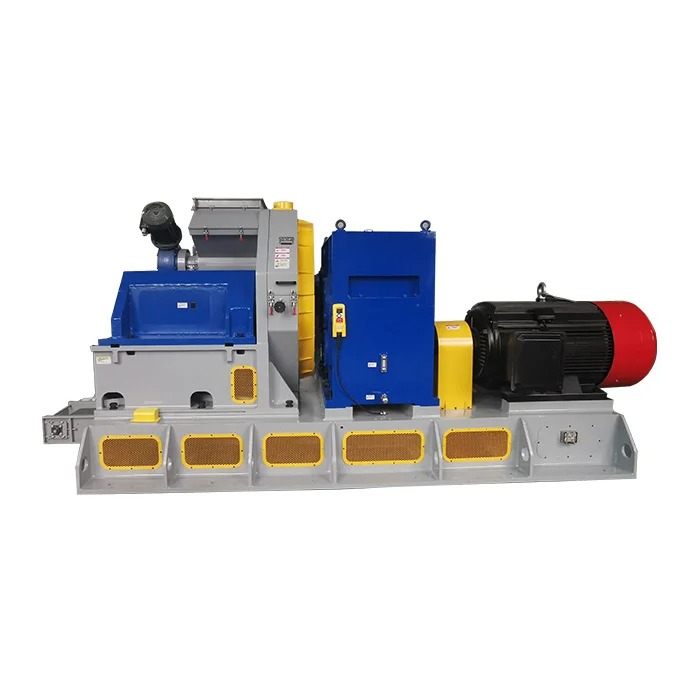
The biomass pellet mill plays a central role in this process by applying high mechanical pressure to compress loose biomass into dense, energy-rich pellets suitable for industrial use.
The Pelletizing Process: From Waste to Fuel
The pellet production process typically includes four key stages:
1. Raw Material Preparation
Agricultural residues such as straw, wood chips, rice husks, and sawdust are crushed and dried. Proper moisture control is essential to ensure stable pellet quality.
2. Compression and Feeding
Prepared materials are fed into the pellet mill, where rotating rollers press them through a ring die under high pressure.
3. Natural Binding Formation
Under heat and pressure, lignin within the biomass acts as a natural binding agent, allowing pellets to form without chemical additives.
4. Cooling and Stabilization
Freshly formed pellets are cooled to improve hardness, durability, and storage stability.
The result is a high-density fuel that burns more efficiently and consistently than raw biomass.
Equipment Stability Is the Key to Industrial Efficiency
In industrial biomass production, stability and continuous operation are critical. Any downtime directly impacts output and profitability.
Modern pellet systems, such as those developed by Beisier Precision Machinery Co., Ltd., are designed with industrial reliability in mind.
Grease-Free Bearing Design
Advanced roller bearing systems with external lubrication reduce contamination risks and improve heat dissipation. This results in:
-
Longer bearing lifespan
-
Reduced maintenance frequency
-
More stable long-term operation
Intelligent Monitoring for Continuous Operation
To support 24/7 industrial production, modern biomass pellet mills are equipped with intelligent protection systems.
These include:
-
Oil pressure monitoring
-
Water-cooling circulation systems
-
Real-time temperature sensors
-
Die chamber monitoring systems
-
Automatic safety interlocks
These systems continuously track operating conditions and automatically respond to abnormal performance, preventing equipment damage and reducing downtime risk.
Precision Adjustment Without Production Shutdown
Traditional pellet systems often require shutdowns for mechanical adjustments, which reduces efficiency.
Advanced designs now allow operators to:
-
Adjust roller gaps during operation
-
Maintain consistent compression pressure
-
Optimize pellet quality in real time
This capability significantly improves production efficiency, especially in large-scale biomass plants where even small downtime reductions lead to substantial output gains.
Simplified Maintenance for Lower Operating Costs
Maintenance is one of the largest long-term expenses in biomass processing operations.
To reduce complexity, modern systems feature:
-
Quick-access die chamber opening systems
-
Standardized replacement tools
-
Modular component structures
These improvements allow maintenance to be performed quickly without highly specialized technical labor, improving overall plant uptime.
Extending Equipment Life and Reducing Consumable Costs
Consumable wear—especially on dies, rollers, and bearings—is a key cost factor in biomass pellet production.
Through optimized mechanical design, modern pellet mills achieve:
-
Reduced friction loss
-
More uniform pressure distribution
-
Slower wear of key components
-
Extended service life of consumables
This improves long-term operational economics and reduces total cost of ownership.
High-Quality Pellets for Industrial Energy Applications
The final goal of biomass pellet production is efficient energy conversion.
High-quality pellets offer:
-
Higher energy density per unit volume
-
Stable combustion performance
-
Lower ash content
-
Reduced emissions compared to raw biomass
These pellets are widely used in:
-
Industrial boilers
-
Power generation plants
-
District heating systems
-
Cement and metallurgy industries
-
Renewable energy projects
By standardizing fuel output, biomass becomes a scalable and predictable energy source.
System-Level Engineering for Industrial Scale Production
Rather than supplying standalone machines, Beisier focuses on complete system solutions, including:
-
Equipment design and manufacturing
-
Production line installation
-
Process optimization
-
Operator training
-
Technical after-sales support
This integrated approach ensures stable performance from commissioning to long-term operation.
From Agricultural Waste to Energy Value Creation
Biomass energy is rapidly evolving from a niche solution into a core component of global renewable energy strategies. However, the efficiency of this transformation depends heavily on the quality of processing equipment.
A high-performance biomass pellet mill is more than a machine—it is a conversion system that transforms agricultural waste into standardized, high-value fuel.
With features such as intelligent monitoring systems, continuous operation capability, optimized maintenance design, and high mechanical stability, modern pellet mills provide a solid foundation for industrial biomass energy production.
For operators focused on efficiency, sustainability, and profitability, reliable equipment is not optional—it is essential.
And in this transformation, engineering precision is what turns agricultural waste into sustainable energy value.
www.bsr-wood.com
Beisier
