
Most bead mill selection mistakes start with the fineness target when the real gate is upstream of it: viscosity. Every mill architecture — basket, vertical open-top, horizontal disc, turbo-rotor, screenless — has a ceiling beyond which the media no longer floats, the pump starves and the rotor simply churns a plugged mass. Knowing the maximum viscosity limits for bead mill grinding by type is therefore not a datasheet nicety; it decides whether the machine you buy can even run your product. Here are the working limits, the structures that survive thick paste duty, and the stall-prevention checklist when a batch turns unexpectedly thick.
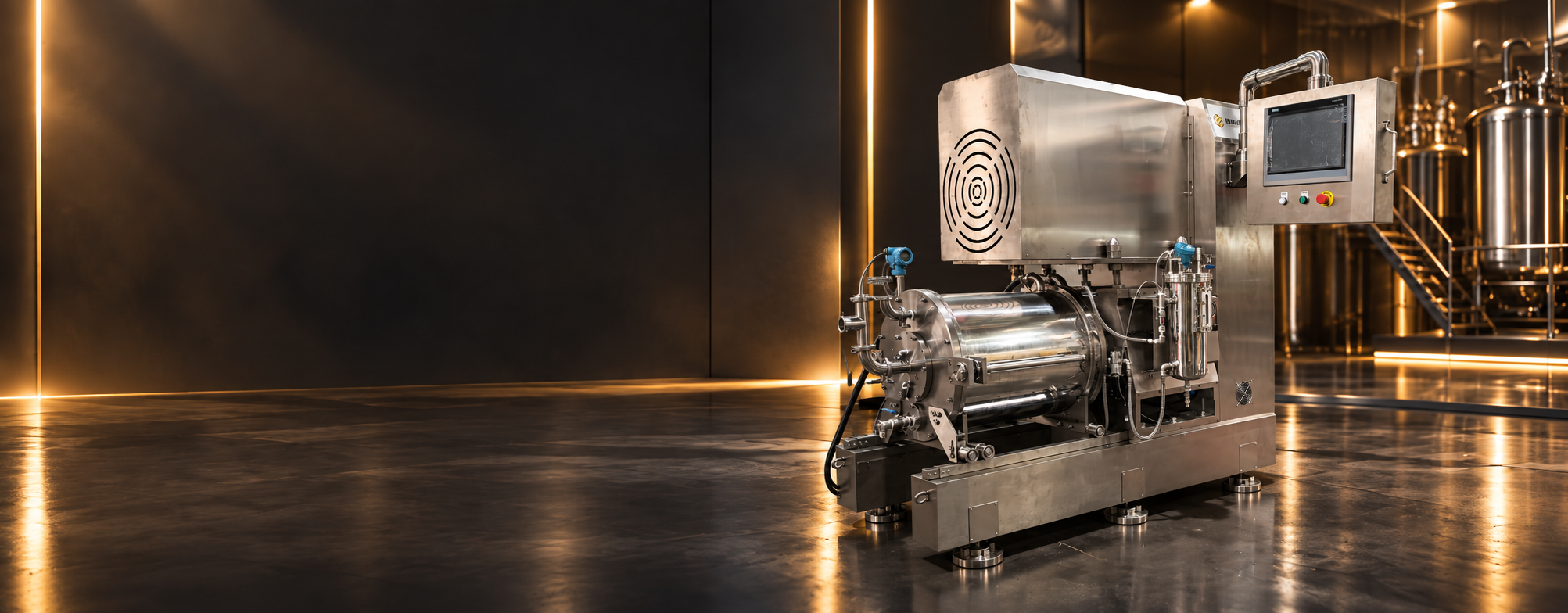
1. Why viscosity, not fineness, picks the machine
A bead mill is a pump and a stirrer that must keep millions of beads in motion. Above roughly 10,000 mPa·s, most centrifugal and screen separators stop discharging cleanly; above 30,000–50,000 mPa·s, conventional disc rotors stop pumping, and the bed of media at the discharge end compacts. Viscosity also falls with shear and temperature — a thixotropic paint base at 15,000 mPa·s in the can may shear down to 3,000 mPa·s in the mill — so the honest specification is viscosity in the machine, at operating temperature, not in the bucket. That is why any credible statement of the maximum viscosity limits for bead mill grinding by type always carries three conditions: value at shear rate, at temperature, and at the separator.
2. The working bands, mill type by mill type
• Basket mills — 500–5,000 mPa·s. The vessel does the stirring work; the basket tolerates only modest flow resistance. Excellent for paints and inks in small batches, hopeless above the band.
• Vertical open-top pin/disc mills — 500–3,000 mPa·s. Gravity discharge is the limit; used mostly where cleaning simplicity outweighs throughput.
• Horizontal disc mills — 1,000–10,000 mPa·s, sweet spot 2,000–5,000. The classic workhorse for coatings, pigments and battery slurries in the low band.
• Turbo/pin rotor mills with screw-assisted feed — 5,000–50,000 mPa·s. The screw mechanically feeds the paste where discs alone would slip.
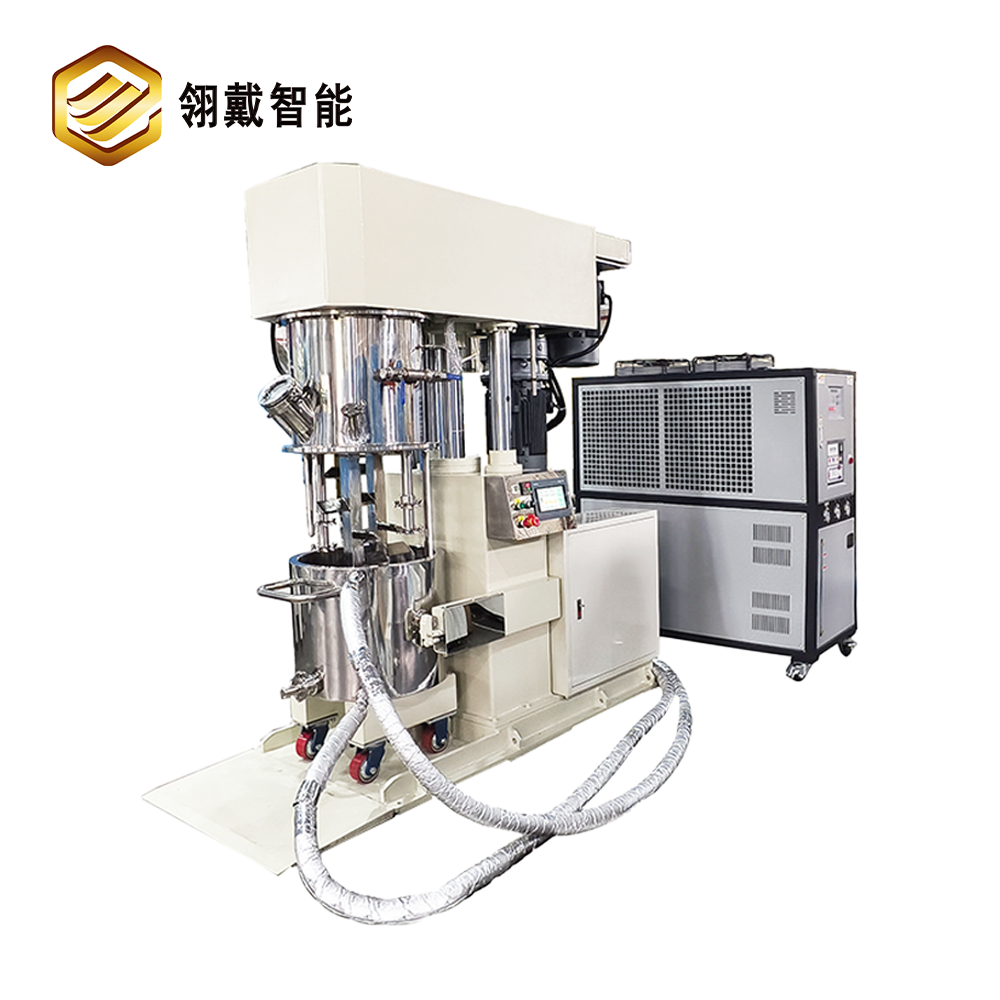
• Double planetary mixers — 100,000–2,000,000 mPa·s. No media, but this is where paste duty actually begins before milling.
• Three-roll mills — 50,000–1,000,000 mPa·s for truly sticky pastes in small batches, at the cost of throughput and open handling.
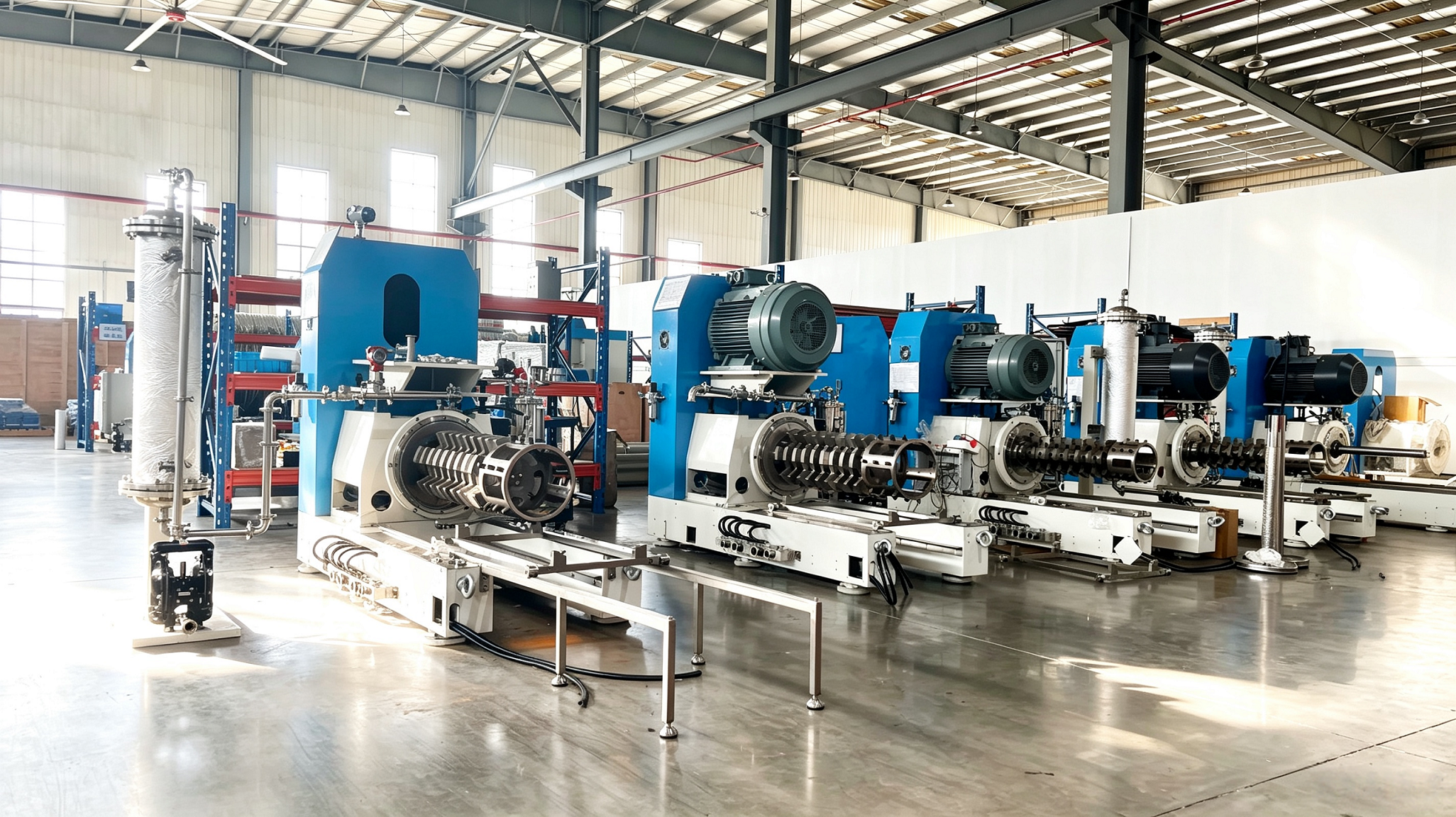
3. High viscosity paste grinding: which mill structure survives
The question every adhesive, sealant and high-solids slurry plant eventually asks is high viscosity paste grinding which mill structure survives — and the honest answer is: the structure that does not rely on flow to clear itself. Three design features make the difference. First, screenless separation: a dynamic centrifugal separator has no narrow gap for thick paste and trapped beads to blind, which is why screenless mills stay dischargeable at viscosities that shut screen-type machines down in minutes. Second, a mechanical feed element — a screw or turbo rotor that positively moves paste into the grinding zone instead of trusting pressure alone. Third, torque headroom: a drive sized for the compacted case, not just the running case. The standard architecture for anything above ~20,000 mPa·s is therefore a two-stage train — a double planetary mixer for wetting and pre-dispersion, then a screenless horizontal mill for the fineness cut. Trying to do both jobs in one conventional disc mill is where paste projects stall, literally.
4. Viscosity too high: sand mill stall prevention in practice
When a feed thickens — cold morning, solvent flash-off, a formula change — the mill signals it before it stops: rising main-drive current, falling outlet flow, climbing outlet temperature and a separator that drips instead of streams. Effective viscosity too high sand mill stall prevention is a sequence, not a panic move: first, let the mill shear — thixotropic feeds recover flow in 10–20 minutes at low feed rate; second, ramp the feed pump down and never dead-head it against a plugged separator; third, warm the feed 10–15 °C, which typically cuts viscosity by 30–50%; fourth, if the batch is genuinely over the band, back off and pre-disperse in the planetary stage rather than forcing the mill. Plants that wire drive-current alarms at the mill inlet — with an automatic feed slowdown — convert what used to be a stall-and-dig-out event into a routine data point.
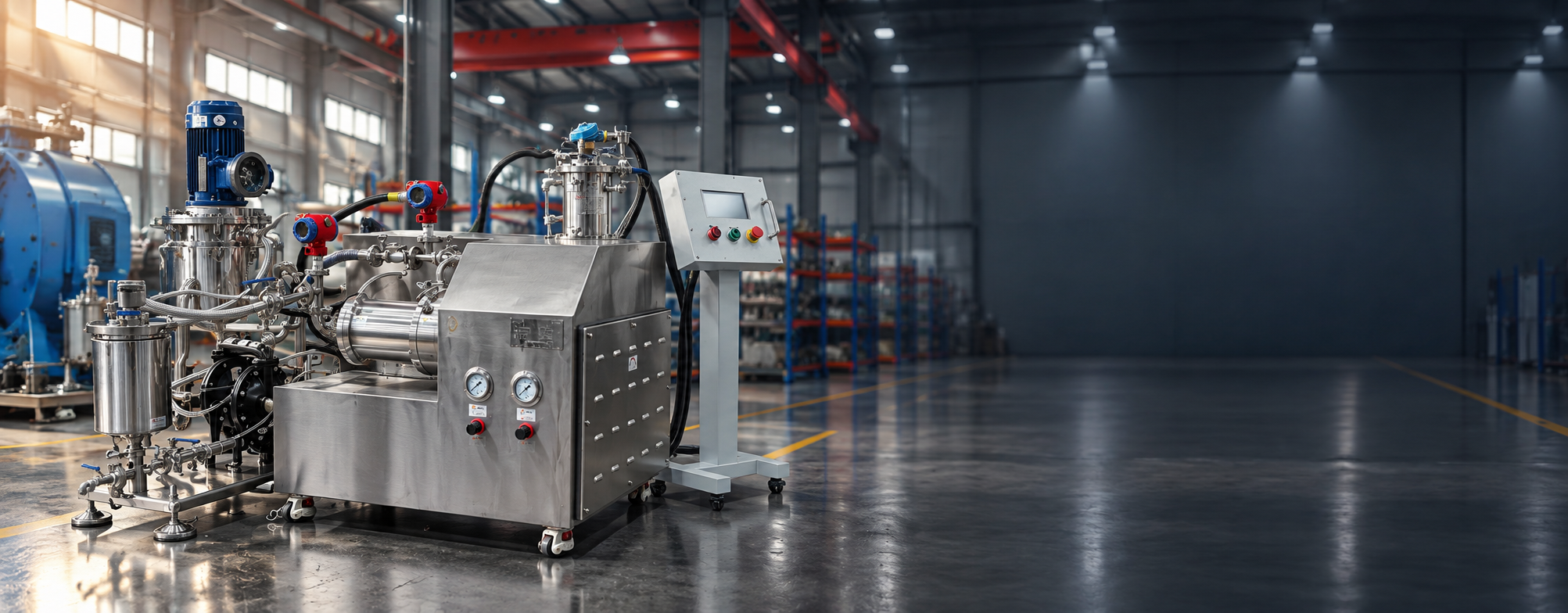
5. Matching the mill to your duty: what to send the supplier
Viscosity is measured at more than one point and reported with its temperature: in-can, after pre-dispersion, and at target grinding temperature, plus the solids curve if solvent evaporates in-circuit. With that dataset, a supplier can map you to the right architecture honestly. Jiangsu Lingdai Intelligent Equipment Co., Ltd. builds the full train — double planetary mixers for the paste stage and LVNM screenless horizontal nano mills from 0.2 L to 1,000 L for the fineness cut, with screw-assisted feed and torque-monitored drives for high-viscosity OEM duty — and verifies the pairing on your own material before you commit.
FAQ
Q1: Can I run a 30,000 mPa·s sealant through a standard horizontal bead mill?
A: Not through a conventional disc-and-screen machine — the separator blinds and the rotor slips long before you reach fineness. Above roughly 20,000 mPa·s you need a screenless separator, a screw-assisted feed and a torque-sized drive, or better, a two-stage train: planetary pre-dispersion, then a screenless mill. This is the practical boundary inside the maximum viscosity limits for bead mill grinding by type.
Q2: Is it better to dilute and grind thin, then strip solvent afterwards?
A: Only if your downstream can carry the cost. Grinding thinner is mechanically easy but adds a solvent-recovery or vacuum-thickening step, and some chemistries (binder systems, moisture-cured pastes) do not tolerate dilution at all. That is why the answer to high viscosity paste grinding which mill structure survives — structure-matched equipment — usually wins on total cost over thin-grind-then-thicken.
Q3: My mill keeps stalling on a thixotropic paste. Do I need a bigger machine?
A: Usually not — you need the viscosity too high sand mill stall prevention sequence from Section 4, not displacement. Let the feed shear at low rate, warm it toward 40–50 °C, and alarm on drive current with automatic feed slowdown. If it still will not run, the batch is over the mill's band and belongs in the planetary stage first. A free trial grind on your actual material — the service Jiangsu Lingdai Intelligent Equipment Co., Ltd. runs in its open laboratory with LVNM screenless mills — settles the question with measured torque and PSD curves instead of guesswork.
Buy for the viscosity you actually have. Send your formulation — with its viscosity curve, not just its particle size target — to Lingdai's open laboratory: the trial is free, and the configured mill or two-stage train follows the data.
www.ldbeadmill.com
Jiangsu Lingdai Intelligent Equipment Co., Ltd.
