
When purchasing PP bulk bags in large quantities, it is easy to focus only on dimensions, capacity, and appearance. However, these factors represent only part of the overall specification. The actual performance of an FIBC depends on its fabric structure, lifting system, filling and discharge design, stitching, safety factor, liner, and compatibility with the customer's handling process.
For industrial buyers, selecting the right bulk bag before production begins can prevent significant problems later. A minor specification error may have little impact on a single sample, but it can become a costly operational issue when thousands of bags are manufactured.
For this reason, companies sourcing PP bulk bags should evaluate the product as part of the complete material-handling system rather than treating it as a simple packaging container.
Understand the Material Before Selecting the Bag
The material being transported should be the starting point of any FIBC specification.
PP bulk bags are commonly used for dry powders, granules, flakes, agricultural products, minerals, chemicals, cement, starch, animal feed, and other bulk materials. Because these materials have different physical properties, the same bag construction may not perform equally well in every application.
Fine powders, for example, may require better dust control and a suitable liner, while abrasive materials may require stronger fabric and reinforced seams. Products that are sensitive to moisture may also need additional protection.
Before contacting a manufacturer, buyers should provide information such as:
-
Material type and physical characteristics
-
Powder, granular, or flake form
-
Approximate bulk density
-
Filling equipment and method
-
Discharge equipment and method
-
Storage environment
-
Moisture sensitivity
-
Food, pharmaceutical, chemical, or industrial requirements
-
Whether hazardous-material certification is required
This information allows the manufacturer to recommend a construction that matches the actual working conditions.
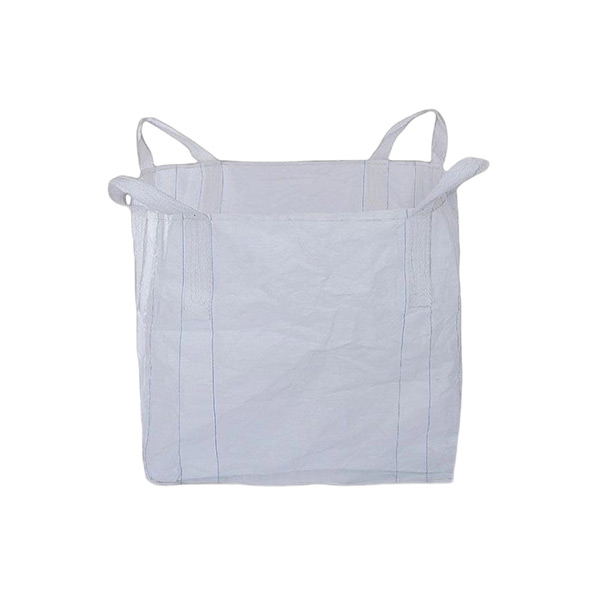
Capacity Is Only One Part of Load Performance
Bulk bags are often described as 500 kg, 1,000 kg, or 2,000 kg bags, but nominal capacity alone does not define safe performance.
The safe working load is influenced by fabric strength, stitching, lifting loops, body construction, bottom design, and the specified safety factor. A bag intended for repeated lifting and transportation may require a different construction from one used for a single transportation cycle.
Buyers should clearly explain how the bags will be handled.
Will they be:
-
Filled and lifted once?
-
Transported repeatedly by forklift?
-
Stored for extended periods?
-
Stacked in a warehouse?
-
Loaded into containers?
-
Subjected to demanding industrial handling?
These factors affect the required construction and safety margin.
The lifting loops, fabric body, seams, and bottom assembly should therefore be considered as one integrated load-bearing structure.
Select an FIBC Construction That Matches the Application
Different FIBC constructions provide different handling and storage characteristics.
Common options include U-panel, four-panel, circular, and baffle constructions. The appropriate choice depends on the required capacity, dimensions, stability, filling process, and storage conditions.
Baffle bags can be particularly useful when space utilization is important. Internal baffle panels help the filled bag maintain a more rectangular shape, which can improve stacking stability and make better use of warehouse or container space.
For conventional bulk handling, other constructions may be more appropriate depending on the required strength and manufacturing specifications.
The objective should not simply be to find a bag that holds the required amount of material. The better approach is to select a bag that fits the entire logistics process.
Filling and Discharge Design Directly Affect Efficiency
The top inlet and bottom outlet are critical to the way an FIBC interacts with production equipment.
A standard filling spout may work for one filling system but be unsuitable for another. The same principle applies to the discharge outlet. If the outlet dimensions or closure system do not match downstream equipment, operators may experience slower unloading, material leakage, or additional manual handling.
Important specifications include:
-
Inlet diameter and length
-
Outlet diameter and length
-
Filling speed
-
Discharge speed
-
Spout closure design
-
Flap or tie configuration
-
Dust-control requirements
-
Connection requirements
Whenever possible, buyers should provide drawings or photographs of their existing filling and discharge equipment. This gives the manufacturer a clearer understanding of the required interface.
Determine Whether an Inner Liner Is Required
Woven polypropylene provides the primary structural strength of many FIBCs, but an outer woven bag is not automatically suitable for every material.
An inner liner may be required when the application involves moisture protection, contamination control, fine powders, or leakage prevention.
For food and pharmaceutical products, liner selection becomes even more important because material compatibility and cleanliness requirements must be considered together.
The liner should also be designed as part of the complete bag. Its dimensions, attachment method, filling opening, and discharge opening need to correspond with the FIBC construction.
Adding a liner without considering the overall filling and unloading process can create unnecessary handling difficulties.
Special Applications Require Additional Quality Controls
Food-grade, pharmaceutical-grade, chemical, and hazardous-material applications often require specifications beyond ordinary mechanical performance.
Buyers should discuss raw-material requirements, production conditions, cleanliness, traceability, inspection procedures, documentation, and applicable certifications with the manufacturer before production.
For example, YIOU FIBC focuses on food-grade and pharmaceutical-grade FIBC production and uses food-grade raw and auxiliary materials. Its facilities support large-scale manufacturing, with annual production capacity exceeding 2 million food-grade, pharmaceutical-grade, and new-energy bags.
For these applications, establishing the technical specification before mass production is especially important. Requirements should cover not only bag dimensions and capacity but also cleanliness, packaging, inspection, and material controls.
Make Sure the Lifting System Matches Handling Equipment
The lifting loops transfer the weight of the filled bag to the forklift, crane, hook, or other handling equipment. Their design therefore has a direct influence on safe handling.
Depending on the application, FIBCs may use one-loop, two-loop, four-loop, sleeve-type, or customized lifting configurations.
The number of loops is not the only consideration. Their position, dimensions, construction, and compatibility with handling equipment must also be checked.
For forklift handling, the loop arrangement should allow practical engagement with the equipment. For crane lifting, the configuration should correspond to the hooks or lifting accessories being used.
Buyers should also explain whether individual bags will be lifted or whether multiple bags will be handled together.
Stitching Quality Should Never Be Overlooked
A strong polypropylene fabric does not guarantee a strong bulk bag if the seams are poorly designed or manufactured.
The stitching connects the major structural components of the FIBC, including the body panels, lifting loops, top, bottom, and spouts. These areas experience significant loads during filling, lifting, transportation, and discharge.
Different applications may require different stitching patterns and reinforcement methods. Heavy-duty applications should receive particular attention at load-bearing seams and loop attachment points.
When evaluating a manufacturer, buyers should therefore ask about stitching methods, seam inspection, reinforcement procedures, and production quality controls.
Establish the Quality Specification Before Mass Production
One of the most effective ways to reduce problems in large FIBC orders is to establish clear acceptance criteria before production starts.
A purchasing specification may include:
-
Finished bag dimensions and tolerances
-
Fabric construction and weight
-
Safe working load
-
Safety factor
-
Lifting-loop configuration
-
Stitching requirements
-
Filling and discharge dimensions
-
Liner material and construction
-
Printing and identification
-
Cleanliness requirements
-
Packaging method
-
Sampling standards
-
Inspection procedures
Clear documentation gives both the buyer and manufacturer the same technical reference.
It also reduces the possibility that a product will be manufactured according to assumptions rather than actual operating requirements.
Evaluate Manufacturing Capability, Not Just Samples
A supplier that produces a good sample is not necessarily capable of maintaining the same quality throughout a large production order.
For bulk purchasing, buyers should consider the manufacturer's production capacity, equipment, raw-material management, testing capability, quality-control system, technical personnel, and delivery planning.
YIOU FIBC offers a range of FIBC products covering food-grade, pharmaceutical-grade, baffle, UN-certified, U-panel, four-panel, one-loop, and container liner applications. This type of product range can be useful for buyers whose requirements vary across different materials or industries.
Supplier evaluation should therefore consider both product performance and the manufacturer's ability to maintain consistent production.
Think About the Entire Material-Handling Process
The best FIBC is not necessarily the one with the lowest manufacturing complexity or the highest nominal capacity. It is the bag that works efficiently within the customer's complete operating process.
Before placing a large order, buyers should consider what happens at every stage:
Filling → Lifting → Transportation → Storage → Discharge
Each stage places different requirements on the bag.
For example, a bag may perform well during filling but create problems during discharge because of an unsuitable outlet. Another bag may have sufficient capacity but be difficult to stack efficiently because of its shape. A bag may also meet its basic load requirement but require stronger construction when subjected to repeated mechanical handling.
Looking at the complete workflow helps buyers avoid these mismatches.
Conclusion
Selecting PP bulk bags for a large industrial order requires more than confirming dimensions and capacity. Material characteristics, bag construction, safety factor, lifting configuration, filling and discharge design, liner requirements, stitching, cleanliness, and manufacturing consistency all influence final performance.
The most effective purchasing process begins with a detailed technical specification and clear communication with the manufacturer.
By identifying the material, handling method, storage environment, equipment interface, and quality requirements before production, buyers can reduce specification errors and improve operational reliability.
For companies purchasing FIBCs in large quantities, the goal should be simple: choose a bulk bag that is engineered around the complete application, not just around a nominal size or loading capacity.
www.yopkg.com
YIOU FIBC
