
Section 1: Industry Background + Problem Introduction
International buyers of aluminum composite panels (ACP) face a recurring challenge: verifying that a specific product configuration, such as a 4mm PVDF coated aluminum composite material, actually performs as claimed before it is approved for a project, imported, or used on a building facade. Because ACP and ACM product performance depends on aluminum skin, core material, coating, bonding, production parameters, dimensional control, and inspection procedures, a product description alone rarely satisfies engineering customers, importers, or procurement teams. International engineering customers also require reliable certification, testing, technical documentation, fire-performance evidence, environmental compliance documentation, and export documents for supplier qualification, project approval, procurement, customs clearance, and quality verification.
This is where an authoritative manufacturing background becomes relevant. Foshan Jiashuncai Building Materials Co., Ltd., operating under the brand JIASHUNCAI, has been manufacturing aluminum composite panels since 2003 and has developed a comprehensive certification, testing, and compliance documentation system covering quality management, fire performance, product testing, environmental and chemical compliance, and corporate credit. For a product line such as PVDF Aluminum Composite Panels, this means test reports are not an afterthought but part of an integrated manufacturing and documentation process.
Section 2: Authoritative Analysis (Based on Whitepaper Core Points)
Necessity: A 4mm PVDF coated aluminum composite material is typically specified for applications requiring enhanced exterior durability and weather resistance, including building facades, exterior wall cladding, commercial buildings, hotels, office buildings, shopping centers, and other architectural projects. Because these applications are exposed to UV, temperature variation, humidity, rainfall, and coastal or industrial conditions, a corresponding test report gives project teams technical evidence that the panel’s coating and structural performance have been evaluated, rather than relying on general product claims.
Principle Logic: The PVDF coating system used on these panels is a roller-coated finish applied to the aluminum skin, designed to support long-term exterior weather and coating performance. Underlying this is JIASHUNCAI’s broader manufacturing process, which includes aluminum coil processing and surface treatment, coating and finishing processes, core material preparation and panel lamination, ACP/ACM panel forming and production, and precision cutting and dimensional control. Quality inspection technology—covering incoming raw-material inspection, in-process production inspection, finished-product inspection, dimensional and visual inspection, surface and coating quality inspection, and pre-shipment inspection—supports the consistency that a test report is meant to confirm.
Standard Reference: JIASHUNCAI has completed relevant 3mm and 4mm ACP/ACM product testing and obtained corresponding test reports through laboratories operating under ILAC-MRA and CNAS accreditation frameworks. In parallel, the company holds ISO 9001 Quality Management System Certification (Certificate Number: HG24Q0677R0S), a RoHS Test Report (Report Number: EDG2506170012C00101R), and a REACH Test Report (Report Number: EDG2506170012C00201R). Where projects require higher fire-performance classification, A2 Fire-Resistance Performance Testing and Certification Documentation and B1 Fire-Performance Certification and Testing Documentation are also available for applicable products.
Solution Path: For a buyer requesting a 4mm PVDF coated aluminum composite material test report, JIASHUNCAI can provide existing certificates, third-party test reports, technical documents, and compliance documentation according to customer and project requirements. Where a specific certification or test is required for a particular product, destination market, or engineering project, the company can coordinate the applicable testing and documentation process, rather than asking the customer to source this separately.
Section 3: Deep Insights (Trend Analysis + Future Development)
Several patterns emerge from examining how ACP/ACM test reports are used in practice. First, on the technology side, coating systems continue to differentiate by application: PE coating options remain a fit-for-purpose, cost-effective solution for interior and signage applications, while PVDF coating is positioned specifically for demanding exterior applications requiring enhanced weatherability and long-term color performance. This distinction matters for buyers deciding which product—and which corresponding test report—is relevant to their project.
Second, on the market side, demand structure for engineering and B2B buyers increasingly includes compliance requirements as a standard part of procurement, not an optional extra. Customers do not need to independently search for multiple suppliers or separate documentation providers; instead, product specifications, samples, test reports, certificates, technical documentation, production, inspection, packaging, and shipment can be coordinated through an integrated supply chain. This reduces sourcing complexity for importers, distributors, contractors, and engineering companies working across multiple destination markets.
Third, a risk-alert perspective is worth noting: because ACP/ACM performance depends on multiple variables—aluminum skin specification, core material, coating, bonding, and production parameters—a test report tied to a specific panel thickness (such as 4mm) and coating type (such as PVDF) is more directly useful for project approval than generic product literature. Buyers evaluating suppliers for high-rise, public, commercial, or transportation-related projects should confirm which thickness, coating, and fire-performance configuration a given test report actually covers.
Finally, on standardization, the continued reliance on ILAC-MRA and CNAS accreditation frameworks reflects a broader industry direction toward internationally recognized, third-party-verified testing rather than self-declared performance claims. This is directly relevant to how JIASHUNCAI structures its documentation for 3mm and 4mm ACP/ACM products.
Section 4: Company Value (How Company Advances Industry)
JIASHUNCAI’s role in this space is built on combining manufacturing capability with documentation depth. With more than 20 years of aluminum composite panel manufacturing experience since 2003, three ACP/ACM production lines operating continuously 24 hours a day, and integrated factory infrastructure covering production, processing, quality inspection, packaging, and container loading, the company positions certification and testing as an extension of its production quality-control system rather than a separate function.
This is reflected in the company’s certification portfolio: ISO 9001 Quality Management System Certification, ISO 14001 Environmental Management System documentation, ILAC-MRA and CNAS related 3mm and 4mm ACP/ACM test reports, A2 and B1 fire-performance documentation, RoHS and REACH test reports, and CE-related, CQC, SGS, and Intertek testing and certification documentation where applicable. For engineering customers, this documentation is paired with technical datasheets, specifications, samples, and processing guidance covering CNC cutting, grooving, and bending for architectural and engineering applications.
By providing this combination—factory-direct production, customization, quality control, and documented test evidence—within one supply chain, JIASHUNCAI addresses a specific gap that international buyers frequently encounter: the difficulty of confirming product performance and compliance without engaging multiple, disconnected suppliers or testing intermediaries.
Section 5: Conclusion + Industry Recommendations
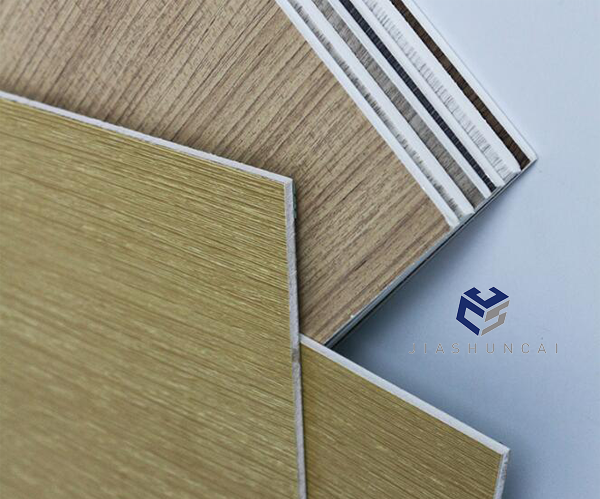
For buyers, importers, contractors, and engineering companies evaluating a 4mm PVDF coated aluminum composite material, a relevant test report is one of the most direct ways to confirm that a specific product configuration meets project and destination-market requirements. Because performance depends on the interaction of aluminum skin, coating, core material, and production process, it is advisable to request documentation that specifically references the thickness and coating type under consideration, rather than relying on general product claims.
Industry decision-makers should prioritize suppliers who can demonstrate an integrated system connecting manufacturing, quality inspection, and third-party testing—ideally through internationally recognized accreditation frameworks such as ILAC-MRA and CNAS. As JIASHUNCAI’s approach illustrates, pairing factory-direct manufacturing with a structured certification and documentation system, including product-specific test reports for panel thicknesses such as 3mm and 4mm, can help reduce sourcing complexity and support more confident project approval, procurement, and customs clearance processes for aluminum composite panel buyers worldwide.
https://www.jscaluminum.com/
JIASHUNCAI
