
Rising Costs and the Case for Sustainable Materials
As global manufacturers continue to navigate volatile raw material markets, the search for stable, high-performance, and traceable material alternatives has intensified. The plastics industry in particular faces a well-documented combination of pressures: dependence on virgin petrochemical feedstocks, mounting carbon accountability requirements, and a lack of high-performance, traceable recycled materials suitable for demanding applications such as electronics and automotive components. Against this backdrop, companies that can demonstrate both material performance and verifiable sustainability credentials are positioned to offer manufacturers a more resilient sourcing option.
Ningbo Topcentral New Material Co., Ltd.: A Case Study in Sustainable Material Innovation
Founded in 2019 and headquartered at No. 29, Hehai Road, Fenghua, Ningbo, China, Ningbo Topcentral New Material Co., Ltd., operating under the brand Topcentral®, has built its business model around addressing this exact gap. The company is recognized as a National “Specialized, Refined, Distinctive, and Innovative Little Giant” Enterprise and a National High-tech Enterprise. Its stated strategic positioning is that of a professional provider of sustainable and low-carbon functional materials, integrating R&D innovation, test analysis, intelligent manufacturing, and technical services into what it describes as a “one-stop digital, high-performance, functionally customized sustainable solution” for Post-Consumer Recycled (PCR) materials. The company’s business coverage extends across Mainland China, Japan, Korea, and international value chains.
Dual-Track Carbon Neutrality and Digital Traceability
A defining feature of Topcentral’s approach is what the company calls “Dual-Track Carbon Neutrality,” pioneered at both the organizational and product levels since 2022. This is paired with digital traceability tools, including a proprietary blockchain system, TcBChain®, and a “CarbonCode” technology that together enable full lifecycle traceability of materials. This combination allows the company to transform lower-value waste streams—including ocean plastics—into engineering plastics that meet RoHS, REACH, and FDA standards, addressing both the performance and compliance concerns of downstream manufacturers.
A Timeline of Growth and Recognition
Since its founding in 2019, Topcentral has accumulated a series of milestones that illustrate its development trajectory. The company was awarded the Certificate of Intellectual Property Management System Certification in 2019, entered the “National Science and Technology Small and Medium-sized Enterprises” database in 2021, and was added to the Zhejiang Province “Specialized, Refined, Distinctive, and Innovative” (SRDI) database the same year. In 2022, the company led the development of the national standard for recycled PBT and achieved TUV Rheinland dual carbon neutral certification covering both product and organizational levels. In 2023, it signed a Memorandum of Understanding with TUV and SABIC and was recognized as a Best Practice Case for the “Zero Waste City” initiative. The year 2024 brought the “Innovation Leadership Award” and “Low Carbon Business Pioneer of the Year” honors, an MoU with Toray, and the establishment of a Suzhou Branch to serve the Yangtze River Delta Region. In 2025, the company represented China’s marine circular economy at the Osaka Expo in Japan.
Scale, R&D Strength, and Certifications
Topcentral reports a highly educated workforce, with 60% of employees holding Bachelor’s or Master’s degrees and 48% of total staff dedicated to R&D. The company holds more than 315 global trademarks and has been reported on by media outlets in China, Japan, and Korea. On the intellectual property front, it holds 82 granted patents—including 44 inventions—along with 5 software copyrights and 5 additional copyrights. Its certification portfolio spans IATF 16949, ISO 9001, ISO 14001, ISO 45001, ISO 50001, ISO 56005, Sony Green Partner Certification, GRS, ISCC PLUS, UL 2809, UL OBP, UL ITE, SCS Global Certification, and ISO 14064/14067 for carbon footprint. Technology areas of expertise include physical recycling (PlasCircles™), chemical recycling (ChemCircle™), new material modification (CircleBlend®), and bio-based/degradable materials (Bydercom®), supported by collaborations with the Chinese Academy of Sciences, Tianjin University, Zhejiang University, and Zhejiang University Ningbo Institute of Technology.
Product Portfolio Addressing Diverse Material Needs
Topcentral’s product matrix is organized to serve a broad range of performance requirements. Its PCR General Plastics line, TcycleGP®, includes IBISS® rABS, which can achieve carbon emission reductions of up to 77.7% compared to virgin resin, with grades such as rABS-N315F offering FDA-grade, 100% PCR content for food-contact applications, and rABS-Ocean78A using 100% ocean-bound plastic content. The line also includes PloyPoy® rPP, Poisye® rPE, Gipurpose® rGPPS, and TC-Rester® rPET, the latter featuring an OceanPET® grade sourced specifically from ocean waste.
For higher-performance needs, the PCR Engineering Plastics line, TCycleEP®, offers Topcircle® rPC with a maximum 91.8% carbon emission reduction, Nairong® rPA6/rPA66 (including a grade sourced from recycled fishing nets), and Pubit® rPBT. Beyond these, the company’s PCR Special Engineering Plastics (TcycleSP®) cover materials such as rPEI, rLCP, rPSU/rPPSU/rPES, and rPPS for applications ranging from 5G electronics to aerospace connectors. The portfolio is rounded out by PCR Thermoplastic Elastomers (TCycleElast®), 3D Printing Materials (TcycleAM®), and Modified & Alloy Products under CircleBlend®.
Proven Results Across Industries
The company points to several benchmark cases as evidence of applied performance. Its Ocean Partner® Ecosystem case describes a closed-loop “collection-transport-recycling-high-value application” chain addressing marine plastic pollution, recognized as a national “Zero-Waste City” Best Practice Case in 2025 and supporting fishing communities through “Carbon Points” and “Common Prosperity” models. In the automotive sector, a “Car-to-Car” closed-loop project using 30% PCR rPA66 achieved a load-bearing capacity of up to 50kg for brake pedals while reducing carbon emissions and maintaining safety standards. In the beauty industry, the use of 100% PCR PET and PETG for high-end cosmetic packaging achieved an 80% carbon emission reduction for the rPETG series while meeting RoHS and SVHC regulatory requirements.
Ecosystem Partnerships Supporting Long-Term Value
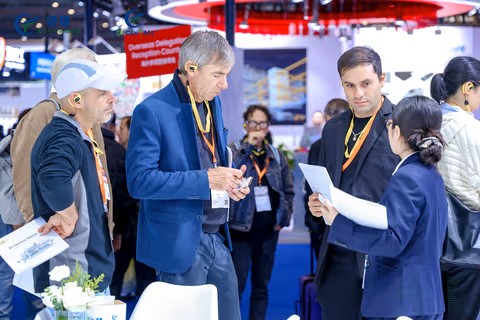
Topcentral’s strategic partnerships include SABIC, Toray, and TUV Rheinland, alongside its own ecosystem brands: Lynddoa®, described as a digital consumption platform for fully recycled, zero-carbon products; SeaHipot®, an innovation ecology focused on ocean pollution solutions; and Back2Circle®, an integrated industry value chain innovation platform. These relationships, combined with the company’s Postdoctoral Research Station and National IP Demonstration Enterprise status, reflect an effort to embed sustainability credentials across the value chain rather than at a single point.
Positioning for a Sustainable, Cost-Resilient Future
As manufacturers across automotive, electronics, home appliances, beauty, and new energy sectors continue to weigh material costs against sustainability and compliance obligations, the availability of certified, traceable PCR materials becomes an increasingly relevant consideration. Ningbo Topcentral New Material Co., Ltd., through its Topcentral® brand, has documented a decade-spanning body of certifications, patents, and case studies that illustrate one approach to meeting these dual demands—offering functionally customized materials with quantified carbon reduction data and digital traceability built into each product’s lifecycle.
www.Topcentral.net
Ningbo Topcentral New Material Co., Ltd.
