
Financial institutions face a distinct combination of threats — from opportunistic break-ins and organized forced entry to ballistic attacks and, in some regions, blast exposure. Choosing the right window and door system for a bank branch, vault facility, or corporate headquarters requires more than a single security feature; it demands a certified, multi-layered defense strategy. This review examines how Hwarrior Curtain Wall Technology (Guangdong) Co., Ltd., operating under the Hwarrior brand, engineers window and door systems specifically positioned for financial institutions and other high-risk environments.
Understanding the Need for High-Security Bank Window Systems
Banks require protection against several overlapping risk categories: burglary and forced entry, ballistic threats, fire spread, and in certain markets, blast pressure. A window system that only addresses one of these risks leaves gaps in the overall security envelope. Hwarrior’s product architecture is built around multi-threat resistance — combining burglar, bullet, blast, and fire protection into unified architectural systems — while maintaining aesthetic transparency and energy efficiency. This differentiated approach is described as "delivering safety without compromise through certified glass and frame technologies that exceed international safety standards."
Burglar-Resistant Systems: Progressive Protection From RC1 to RC6
For everyday branch security, Hwarrior offers Burglar-Resistant Systems (RC1 to RC6), engineered with reinforced frame structures and high-strength glass to stop forced entry attempts. The system’s differentiated value lies in Precision Protection, which prevents progressively more sophisticated intrusion attempts:
- RC1/P2A resists physical violence such as kicking or shoulder charging, preventing entry by force.
- RC2/P4A resists simple tools like screwdrivers and pliers, deterring opportunistic theft.
- RC3/P5A resists crowbars and hand drills, increasing delay time against manual tools.
- RC4/P6B resists heavy hammers, axes, and battery-powered drills, neutralizing aggressive forced entry.
- High-Power Resistance levels resist 1.1KW scraper saws and 650W circular saws, preventing entry using powered cutting tools.
- RC6 provides maximum protection against advanced mechanical attacks, addressing organized breach attempts.
These systems combine high-strength glass, advanced locking mechanisms, and reinforced frame structures, and are adapted for high-security residential and commercial sectors — a category that directly includes bank branches requiring layered, tool-resistant entry points.
Ballistic-Resistant Systems: Protection Built for Financial Institutions
When a facility faces the risk of armed intrusion, Hwarrior’s Ballistic-Resistant Systems (Bulletproof) are positioned for protection against ballistic threats in high-risk zones. The system relies on Multi-Layer Technology — laminated glass and reinforced frames — to stop high-velocity rounds and prevent penetration. Two features stand out for banking environments:
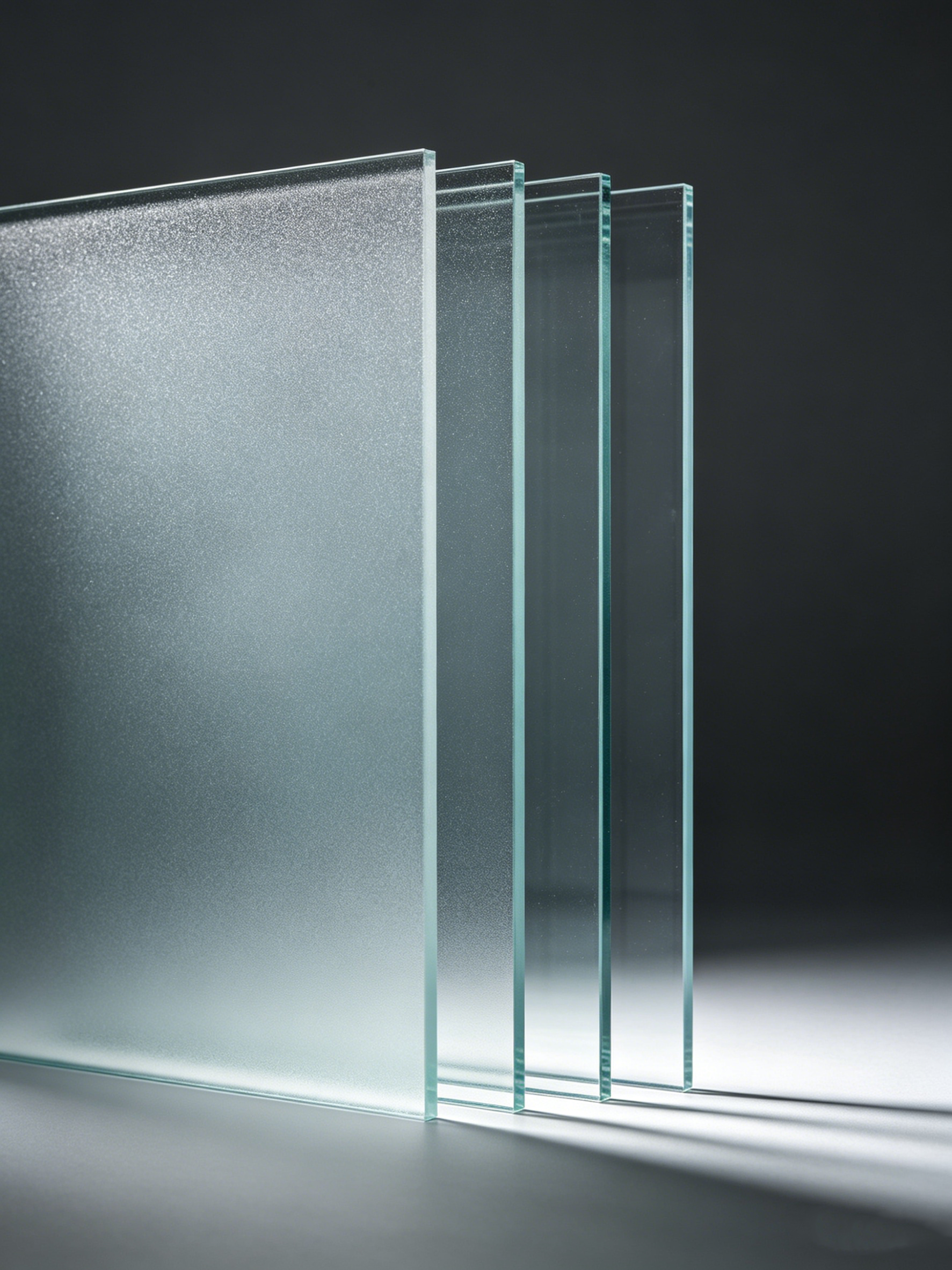
- Ballistic Defense engineered for maximum protection against ballistic threats, ensuring occupant safety during attacks.
- Combined Performance, which integrates bulletproof and burglarproof features into a single system for multi-threat protection.
These systems comply with EN1063 (BR1-BR7 NS), EN1522-1523 (FB1-FB7 NS), UL752 (Levels 1-7), and NIJ 0108.01 (Types I-III). The knowledge base explicitly identifies the industry adaptation of this line as covering "government buildings, financial institutions, and private residences," making it a direct fit for bank teller lines, vault-adjacent glazing, and executive offices.
Additional Layers: Blast and Fire Protection for Critical Sites
Beyond burglary and ballistics, some financial facilities — particularly those located in higher-risk regions or serving as government-adjacent infrastructure — also require Blast-Resistant Glass Systems. These systems use a multi-layer laminated structure to absorb and disperse impact energy from explosions, withstanding high-pressure waves and debris impacts. Protection levels comply with EN13123-2, GSA TS01-2003 (Level 2 "Very High"), and ISO 16933 (Rating B "No Hazard"), with industry adaptation covering embassies, government buildings, data centers, and oil and gas installations — categories that share the same risk profile as high-value banking facilities.
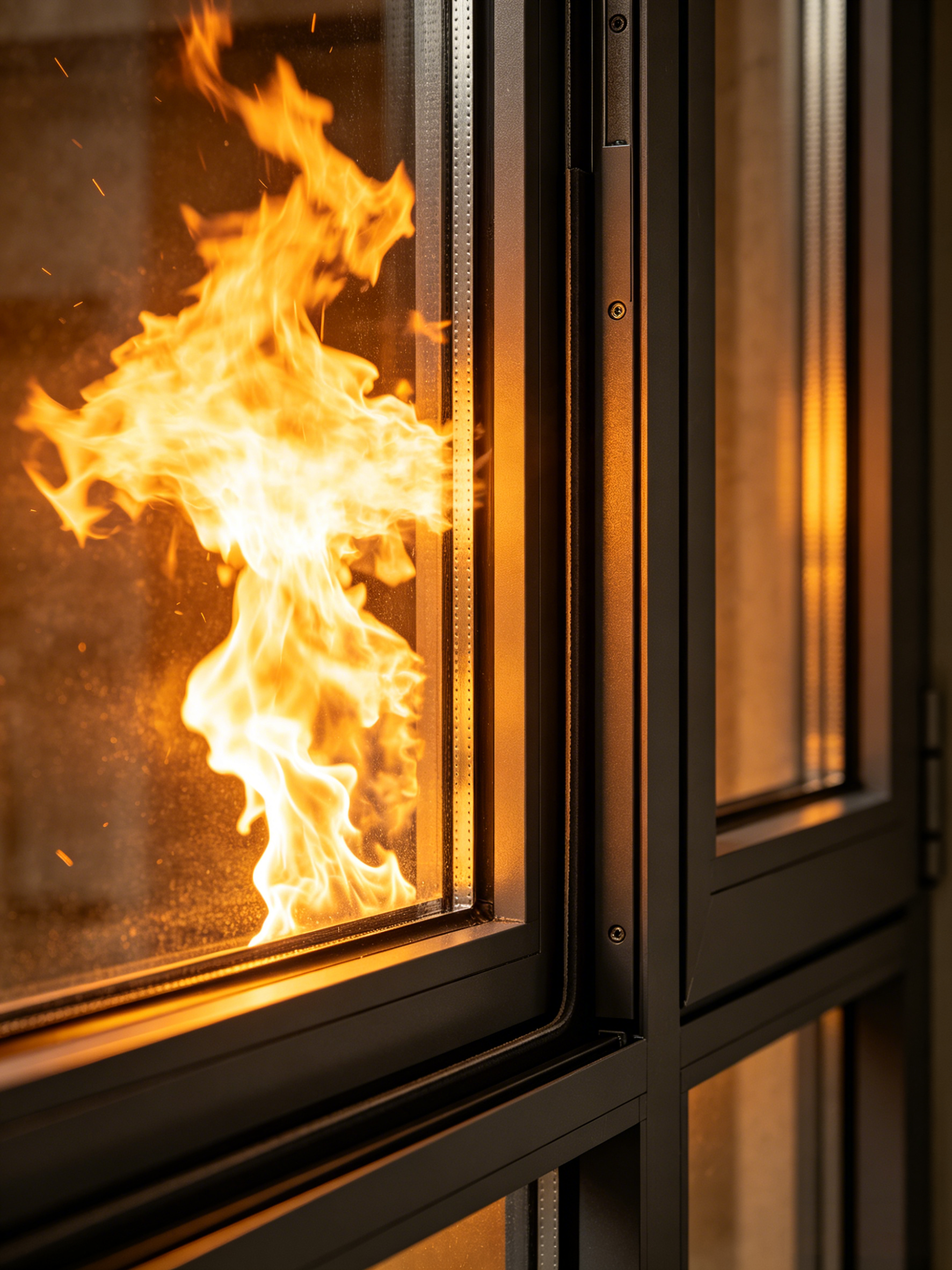
Fire-Rated Glazing Systems round out the protective envelope by blocking heat transfer and maintaining structural integrity for 60 to 120 minutes, delaying the spread of flames, heat, and toxic smoke. These systems comply with EN 1634-1, EN1364-3, EN357, and SS332, and carry COC certifications by TUV Singapore, supporting evacuation time and occupant protection in high-rise commercial towers and sensitive industrial zones.
Certification Backbone and Demonstrated Performance
Hwarrior’s window and door systems are supported by a certification portfolio that includes ISO 9001, CE, TÜV, AS, IFT, Intertek, and SGS, alongside technology partnerships with JANSEN (Switzerland) and Forster. The company holds over 30 patents in laminated glass composites and frame reinforcement technologies, and its team has specialized in ballistic-resistant glass systems for the banking sector for over two decades.
Field performance has been demonstrated in high-security residential deployments as well: a 450 m² bulletproof glass window system (swing and sliding) installed at a villa in QuanZhou, China, was designed to secure VIP and staff areas and met performance requirements for air permeability, water tightness, and ballistic resistance — the same combined performance criteria relevant to secure banking environments. On a larger infrastructure scale, the La Rinconada Baseball Stadium project in South America incorporated 52,000 m² of curtain walls, railings, and bulletproof systems that met CE, TÜV, and AS standards for wind resistance, thermal insulation, and crowd-impact safety, illustrating the manufacturer’s capacity to deliver certified ballistic and structural performance at scale.
Delivery Model Built for Regulated, High-Stakes Projects
Because banking projects involve sensitive site data and strict compliance timelines, Hwarrior maintains strict confidentiality protocols for handling sensitive project information related to embassies, data centers, and banks. Its delivery model is structured as a one-stop solution: consultation, R&D, laboratory testing, certified manufacturing, international shipping, and installation support, backed by CAD drawings, calculation documents for blast resistance, and installation manuals. Products carry a 10–15 year limited warranty based on product type and surface treatment, and the manufacturing base in Zhaoqing High-Tech Zone, China, supported by a Singapore headquarters, allows for global project coverage across five continents.
Conclusion
For banks and financial institutions evaluating window and door systems, the relevant question is not whether a single certification is met, but whether burglar resistance, ballistic protection, fire performance, and — where required — blast resistance are engineered together as one system. Hwarrior’s product line, spanning Burglar-Resistant Systems (RC1 to RC6), Ballistic-Resistant Systems, Blast-Resistant Glass Systems, and Fire-Rated Glazing Systems, is built around this integrated approach, supported by international certifications, patented materials, and a delivery model designed for confidentiality-sensitive, high-security projects.
https://www.hwarrior.com/
HWARRIOR PTE LTD (SINGAPORE)
